

Choosing how to establish your business presence in Hong Kong shapes everything from your tax obligations to your liability exposure. The decision between forming a private limited company or registering a branch office isn’t just paperwork. It determines how you operate, what you pay, and how much risk you carry.
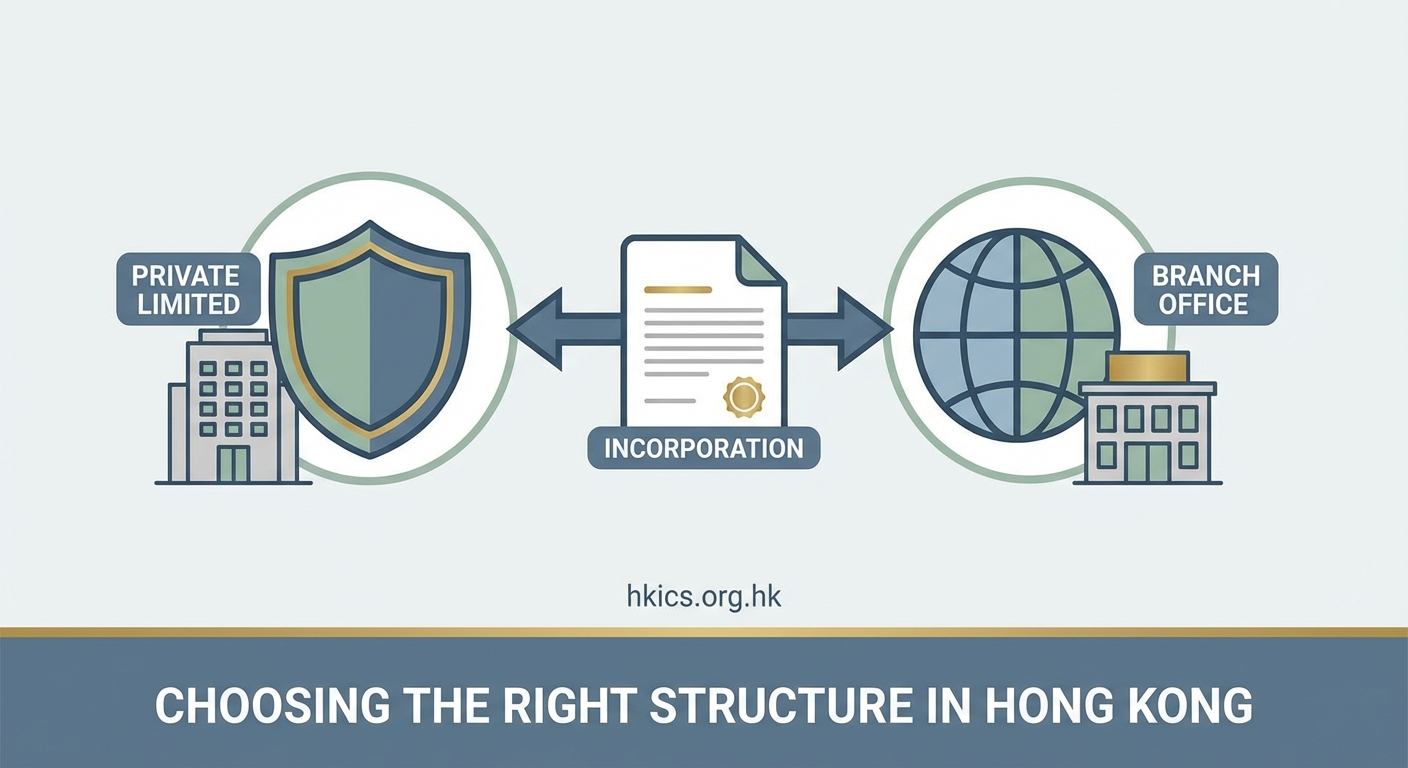
Private limited companies in Hong Kong operate as separate legal entities with limited liability protection and independent tax status. Branch offices function as extensions of foreign parent companies, sharing the same legal identity and tax obligations. Your choice depends on liability concerns, operational independence, tax planning needs, and long-term business goals in the Hong Kong market.
Understanding the fundamental differences
A private limited company stands alone as its own legal person. It can own property, sign contracts, and sue or be sued under its own name. Your parent company remains separate. Creditors cannot chase the parent company’s assets if the Hong Kong subsidiary runs into trouble.
A branch office works differently. It represents your foreign company operating in Hong Kong. No separate legal entity exists. The parent company carries full liability for everything the branch does. If the branch accumulates debts or faces legal claims, creditors can pursue the parent company’s global assets.
This distinction affects every aspect of your operations. Private limited companies file their own tax returns based solely on Hong Kong profits. Branches must report their Hong Kong activities as part of the parent company’s worldwide income, though Hong Kong only taxes the local profits.
Legal structure and liability protection
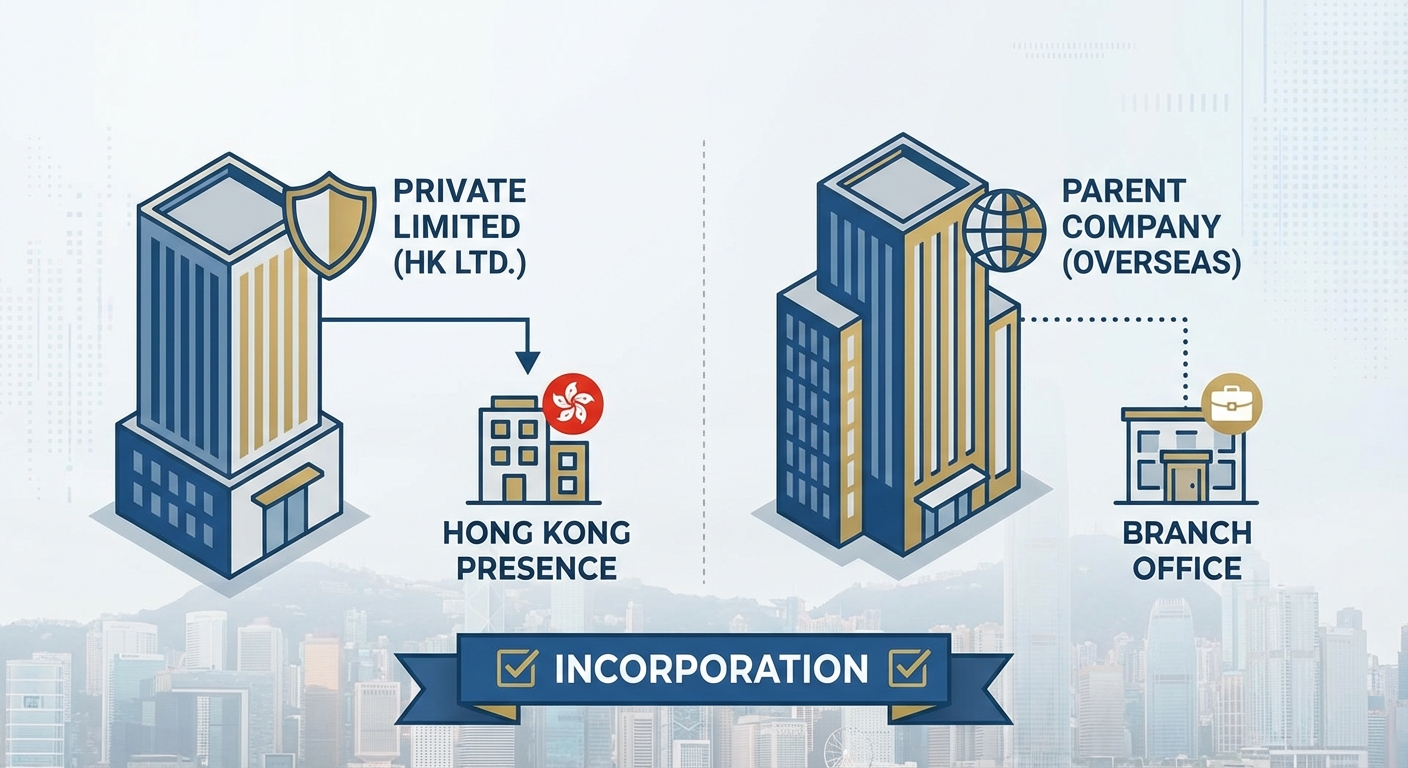
Private limited companies create a protective barrier. Shareholders risk only their invested capital. Directors face duties under Hong Kong law, but personal liability remains limited except in cases of fraud or wrongful trading.
Branch offices offer no such protection. The parent company assumes unlimited liability. A lawsuit against the branch becomes a lawsuit against the parent. This exposure makes branches less attractive for high-risk activities or industries with substantial liability concerns.
Consider a manufacturing operation. Equipment failures, workplace accidents, or product defects could trigger significant claims. A private limited structure shields your parent company from these risks. A branch office leaves your entire corporate group exposed.
The liability question becomes even more critical if you plan to hire substantial staff, lease expensive premises, or enter long-term contracts. Each obligation binds the parent company directly when operating through a branch.
Registration and setup requirements
Setting up either structure requires specific steps and documentation. The processes differ in complexity and ongoing obligations.
Private limited company formation
- Choose a unique company name and verify availability through the Companies Registry.
- Prepare incorporation documents including Articles of Association and details of directors and shareholders.
- Appoint at least one director (any nationality) and one company secretary who must be a Hong Kong resident.
- Establish a registered office address in Hong Kong for official correspondence.
- Submit incorporation forms and pay the registration fee to the Companies Registry.
- Obtain the Certificate of Incorporation, typically within four business days for electronic filings.
- Apply for a Business Registration Certificate from the Inland Revenue Department.
Branch office registration
- Verify your parent company’s legal existence with certified corporate documents.
- Prepare registration documents including certified copies of the parent company’s constitution.
- Appoint an authorized representative resident in Hong Kong to accept legal notices.
- Register the branch with the Companies Registry within one month of establishing a place of business.
- Submit certified translations if parent company documents are not in English or Chinese.
- Obtain the Branch Registration Certificate and Business Registration Certificate.
The private limited route typically costs less initially. Branch registration involves translation and certification expenses for foreign corporate documents. Annual compliance costs run higher for branches due to additional filing requirements.
Tax considerations and planning
Hong Kong operates a territorial tax system. Only profits sourced in Hong Kong face taxation at the current rate of 16.5% for corporations. The first HKD 2 million of assessable profits qualifies for a reduced rate of 8.25% under the two-tiered profits tax regime.
Private limited companies benefit fully from this two-tiered system. Each subsidiary qualifies independently, provided it’s not part of a group already claiming the concession elsewhere.
Branch offices can access the same tax rates on Hong Kong-sourced profits. However, tax planning becomes more complex. The branch must prove which profits arose in Hong Kong versus elsewhere. Transfer pricing rules apply when the branch transacts with the head office or other group entities.
Tax efficiency comparison
| Aspect | Private Limited Company | Branch Office |
|---|---|---|
| Tax filing | Separate Hong Kong tax return | Hong Kong portion of global operations |
| Two-tiered rate | Fully available | Available but may face restrictions |
| Dividend repatriation | No withholding tax on dividends | Not applicable (same entity) |
| Transfer pricing | Arms-length pricing required for intercompany transactions | Notional pricing for head office transactions |
| Loss utilization | Losses carried forward within Hong Kong entity | Losses may offset global profits depending on home jurisdiction |
Many businesses prefer private limited companies for cleaner tax separation. Profits stay in Hong Kong or get distributed as dividends without withholding tax. Branch profits technically belong to the parent immediately, creating potential tax complications in the home jurisdiction.
Operational flexibility and control
Private limited companies operate with significant autonomy. The board of directors makes decisions locally, subject to shareholder oversight. You can structure governance to match your needs, whether maintaining tight parent control or delegating authority to local management.
Branches function as extensions. They cannot make truly independent decisions. Every action represents the parent company. This creates practical challenges for banking, contracts, and business relationships.
Hong Kong banks often prefer dealing with local private limited companies. Account opening procedures run smoother. Credit facilities become more accessible. Counterparties feel more comfortable signing contracts with a local legal entity rather than a foreign branch.
The company secretary requirement for private limited companies adds a compliance layer but also provides valuable local expertise. The secretary ensures statutory filings happen on time, maintains proper records, and advises on Hong Kong corporate law obligations.
Compliance and ongoing obligations
Both structures face annual compliance requirements, but the burden differs.
Private limited companies must:
- File annual returns with the Companies Registry
- Maintain statutory registers at the registered office
- Hold annual general meetings (unless all shareholders agree to dispense with them)
- Prepare audited financial statements unless qualifying for audit exemption
- Renew the Business Registration Certificate annually
- Keep proper accounting records for at least seven years
Branch offices must:
- File annual returns including parent company accounts
- Notify the Companies Registry of any changes to parent company details
- Maintain a register of the authorized representative
- Provide certified translations of foreign language documents
- Renew the Business Registration Certificate annually
- Keep accounting records reflecting Hong Kong operations
The branch office faces an additional burden. Any changes to the parent company’s constitution, directors, or registered office must be reported to Hong Kong authorities within the prescribed timeframe. This creates an ongoing administrative task that private limited companies avoid.
When your parent company undergoes restructuring or changes directors frequently, the branch office notification requirements become burdensome. A private limited subsidiary insulates you from these administrative ripples.
Choosing based on your business goals
Your optimal structure depends on specific circumstances and objectives.
Consider a private limited company if you:
- Want to limit liability exposure to Hong Kong operations
- Plan significant investment in assets or staff
- Need operational independence from the parent company
- Prefer simplified tax reporting and planning
- Intend to raise capital locally or bring in Hong Kong partners
- Operate in industries with elevated liability risks
Consider a branch office if you:
- Run a representative office with minimal operational activity
- Need to maintain tight integration with parent company operations
- Plan limited duration activities like a specific project
- Want to test the Hong Kong market before committing to a subsidiary
- Operate in professional services where the parent company’s reputation matters
- Have regulatory reasons to operate as a branch rather than a separate entity
Some businesses start with a branch office to establish presence, then convert to a private limited company as operations expand. This progression makes sense if you’re uncertain about market potential but want a legal presence for bidding on contracts or serving clients.
The conversion process requires dissolving the branch and incorporating a new company. Assets and contracts must transfer. Employees need new employment agreements. The transition takes planning but remains straightforward.
Capital requirements and funding
Hong Kong imposes no minimum capital requirement for private limited companies. You can incorporate with as little as HKD 1 of share capital. This flexibility lets you structure equity to match your actual investment and ownership arrangements.
Branch offices don’t have share capital. The parent company funds operations through capital contributions or loans. These transactions require proper documentation for tax purposes. Transfer pricing rules apply to interest rates on intercompany loans.
Private limited companies offer more funding flexibility. You can:
- Issue different share classes with varying rights
- Bring in outside investors without affecting parent company ownership
- Raise debt from Hong Kong or international lenders
- Grant employee share options as incentives
Branches rely entirely on parent company funding. Local investors cannot take equity stakes. Employee incentive arrangements must reference parent company shares, creating complexity for Hong Kong staff.
Making your decision with confidence
The private limited versus branch office choice shapes your Hong Kong operations for years. Most foreign businesses establishing substantial operations choose the private limited route. The liability protection alone justifies the structure for any business with employees, premises, or significant contracts.
Branch offices serve specific purposes. Representative offices, project-based work, or preliminary market exploration fit the branch model. Once you commit to real operations, the private limited structure offers superior protection and flexibility.
Your home country tax situation also matters. Some jurisdictions tax worldwide income, making branch profits immediately taxable at home. A Hong Kong subsidiary’s profits may defer home country tax until dividend repatriation. Consult tax advisors familiar with both jurisdictions before deciding.
The good news? Hong Kong makes both options accessible. Registration processes work efficiently. Professional service providers can handle the paperwork. You can establish your presence within weeks.
Setting up your Hong Kong presence the right way
Your business deserves a structure that protects your interests and supports your goals. The private limited versus branch office decision isn’t just about today. It affects your flexibility to grow, your exposure to risk, and your ability to operate efficiently in the Hong Kong market.
Most businesses find that private limited companies offer the best combination of protection, independence, and operational simplicity. The separate legal entity structure aligns with how Hong Kong businesses, banks, and counterparties prefer to work.
Take time to map out your plans. Consider where you’ll be in three years, not just three months. Think about employees, premises, contracts, and potential liabilities. The structure you choose today should serve your business as it grows and evolves in one of Asia’s most dynamic commercial centers.