

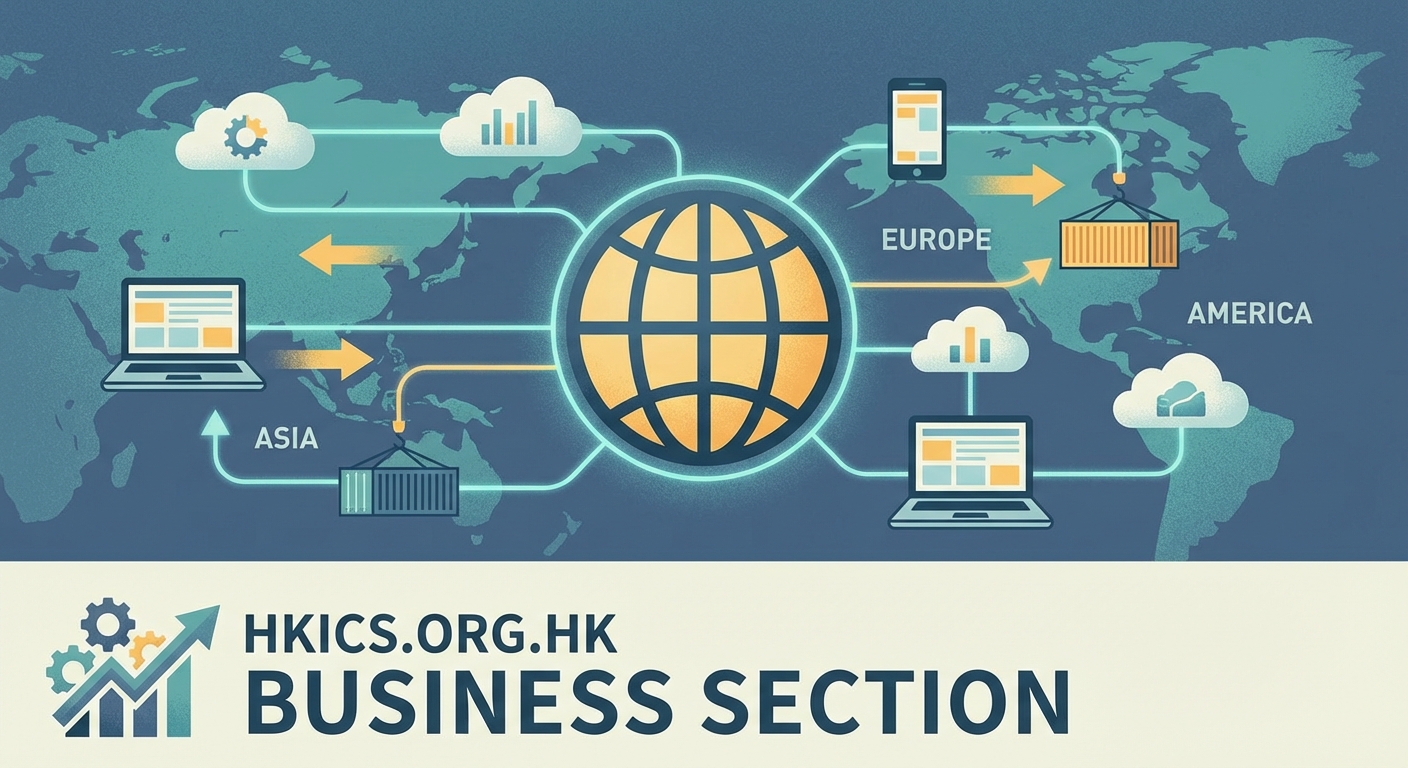
The way businesses sell across borders has changed more in the past three years than in the previous decade. Digital platforms now enable a startup in Hong Kong to serve customers in São Paulo, Stockholm, and Singapore simultaneously. Yet this accessibility brings new challenges around compliance, payment processing, and cultural adaptation that many executives underestimate.
Cross-border digital business trends in 2024 center on AI-driven localization, evolving regulatory frameworks, embedded finance solutions, and sustainability requirements. Companies expanding internationally must balance automation with cultural intelligence while navigating fragmented compliance landscapes. Success depends on adaptable technology infrastructure, strategic payment partnerships, and proactive regulatory monitoring across target markets.
Technology infrastructure driving international growth
Cloud-based platforms have made international expansion accessible to mid-sized companies that previously lacked the resources for global operations. Businesses can now deploy localized websites, manage inventory across continents, and process transactions in multiple currencies without building physical infrastructure in each market.
API-first architectures allow companies to integrate best-of-breed services for each market. A business might use one payment processor in Europe, another in Southeast Asia, and a third in Latin America, all connected through a unified backend system. This modular approach reduces dependency on single vendors and enables faster market entry.
Edge computing is reducing latency for customers in distant markets. By processing data closer to end users, companies deliver faster load times and better user experiences regardless of geographic distance. This matters particularly for digital services, streaming platforms, and real-time collaboration tools where milliseconds affect customer satisfaction.
Regulatory complexity across markets
Different jurisdictions treat digital businesses differently. What qualifies as a taxable presence in one country might not trigger obligations in another. Companies must track these distinctions carefully to avoid unexpected liabilities.
Data residency requirements force many businesses to rethink their architecture. Some countries mandate that citizen data remain within national borders. Others require local processing or storage. These rules affect everything from server locations to customer service operations.
Consumer protection standards vary widely. Europe’s strict privacy regulations contrast sharply with more permissive frameworks elsewhere. Return policies, warranty obligations, and disclosure requirements differ by market. Businesses need systems that adapt to each jurisdiction’s requirements without creating operational chaos.
The biggest mistake companies make is treating compliance as a one-time setup task. Regulations change constantly. What worked last year might expose you to penalties today. Build monitoring into your operations from day one.
Payment systems and financial infrastructure
Local payment preferences determine success in many markets. Credit cards dominate in North America, but digital wallets lead in Asia. Bank transfers remain popular in Europe, while cash-on-delivery persists in emerging markets. Companies must support the methods customers actually use, not just what’s convenient to implement.
Currency volatility creates both risks and opportunities. Businesses accepting payments in multiple currencies face exposure to exchange rate fluctuations. Some hedge this risk through financial instruments. Others build margins that absorb typical variations. The right approach depends on transaction volumes and risk tolerance.
Embedded finance is blurring the lines between commerce and banking. Platforms now offer credit, insurance, and investment products directly within shopping experiences. This integration increases conversion rates and average order values while creating new regulatory considerations around financial services licensing.
| Payment Approach | Implementation Complexity | Market Coverage | Regulatory Burden |
|---|---|---|---|
| Global payment processor | Low | Broad but shallow | Moderate |
| Local payment partnerships | High | Deep but narrow | High |
| Hybrid model | Moderate | Balanced | Variable |
| Cryptocurrency integration | Very high | Limited | Uncertain |
Localization beyond translation

Language translation is table stakes. Real localization adapts content, imagery, and user flows to cultural contexts. Color symbolism, number formatting, date conventions, and visual hierarchy all vary by culture. Businesses that simply translate text without considering these factors often alienate potential customers.
AI-powered localization tools are improving rapidly. Modern systems can adapt tone, formality levels, and cultural references automatically. They catch issues that human translators might miss, like product names that sound inappropriate in certain languages or imagery that carries unintended connotations.
Local market knowledge remains irreplaceable. Automated tools handle mechanical tasks, but humans must make judgment calls about brand positioning, competitive differentiation, and market timing. Smart companies combine AI efficiency with human cultural intelligence.
Supply chain and fulfillment strategies
Inventory placement affects both delivery speed and cost structure. Businesses must decide whether to centralize stock or distribute it across regional warehouses. Centralization reduces complexity but increases shipping times and costs. Distribution speeds delivery but multiplies inventory carrying costs and complexity.
Cross-border shipping regulations continue to evolve. Customs procedures, import duties, and prohibited items lists change frequently. Businesses need systems that stay current with these rules and communicate accurate delivery estimates to customers. Nothing damages trust faster than unexpected delays or surprise fees.
Returns management becomes exponentially more complex across borders. The economics of international returns often make them unprofitable. Some companies offer local return options through partnerships. Others provide partial refunds in exchange for customers keeping items. Each approach has tradeoffs around customer satisfaction and unit economics.
Steps for entering new markets strategically
-
Conduct regulatory research before building anything. Understand tax obligations, data requirements, and consumer protection standards. Factor compliance costs into market viability assessments.
-
Test payment and logistics infrastructure with small transaction volumes. Real-world testing reveals issues that research misses. Start with limited inventory and scale based on actual performance.
-
Build relationships with local service providers early. Payment processors, logistics companies, and legal advisors with market expertise accelerate problem-solving and reduce costly mistakes.
-
Create feedback loops between local operations and central teams. Market-specific insights should inform product development, marketing strategies, and operational improvements across the organization.
-
Establish clear criteria for market exit decisions. Not every expansion succeeds. Define metrics that trigger reassessment and have plans for graceful exits that protect brand reputation.
Sustainability and ethical considerations
Environmental regulations are tightening globally. Carbon reporting requirements, packaging restrictions, and circular economy mandates affect international operations. Companies must track these evolving standards and adapt practices accordingly.
Labor and sourcing transparency demands are increasing. Customers and regulators want visibility into supply chains. Businesses face pressure to demonstrate ethical practices around worker treatment, environmental impact, and community effects throughout their operations.
Greenwashing carries serious risks. Vague sustainability claims attract regulatory scrutiny and consumer backlash. Companies making environmental commitments need verifiable data and third-party validation to maintain credibility.
Data analytics and market intelligence
Customer behavior varies significantly by market. Purchase patterns, browsing habits, and response to marketing differ across cultures and regions. Companies need analytics systems that capture these variations and inform localized strategies.
Competitive landscapes shift constantly. New local players emerge, international competitors enter markets, and regulatory changes alter competitive dynamics. Effective market intelligence requires ongoing monitoring, not periodic snapshots.
Predictive analytics help anticipate market changes. By analyzing regulatory trends, economic indicators, and consumer sentiment, businesses can position themselves ahead of shifts rather than reacting after the fact.
Key metrics to monitor across markets:
- Customer acquisition costs by channel and geography
- Conversion rates through localized versus translated experiences
- Payment method preferences and transaction success rates
- Return rates and reasons by market
- Regulatory compliance incidents and near-misses
- Customer service inquiry patterns and resolution times
Building organizational capabilities
Cross-border operations require new skills. Teams need expertise in international tax, multi-currency accounting, global logistics, and cross-cultural communication. Businesses must either develop these capabilities internally or partner with specialists who provide them.
Organizational structure affects international success. Centralized models maintain consistency but can be slow to respond to local needs. Decentralized approaches enable market responsiveness but risk brand fragmentation. Most successful companies find hybrid models that balance both priorities.
Knowledge management becomes critical at scale. Insights from one market should inform strategies in others. Companies need systems that capture learnings, make them accessible, and encourage cross-market collaboration.
Common pitfalls and how to avoid them
| Mistake | Why It Happens | Prevention Strategy |
|---|---|---|
| Underestimating compliance complexity | Assuming home market rules apply everywhere | Invest in local legal expertise before launch |
| Ignoring payment preferences | Implementing only familiar methods | Research actual customer behavior in target markets |
| Over-relying on automation | Believing technology solves cultural challenges | Balance AI tools with human cultural judgment |
| Neglecting customer service localization | Treating support as an afterthought | Plan multilingual, culturally-adapted support from start |
Technology partnerships and vendor selection
Choosing the right technology partners affects long-term flexibility. Vendors with strong API ecosystems enable easier integration and replacement. Proprietary systems create dependency and limit future options.
Geographic coverage matters differently for different services. Payment processors need deep local market presence. Content delivery networks prioritize global reach. Match vendor strengths to specific requirements rather than seeking one-size-fits-all solutions.
Contract terms should anticipate growth and change. Volume pricing, data portability guarantees, and clear exit terms protect businesses as they scale. What seems like a minor contract detail during initial implementation can become a major constraint later.
Emerging technologies reshaping international commerce
Artificial intelligence is automating tasks that previously required local expertise. From customer service chatbots that handle multiple languages to pricing algorithms that account for local market conditions, AI reduces the human resources needed for international operations.
Blockchain technology is finding practical applications in supply chain transparency and cross-border payments. While cryptocurrency adoption remains limited for consumer transactions, underlying blockchain infrastructure is solving real business problems around trust and verification.
Augmented reality is reducing barriers to online purchasing. Virtual try-on features and 3D product visualization help customers make confident purchase decisions without physical interaction. This particularly benefits cross-border commerce where returns are expensive.
Building resilience into international operations
Diversification reduces risk exposure. Businesses dependent on single markets, suppliers, or logistics routes face existential threats when disruptions occur. Spreading operations across geographies, partners, and channels builds resilience.
Scenario planning helps prepare for uncertainty. By thinking through potential disruptions and developing response plans, companies can react faster when problems arise. This matters especially in international operations where distance and complexity slow improvised responses.
Financial buffers absorb shocks. International expansion creates cash flow complexity around currency conversion, payment timing, and unexpected costs. Maintaining adequate reserves prevents temporary problems from becoming permanent failures.
Making international expansion work for your business
Cross-border digital business trends point toward increasing opportunity and complexity. Technology continues lowering barriers to international commerce while regulatory and cultural factors demand sophisticated approaches.
Success requires balancing global efficiency with local responsiveness. Companies that treat international expansion as simply scaling existing operations usually struggle. Those that thoughtfully adapt to market differences while maintaining core brand values tend to thrive.
Start smaller than you think necessary. Test assumptions with real customers before committing major resources. Build learning into every market entry. The businesses winning internationally today are those that combine ambitious vision with humble, iterative execution.