
Running a small business in Hong Kong means juggling a dozen tasks at once. You’re managing staff, chasing clients, and somehow trying to keep the books in order. But here’s the thing: even the smallest accounting slip can snowball into serious trouble with the Inland Revenue Department or create cash flow headaches that threaten your entire operation.
Hong Kong SMEs commonly struggle with poor record keeping, misclassified expenses, payroll errors, and inadequate cash flow monitoring. These accounting mistakes can trigger tax penalties, compliance issues, and financial instability. Understanding and addressing these errors through systematic processes, proper documentation, and regular reconciliation helps businesses maintain regulatory compliance while building a foundation for sustainable growth and accurate financial decision making.
Why accounting mistakes hurt Hong Kong SMEs more than you think
Most business owners assume accounting errors are just minor annoyances. The reality is far more serious.
A misplaced receipt or forgotten invoice can cascade into inaccurate tax filings. The IRD doesn’t care if you were too busy serving customers to update your ledger. Late or incorrect Profits Tax Returns can result in penalties ranging from HKD 10,000 to triple the tax undercharged.
Beyond regulatory trouble, poor accounting creates blind spots in your business. You might think you’re profitable when you’re actually bleeding cash. You could miss early warning signs of liquidity problems until it’s too late to course correct.
Many Hong Kong SMEs operate on thin margins. A single quarter of mismanaged finances can mean the difference between expansion and closure.
Mixing personal and business finances
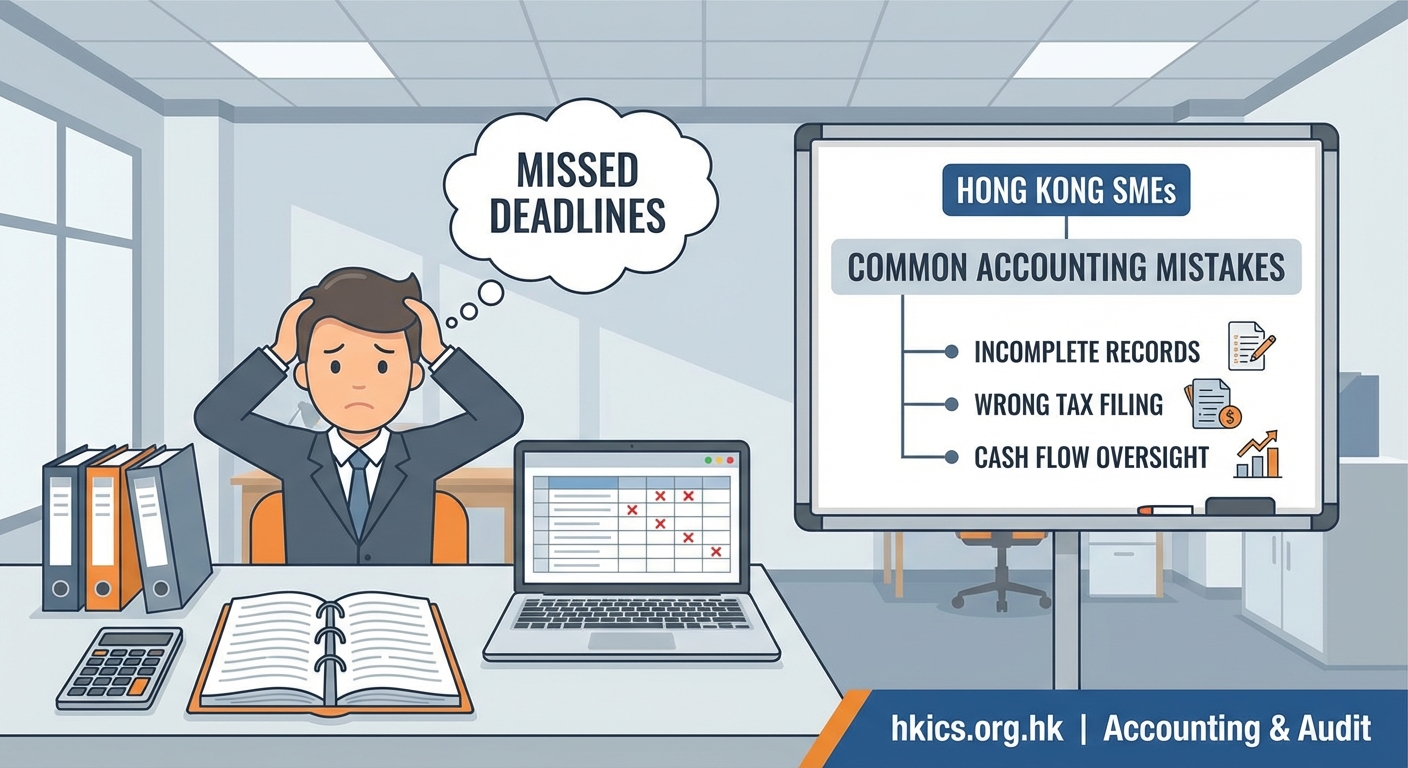
This mistake tops the list for micro businesses and sole proprietors.
You use your personal credit card for a business lunch. You transfer company funds to cover your mortgage. Before long, your personal and business finances are so tangled that even you can’t tell them apart.
The IRD expects clear separation between personal and business transactions. When audit time comes, you’ll spend hours trying to reconstruct which expenses were legitimate business costs. Many business owners end up unable to claim valid deductions simply because they can’t prove the expense was business related.
Set up a dedicated business bank account from day one. Get a separate credit card for business expenses only. Pay yourself a regular salary or drawings, and document it properly.
This separation isn’t just about compliance. It gives you an honest picture of whether your business actually makes money or if you’re subsidizing it from personal savings without realizing it.
Ignoring proper receipt and invoice management
Paper receipts fade. Digital files get lost in cluttered email inboxes. Yet every missing receipt represents a potential tax deduction you can’t claim.
Hong Kong’s tax system allows businesses to deduct legitimate expenses, but only with proper documentation. The burden of proof sits squarely on your shoulders. If you can’t produce a receipt during an audit, the IRD will disallow that expense.
Many SME owners stuff receipts in drawers or snap photos that never get organized. Six months later, when the accountant asks for Q1 expenses, you’re scrambling through faded thermal paper and blurry phone images.
Create a system today:
- Photograph every receipt immediately and store it in a dedicated cloud folder organized by month.
- Label each image with the date, vendor, and purpose before you forget the context.
- Reconcile these receipts against your bank statements weekly, not quarterly.
- Keep both digital and physical copies for at least seven years, as required by Hong Kong law.
The same discipline applies to issuing invoices. Late or missing invoices mean delayed payments and inaccurate revenue recognition. Your financial statements won’t reflect reality, making it impossible to understand your true cash position.
Misclassifying expenses and revenue
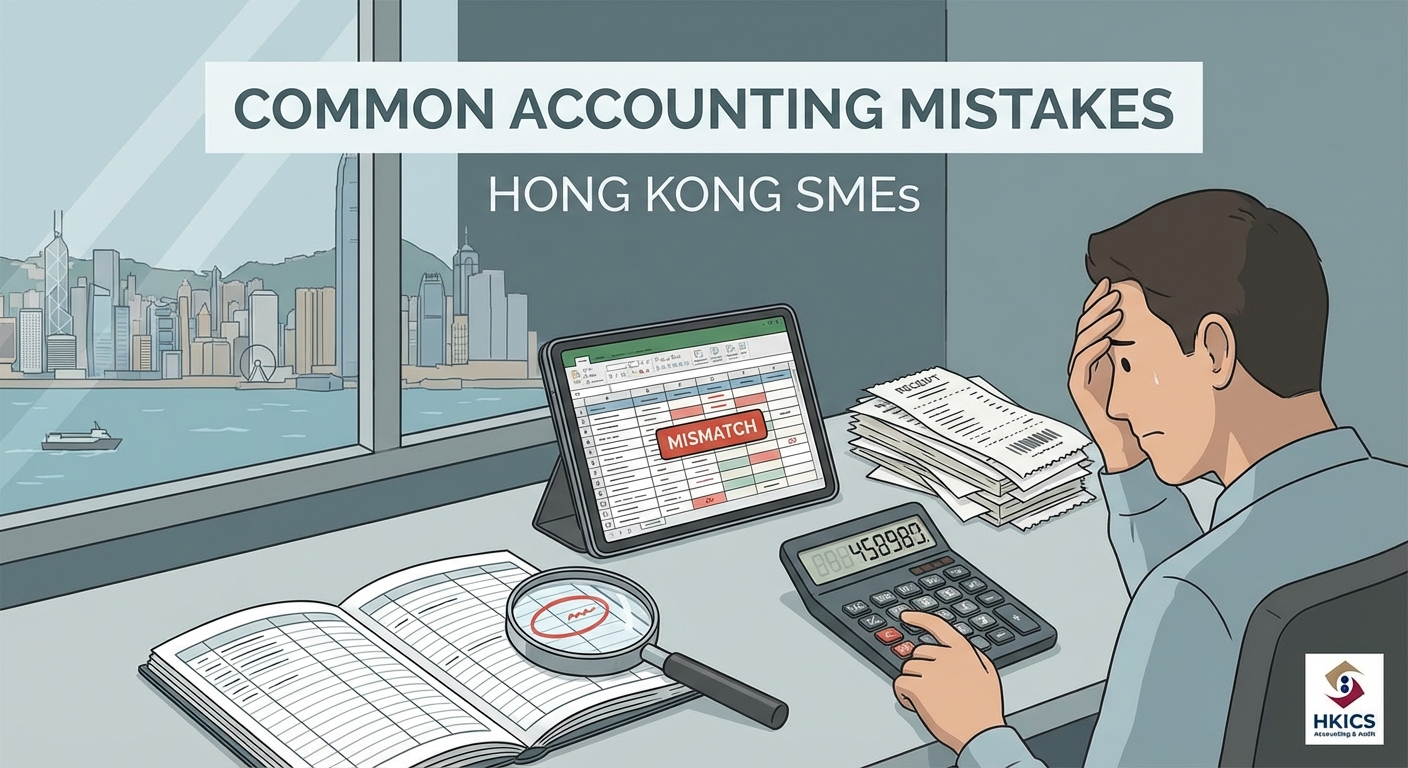
Not all business spending is created equal in the eyes of tax authorities.
Capital expenditure and operating expenses receive different tax treatment. Buying a laptop is capital expenditure. Paying for cloud software is an operating expense. Confuse the two, and your tax calculation will be wrong.
Revenue recognition timing matters too. Some SMEs record income when they issue an invoice. Others wait until payment clears the bank. Hong Kong generally follows accrual accounting for incorporated businesses, meaning you should recognize revenue when earned, not when cash arrives.
Here’s a breakdown of common classification errors:
| Transaction Type | Common Mistake | Correct Treatment |
|---|---|---|
| Equipment purchase over HKD 10,000 | Expensed immediately | Capitalize and depreciate |
| Prepaid annual insurance | Full deduction in payment month | Spread over policy period |
| Customer deposits | Recorded as revenue | Liability until service delivered |
| Owner withdrawals | Treated as business expense | Drawings from equity, not deductible |
| Entertainment expenses | Fully deducted | Only deductible if directly related to business |
Getting these classifications right affects your tax liability and your understanding of profitability. A business that capitalizes assets properly will show smoother, more accurate profit trends than one that expenses everything immediately.
Neglecting monthly bank reconciliation
Bank reconciliation sounds tedious. It’s also one of the most powerful error detection tools available.
Every month, you should match your accounting records against your actual bank statements. The two should align perfectly. When they don’t, you’ve found a problem: a missed transaction, a data entry error, or potentially fraud.
Many Hong Kong SMEs skip this step for months, then face a nightmare trying to reconcile six months of transactions at once. By then, memories have faded and tracking down discrepancies becomes nearly impossible.
Monthly reconciliation catches issues while they’re fresh:
- Duplicate payments that you can reverse
- Missing deposits that need investigation
- Bank fees you forgot to record
- Checks that never cleared
This practice also reveals your true cash position. Your accounting software might show HKD 50,000 in the bank, but if you haven’t reconciled in three months, that number could be fantasy.
Set a recurring calendar reminder for the first week of each month. Treat reconciliation as non negotiable, like paying rent.
Making payroll and MPF errors
Payroll mistakes create problems with both employees and regulators.
The Mandatory Provident Fund system requires employers to contribute 5% of relevant income for each employee, up to the maximum relevant income level. Employees contribute another 5%. Miss a payment deadline, and you’ll face surcharges of 5% per month on outstanding contributions.
Common payroll errors include:
- Miscalculating MPF contributions for employees with fluctuating hours
- Forgetting to enroll new employees within the 60 day deadline
- Failing to adjust contributions when employees receive raises or bonuses
- Not maintaining proper employment records as required by the Employment Ordinance
The IRD also scrutinizes payroll. You must file Employer’s Returns (IR56B forms) annually and notify the IRD of new hires and departures. Late filing carries automatic penalties.
Even small calculation errors compound over time. An employee underpaid by HKD 500 monthly represents HKD 6,000 annually, plus the trust damage when they eventually notice.
Use payroll software that automatically calculates MPF contributions and keeps current with regulatory changes. Double check calculations for at least the first three months when implementing any new system.
Failing to track cash flow separately from profit
Profit and cash are not the same thing. This distinction confuses many business owners.
You can be profitable on paper while running out of cash. How? You’ve invoiced HKD 100,000 in services, showing profit in your income statement. But if customers haven’t paid yet, you have zero cash to cover this month’s rent.
“I’ve seen profitable businesses fail because they didn’t understand their cash conversion cycle. They had receivables they couldn’t collect fast enough to meet payables that came due immediately.” This reality hits service businesses especially hard.
Track these metrics weekly:
- Cash on hand right now
- Receivables outstanding and their aging
- Payables due in the next 30 days
- Upcoming large expenses like quarterly rent or annual insurance
Create a simple cash flow forecast. Project your expected cash position for the next 90 days based on when you actually expect to collect and pay, not when transactions are recognized for accounting purposes.
Many Hong Kong SMEs operate with 30 to 60 day payment terms for customers but need to pay suppliers within 14 days. This timing mismatch creates constant cash pressure that profit margins alone won’t reveal.
Overlooking tax planning opportunities
Most SMEs think about taxes once a year when filing deadlines approach. Strategic tax planning happens throughout the year.
Hong Kong’s territorial tax system only taxes profits sourced in Hong Kong. Understanding source rules can significantly impact your tax liability, especially if you serve overseas clients or manufacture offshore.
Other commonly missed opportunities:
- Accelerated depreciation allowances for certain assets
- Research and development deductions
- Timing large purchases to optimize deductions
- Structuring director remuneration efficiently between salary and dividends
The two tiered Profits Tax regime, introduced in 2018, charges only 8.25% on the first HKD 2 million of assessable profits for corporations (half the standard 16.5% rate). Sole proprietors enjoy similar benefits. But you need accurate accounting to know if you qualify and to maximize this advantage.
Tax planning isn’t about aggressive schemes. It’s about understanding available deductions and structuring transactions legally to minimize liability. An hour with a tax advisor in June can save thousands in April.
Not maintaining adequate documentation for audits
The IRD can audit your tax affairs for up to six years after assessment. Without proper documentation, you’re defenseless.
Required records include:
- All invoices issued and received
- Bank statements and reconciliation records
- Payroll records and MPF contribution proof
- Contracts and agreements
- Asset registers with purchase dates and costs
- Meeting minutes for company decisions
Store these documents systematically. A shoebox of random papers won’t cut it during an audit. You need to produce specific documents on demand, often within days of the IRD’s request.
Digital storage works well if organized properly. Create a clear folder structure by year and category. Use consistent naming conventions. Back up everything to at least two locations.
Physical documents should be filed in clearly labeled binders or boxes. Create an index so you can locate specific items without emptying entire storage units.
The time to organize isn’t when the audit notice arrives. It’s every single month as part of your regular accounting close process.
Trying to handle everything without professional help
Here’s an uncomfortable truth: most business owners aren’t accountants and shouldn’t try to be.
You started your business because you’re great at providing your product or service. Accounting is a specialized skill that takes years to master. The time you spend wrestling with bookkeeping is time not spent growing revenue.
The cost of professional help is almost always less than the cost of mistakes. A bookkeeper charging HKD 3,000 monthly might seem expensive until you face a HKD 30,000 penalty for incorrect tax filings.
Professional accountants also stay current with regulatory changes. Hong Kong’s tax and company law evolve constantly. The depreciation rates that worked last year might have changed. New disclosure requirements might apply to your industry.
That doesn’t mean you should be completely hands off. You need to understand your numbers well enough to spot problems and make informed decisions. But the actual execution of accounting tasks often belongs with specialists.
Consider this progression:
- Start with a bookkeeper for monthly transaction recording and reconciliation.
- Add a tax accountant for annual filings and planning as revenue grows.
- Bring in a CFO or financial controller when you reach the scale where strategic financial management drives competitive advantage.
The right time to get help is before problems emerge, not after the IRD sends a penalty notice.
Building accounting habits that last
Fixing accounting mistakes isn’t about a one time cleanup. It’s about building systems that prevent errors from happening in the first place.
Start small. Pick one area from this article that resonates most with your current situation. Maybe it’s setting up monthly reconciliation. Maybe it’s finally separating personal and business accounts. Master that one change before adding another.
Document your processes as you build them. When you figure out a good system for receipt management, write down the steps. This documentation helps when you hire staff or need to remember your own system six months later.
Review your financial statements monthly, even if they’re not perfect yet. The habit of looking at your numbers regularly builds financial awareness. You’ll start noticing patterns and anomalies that would otherwise slip past.
Your business deserves accurate financial information. You deserve to make decisions based on reality, not guesswork. The accounting mistakes that plague Hong Kong SMEs are completely preventable with consistent effort and the right support. Your future self will thank you for the systems you build today.