

Running a company in Hong Kong means juggling statutory filings, board meeting minutes, annual returns, and a mountain of compliance paperwork. Miss a deadline or file incorrectly, and you face penalties that can hurt your business. That’s where professional corporate secretarial services step in to handle the administrative heavy lifting while you focus on growth.
Corporate secretarial services in Hong Kong manage statutory compliance, company records, board resolutions, and regulatory filings for businesses. These services ensure companies meet Companies Ordinance requirements, avoid penalties, and maintain good standing with the Companies Registry. Modern providers now offer digital platforms that streamline compliance workflows and provide real-time visibility into filing deadlines and corporate governance obligations.
What corporate secretarial services actually do
A company secretary in Hong Kong isn’t just an administrative assistant. They’re a statutory officer with legal responsibilities under the Companies Ordinance.
Every Hong Kong company must appoint a company secretary within six months of incorporation. For private companies, this can be an individual or a corporate service provider. Public companies must appoint a qualified professional.
The role covers several critical functions:
- Maintaining statutory registers including members, directors, and significant controllers
- Filing annual returns and other documents with the Companies Registry
- Organizing board meetings and general meetings with proper notice
- Recording minutes and resolutions accurately
- Ensuring compliance with the Companies Ordinance and other regulations
- Managing share transfers and allotments
- Keeping the registered office address current
- Advising directors on their statutory duties
These tasks sound straightforward until you consider the penalties for getting them wrong. Late annual returns trigger automatic fines. Incorrect statutory registers can lead to prosecution. Missing disclosure deadlines for controller information creates legal exposure.
Why companies outsource these functions
Small businesses often start with a director wearing multiple hats, including company secretary. This works until the compliance burden grows too heavy or the director realizes they lack the specialized knowledge needed.
Here’s what drives companies to hire professional corporate secretarial services:
Compliance expertise: The Companies Ordinance runs to hundreds of pages. Professional secretaries stay current on regulatory changes and filing requirements.
Time savings: Directors spend their time on business strategy instead of paperwork. A typical annual compliance cycle involves dozens of tasks and deadlines.
Risk reduction: Professionals catch potential compliance issues before they become problems. They know which filings need legal review and which transactions trigger disclosure obligations.
Scalability: As companies grow, compliance complexity increases. Professional services scale with your needs without hiring full-time staff.
Digital efficiency: Modern providers use platforms that automate reminders, track deadlines, and provide document access anytime.
Core services you should expect
Not all corporate secretarial providers offer the same scope. Understanding what’s standard versus optional helps you choose the right partner.
Statutory compliance management
- Prepare and file annual returns with the Companies Registry
- Maintain all statutory books and registers in proper form
- Update the Significant Controllers Register as ownership changes
- File forms for director appointments, resignations, and address changes
- Ensure the registered office address remains valid and accessible
- Monitor compliance deadlines and send advance reminders
This baseline service keeps your company in good standing. Providers should handle routine filings without constant prompting from you.
Board and shareholder meeting support
Professional secretaries organize the mechanics of corporate governance:
- Draft meeting notices according to required timelines
- Prepare agenda and supporting materials
- Attend meetings to take accurate minutes
- Record resolutions and ensure proper execution
- Maintain a complete minute book
- File resolutions with authorities when required
Good providers also advise on meeting procedures to ensure decisions are legally effective.
Document custody and access
Your corporate records need secure storage with controlled access. Digital platforms now offer:
- Cloud-based document repositories
- Version control for amended documents
- Audit trails showing who accessed what and when
- Mobile access for directors needing documents urgently
- Automatic backups and disaster recovery
Physical document storage still matters for original share certificates and sealed documents, but most records now exist digitally.
Choosing between traditional and digital providers

The corporate secretarial industry is splitting into two camps. Traditional firms offer personalized service with dedicated account managers. Digital platforms emphasize automation, transparency, and lower costs.
| Approach | Strengths | Limitations |
|---|---|---|
| Traditional firms | Deep expertise, relationship-based, handle complex situations | Higher fees, less transparency, slower response times |
| Digital platforms | Lower cost, real-time updates, self-service access | May lack nuance for complex governance issues |
| Hybrid model | Technology efficiency plus human expertise | Varies widely by provider |
The best choice depends on your company’s complexity. A simple trading company with two shareholders needs different support than a group structure with multiple subsidiaries.
Red flags when evaluating providers
Not every firm offering corporate secretarial services delivers the same quality. Watch for these warning signs:
Lack of qualified staff: Ask about the professional qualifications of the people handling your account. Chartered secretaries and experienced practitioners add real value.
No technology platform: Providers still working entirely on paper or basic spreadsheets can’t offer the efficiency and visibility modern businesses need.
Unclear fee structures: Beware of low headline prices that hide charges for routine services. Get a complete fee schedule upfront.
Poor communication: If they’re slow to respond during the sales process, expect worse service after you sign.
No backup systems: What happens if your main contact leaves? Good firms have team coverage and documented procedures.
The company secretary role carries personal liability in some situations. Make sure your provider has professional indemnity insurance and a track record of accurate, timely compliance work.
Fee structures and what you actually pay
Corporate secretarial fees in Hong Kong vary based on company complexity and service scope.
Expect these typical cost components:
Annual retainer: Covers routine compliance work including annual return filing, statutory register maintenance, and basic advisory support. Simple private companies might pay HKD 8,000 to 15,000 annually. More complex structures cost more.
Registered office service: Providing your registered address typically adds HKD 2,000 to 5,000 per year.
Meeting services: Attending board meetings and preparing minutes often incurs per-meeting fees of HKD 1,500 to 3,000.
Ad hoc filings: Director changes, share transfers, and other non-routine filings carry separate charges, usually HKD 500 to 2,000 per transaction.
Disbursements: Government filing fees get passed through at cost.
Digital platforms sometimes bundle services differently, offering all-inclusive packages that cover unlimited routine filings for a fixed monthly fee.
Get quotes from multiple providers and compare what’s included. The cheapest option often excludes services you’ll need.
How digital platforms change the game
Technology is reshaping corporate secretarial work. Modern platforms offer capabilities impossible with paper-based systems.
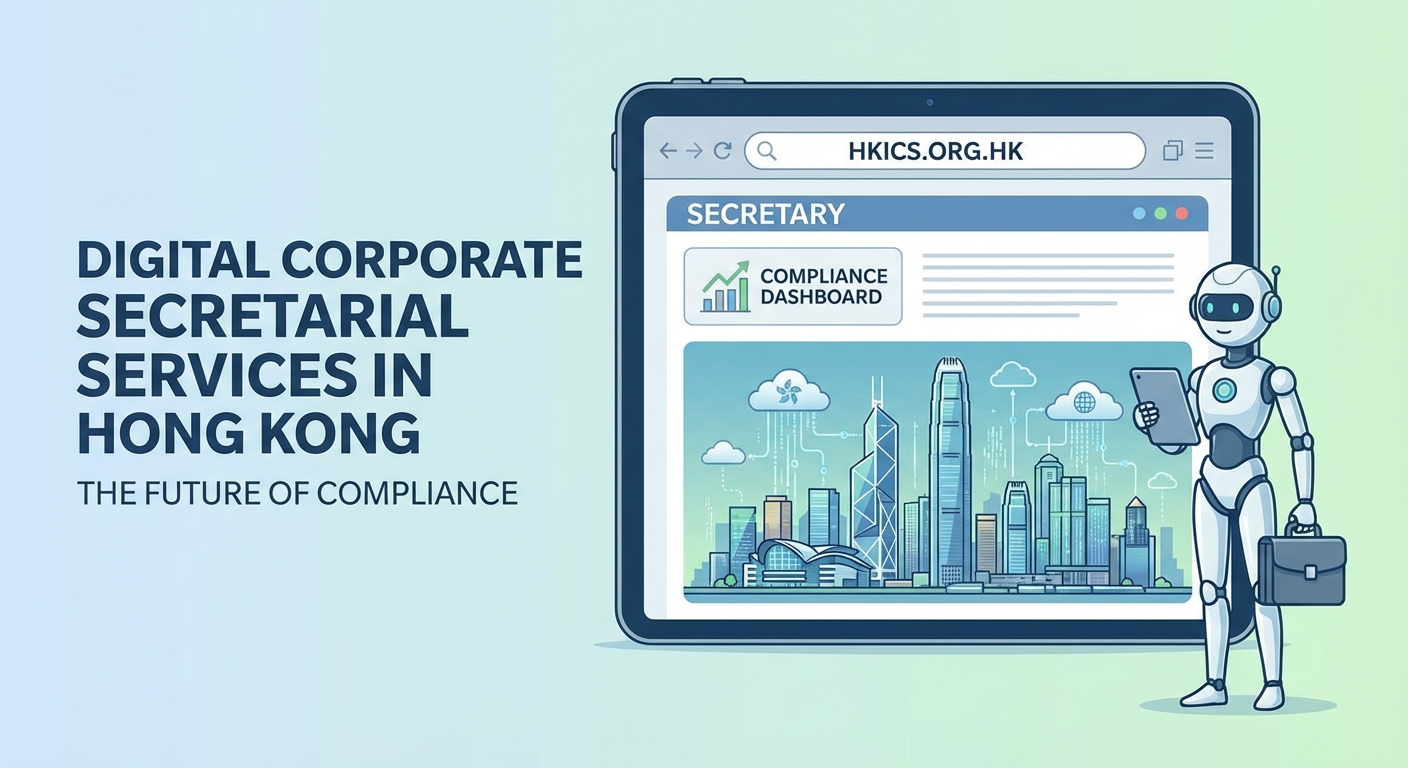
Real-time compliance dashboards: See upcoming deadlines, overdue tasks, and compliance status at a glance. No more wondering whether your annual return got filed.
Automated workflows: The system prompts for required information, generates forms, and tracks approval steps without manual coordination.
Integrated e-signing: Directors approve resolutions digitally from anywhere, eliminating printing, scanning, and courier delays.
Audit trails: Every action gets logged automatically, creating clear records for auditors and regulators.
Mobile access: Check company records or approve documents from your phone during travel.
These features don’t eliminate the need for professional judgment. Complex governance questions still need human expertise. But they make routine compliance faster, cheaper, and more transparent.
Common compliance mistakes to avoid
Even with professional support, directors bear ultimate responsibility for compliance. Understanding common pitfalls helps you stay vigilant.
Missing the Significant Controllers Register deadline: Companies must maintain this register and file returns on time. Penalties apply for late filing.
Incorrect registered office: Your registered office must be a physical address where documents can be served during business hours. A mailbox doesn’t qualify.
Incomplete meeting minutes: Minutes should record decisions clearly enough to prove compliance if questioned later. Vague summaries create legal risk.
Delayed director change notifications: You have 15 days to notify the Registry when directors join or leave. Missing this deadline triggers penalties.
Ignoring beneficial ownership changes: The Significant Controllers Register must stay current as ownership evolves.
Poor document retention: Keep statutory records for at least seven years. Disposing of documents too soon can cause problems during audits or disputes.
Your company secretary should catch these issues, but directors should understand the requirements too.
Questions to ask potential providers
Use these questions to evaluate corporate secretarial service providers:
- What professional qualifications do your staff hold?
- How many companies do you currently serve in our industry?
- What technology platform do you use, and can we see a demo?
- How do you handle urgent requests outside business hours?
- What’s your process for monitoring regulatory changes?
- Can you provide references from similar clients?
- What’s included in your standard fee versus extra charges?
- How do you ensure continuity if our main contact leaves?
- What security measures protect our confidential information?
- Do you carry professional indemnity insurance?
The answers reveal whether a provider matches your needs and expectations.
When to consider changing providers
Sometimes your current corporate secretary isn’t meeting your needs. These signs suggest it might be time to switch:
- Repeated missed deadlines or filing errors
- Poor communication and slow responses
- Lack of proactive compliance advice
- Outdated technology limiting your access to information
- Fee increases without corresponding service improvements
- Staff turnover leaving you with inexperienced handlers
- Inability to scale as your business grows
Changing providers involves transferring corporate records and updating your registered office if needed. Good providers make this transition smooth, handling the administrative details while you maintain business continuity.
Staying compliant while growing internationally
Hong Kong companies expanding regionally face additional compliance layers. Your corporate secretary should coordinate with service providers in other jurisdictions.
Subsidiary management: Each subsidiary needs its own company secretary meeting local requirements. Your Hong Kong provider can coordinate the group compliance calendar.
Cross-border transactions: Acquisitions, restructurings, and investments trigger filings in multiple jurisdictions. Experienced secretaries ensure nothing falls through the cracks.
Reporting consolidation: Group compliance reporting becomes complex with entities in different countries. Digital platforms that aggregate data across jurisdictions save time and reduce errors.
Choose providers with regional networks or partnerships that can support your expansion plans.
Making compliance work for you, not against you
Corporate secretarial services shouldn’t feel like a necessary evil. The right provider becomes a strategic partner who helps you make better governance decisions.
Good company secretaries flag issues before they become crises. They suggest governance improvements that strengthen your business. They free up your time for activities that actually generate revenue.
The shift toward digital platforms makes professional support more accessible and affordable than ever. Even small companies can now access tools and expertise previously available only to large corporations.
Start by clarifying what you need. Map out your current compliance tasks, identify pain points, and decide which functions to outsource. Then find a provider whose expertise, technology, and pricing match your requirements.
Your company secretary handles the paperwork so you can focus on building your business. Choose wisely, and compliance becomes a smooth background process instead of a constant worry.