

Automation isn’t just replacing factory workers anymore. It’s rewriting job descriptions across every industry, from accounting firms to hospitals. The shift is happening faster than most organizations anticipated, and the workforce is scrambling to keep pace.
Automation is fundamentally reshaping how we work by eliminating routine tasks, creating demand for new skills, and forcing organizations to rethink workforce planning. Success depends on balancing technology adoption with human talent development, focusing on roles that require creativity, judgment, and emotional intelligence. Companies that invest in reskilling programs and adaptive strategies will thrive during this transition period.
What automation means for today’s jobs
The conversation around automation often centers on job loss. That’s only part of the story.
Automation changes what jobs look like more than it eliminates them entirely. A tax accountant who once spent 60% of their time on data entry now focuses on strategic planning and client advisory work. Software handles the repetitive calculations. The accountant’s role evolved rather than disappeared.
This pattern repeats across industries. Manufacturing workers operate sophisticated robotics systems instead of performing manual assembly. Customer service representatives handle complex escalations while chatbots manage routine inquiries. Radiologists analyze difficult cases while AI flags potential issues in standard scans.
The jobs that remain require different skills. Technical literacy becomes baseline. Problem solving matters more than memorization. Interpersonal skills gain value as machines handle transactional work.
Jobs most affected by automation right now
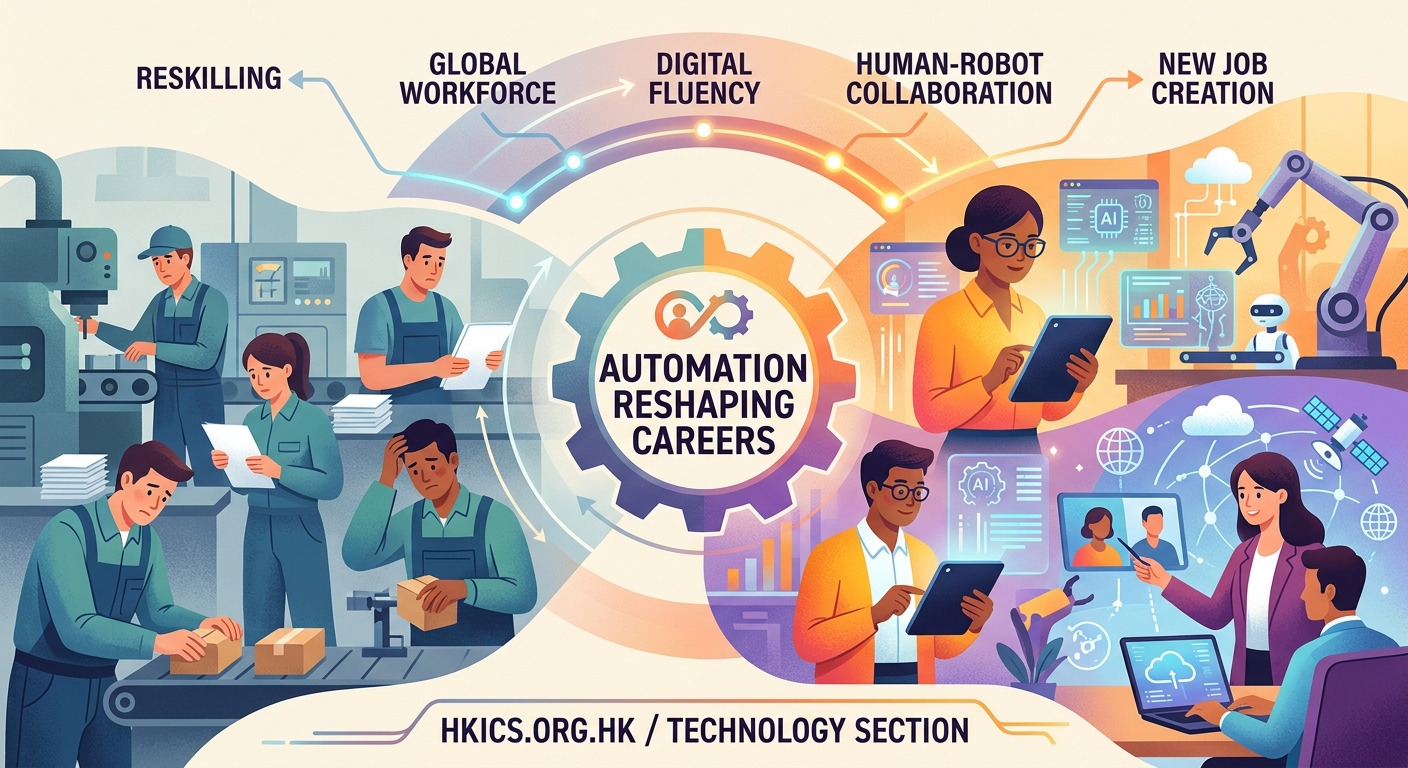
Some roles face more immediate disruption than others. Understanding which positions are most vulnerable helps with workforce planning.
Data entry clerks top the list. Optical character recognition and automated data processing eliminate the need for manual input. Bank tellers face similar pressure as mobile banking and ATMs handle routine transactions. Telemarketing positions shrink as automated calling systems and chatbots take over outbound campaigns.
Manufacturing and warehouse workers see significant changes. Robotic systems handle picking, packing, and assembly with increasing sophistication. Transportation workers face long term uncertainty as autonomous vehicle technology matures.
But automation also creates new positions. Someone needs to program those robots. Maintain the AI systems. Analyze the data they generate. Design better automation tools. Train workers on new technologies.
| Role Category | Automation Risk | New Opportunities |
|---|---|---|
| Data entry and processing | High | Data analysis, system management |
| Customer service (routine) | High | Complex problem resolution, relationship management |
| Manufacturing assembly | Medium to High | Robotics operation, quality control |
| Accounting (transactional) | Medium | Strategic advisory, forensic analysis |
| Transportation | Medium (long term) | Fleet management, route optimization |
How businesses are adapting their workforce strategies
Forward thinking companies aren’t waiting for automation to force their hand. They’re proactively reshaping their workforce.
The most successful organizations follow a three step approach:
- Audit current workflows to identify automation opportunities and assess which tasks machines handle better than humans.
- Invest in reskilling programs that prepare existing employees for evolved roles rather than replacing them entirely.
- Redesign job descriptions around human strengths like creativity, emotional intelligence, and complex decision making.
This approach preserves institutional knowledge while building new capabilities. A financial services firm might train loan processors to become relationship managers. A logistics company could transition warehouse supervisors into automation specialists.
The key is starting early. Waiting until automation arrives creates chaos. Planning ahead allows smooth transitions.
Organizations that treat automation as a workforce development opportunity rather than a cost cutting exercise see better outcomes. Employees become partners in the transformation instead of casualties of it. That difference shows up in productivity, morale, and retention rates.
Skills that matter in an automated workplace
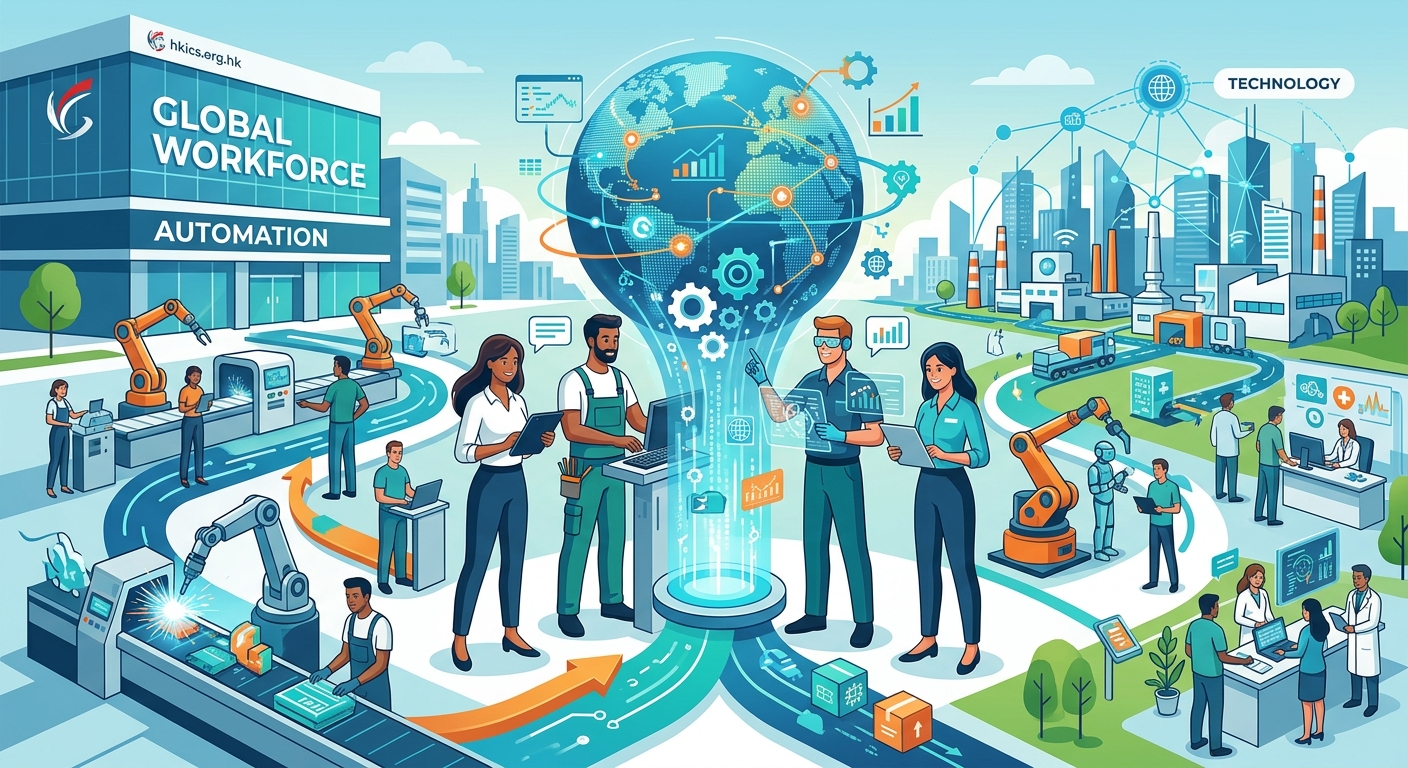
Technical skills get attention, but they’re not the whole picture. The most valuable workers combine technical literacy with distinctly human capabilities.
Critical thinking tops the list. Machines excel at following rules and processing data. They struggle with ambiguity, context, and judgment calls. Workers who can analyze complex situations and make reasoned decisions remain indispensable.
Emotional intelligence grows more valuable as automation handles transactional work. The ability to read people, build relationships, and navigate sensitive situations can’t be automated. Healthcare workers, managers, and client facing professionals rely on these skills daily.
Adaptability becomes essential. Technology changes faster than career spans. Workers who learn continuously and adjust to new tools thrive. Those who resist change struggle.
Creative problem solving separates humans from machines. AI can optimize existing processes brilliantly. It can’t imagine entirely new approaches or challenge fundamental assumptions. That requires human creativity.
Communication skills matter more, not less. As work becomes more technical, the ability to explain complex concepts clearly becomes crucial. Translating between technical teams and business stakeholders creates enormous value.
The reskilling challenge facing HR departments
Human resources teams face unprecedented pressure to reskill existing workforces. The alternative is losing experienced employees and struggling to hire replacements with the right skills.
The numbers are daunting. Industry estimates suggest 50% of all employees will need significant reskilling by 2025. That’s not tweaking existing skills. That’s learning fundamentally new capabilities.
Traditional training programs can’t keep pace. Week long seminars and annual workshops don’t cut it anymore. Organizations need continuous learning cultures where skill development happens constantly.
Some companies partner with educational institutions to create custom programs. Others build internal academies focused on emerging skills. The most innovative use a combination of formal training, mentorship, and hands on projects.
The investment pays off. Reskilling existing employees costs less than hiring new ones. It preserves institutional knowledge. It boosts morale by showing commitment to worker development.
But it requires commitment. Half measures don’t work. Organizations need dedicated budgets, executive support, and patience for results.
Industry specific automation trends
Automation plays out differently across sectors. Understanding industry specific patterns helps with planning.
Manufacturing and logistics
Physical automation dominates. Robotic systems handle assembly, packaging, and material movement. Warehouse automation accelerates with AI powered inventory management and autonomous vehicles. Workers shift toward oversight, maintenance, and exception handling roles.
Financial services
Process automation transforms back office operations. Robotic process automation handles transaction processing, compliance checks, and report generation. Front office workers focus on complex advisory services and relationship management. Fraud detection and risk analysis become heavily automated.
Healthcare
Diagnostic automation assists rather than replaces clinicians. AI analyzes medical images, flags potential issues, and suggests treatment options. Administrative automation reduces paperwork burden. Healthcare workers spend more time on patient interaction and complex decision making.
Professional services
Document review, research, and preliminary analysis face automation. Legal tech handles contract analysis and discovery. Accounting software automates tax preparation and bookkeeping. Professionals focus on strategy, judgment calls, and client relationships.
Retail and hospitality
Self service technology expands from checkout to customer service. Inventory management becomes automated. Workers shift toward experience creation, problem resolution, and personalized service delivery.
Common mistakes organizations make during automation transitions
Even well intentioned companies stumble during workforce automation. Avoiding these pitfalls improves outcomes.
Underestimating the human element ranks as the biggest mistake. Technology implementation gets attention and budget. Change management and employee support get afterthoughts. Workers resist, adoption stalls, and investments underperform.
Moving too fast creates chaos. Automation works best when introduced gradually with proper training and support. Rushing the process overwhelms employees and creates quality issues.
Ignoring middle management causes problems. Supervisors and team leaders need new skills to manage automated workflows. They need support navigating their own role changes. Neglecting this group creates bottlenecks.
Failing to communicate clearly breeds anxiety. Workers imagine worst case scenarios when leadership stays silent. Transparent communication about automation plans, timeline, and support reduces resistance.
Treating automation as purely a technology project misses the point. It’s a workforce transformation that happens to involve technology. HR needs equal standing with IT in planning and execution.
Preparing your workforce for continued automation
The automation wave won’t crest and recede. It will keep building. Organizations need sustainable approaches to continuous adaptation.
Build learning into daily work. Waiting for formal training sessions creates gaps. Encourage experimentation with new tools. Create time for skill development. Make learning part of performance expectations.
Focus on transferable skills that remain valuable across technology shifts. Problem solving, communication, and analytical thinking matter regardless of which specific tools employees use.
Create career pathways that account for automation. Show employees how their roles might evolve. Provide clear routes from at risk positions to emerging opportunities. Make internal mobility easier than external hiring.
Partner with employees on automation decisions. Workers understand their jobs better than anyone. They spot automation opportunities and implementation challenges. Including them in planning improves outcomes and builds buy in.
Measure success beyond productivity metrics. Track employee confidence with new technologies. Monitor skill development progress. Assess morale during transitions. These indicators predict long term success better than short term efficiency gains.
Making automation work for your team
Automation changes everything about how we work. Fighting that reality wastes energy. Embracing it strategically creates opportunities.
The organizations that thrive treat automation as a workforce development challenge, not just a technology upgrade. They invest in their people while adopting new tools. They communicate clearly and involve employees in planning. They balance efficiency gains with human considerations.
Your workforce already possesses valuable skills and knowledge. Automation should amplify those strengths, not replace them. Start planning now. Assess which roles face the most change. Identify skills gaps. Build reskilling programs. Create pathways for internal mobility.
The future belongs to organizations that successfully blend human talent with technological capability. Make sure yours is ready.