

Venture capital does more than write checks. It builds infrastructure, creates networks, and fundamentally changes how entire regions approach innovation. When investors commit capital to startups, they bring expertise, connections, and credibility that can transform a scattered collection of entrepreneurs into a thriving ecosystem.
Venture capital shapes startup ecosystems by providing not just funding, but mentorship, market access, and strategic guidance. VC firms create networks that connect entrepreneurs with talent, advisors, and follow-on investors. Their presence attracts skilled workers, service providers, and additional capital to regions, creating self-reinforcing cycles of innovation. Understanding this relationship helps founders position themselves for growth and cities build stronger entrepreneurial communities.
The mechanics of ecosystem development
Venture capital firms operate as ecosystem architects. They identify promising startups, inject capital, and then actively work to increase the odds of success. This involvement goes far beyond financial transactions.
Most VC firms maintain extensive networks of industry experts, potential customers, and experienced operators. When they invest in a company, they open these networks to founders. A hardware startup might gain introductions to manufacturing partners in Asia. A fintech company could get meetings with banking executives who become early customers.
The value transfer happens through multiple channels. Portfolio companies often share office space, creating opportunities for collaboration. Founders meet at investor-hosted events, exchanging lessons about hiring, product development, and market entry. These interactions accelerate learning curves dramatically.
Consider what happens when a major VC firm opens an office in a new city. Local entrepreneurs suddenly have access to capital that previously required relocation. Service providers like lawyers, accountants, and recruiters establish practices focused on startups. Universities adjust curricula to prepare students for entrepreneurial careers. The entire business environment shifts.
Capital concentration and regional growth
Geography matters in venture capital. Certain cities attract disproportionate investment, creating powerful network effects. Silicon Valley remains the dominant example, but similar patterns emerge in Beijing, London, Singapore, and Tel Aviv.
These concentrations occur for specific reasons:
- Successful exits create experienced founders who start new companies
- Early employees from successful startups possess valuable skills and connections
- Local investors develop expertise in specific industries or technologies
- Universities produce research and talent pipelines
- Support infrastructure emerges to serve growing startup populations
The cycle reinforces itself. As more startups succeed, more capital flows in. More capital means more experiments, increasing the probability of breakthrough companies. Those successes attract talented people from other regions, further strengthening the ecosystem.
Emerging ecosystems face a chicken-and-egg problem. Without successful companies, they struggle to attract capital. Without capital, companies find it harder to succeed. Breaking this cycle requires coordinated effort from governments, universities, and early-stage investors willing to take higher risks.
How funding stages shape company development
Venture capital operates in distinct stages, each serving different purposes in ecosystem development. Understanding these stages reveals how capital shapes company trajectories.
| Stage | Typical Investment | Primary Purpose | Ecosystem Impact |
|---|---|---|---|
| Pre-seed | $50K to $500K | Validate ideas, build prototypes | Encourages experimentation, lowers barriers to entry |
| Seed | $500K to $3M | Prove product-market fit | Supports full-time founding teams, early hires |
| Series A | $3M to $15M | Scale customer acquisition | Enables professional management, market expansion |
| Series B+ | $15M to $100M+ | Accelerate growth, expand markets | Creates employment, attracts talent, generates exits |
Each stage requires different investor expertise. Pre-seed and seed investors often provide hands-on guidance on product development and initial customer acquisition. Later-stage investors focus on operational scaling, international expansion, and preparing for exits.
This specialization creates ecosystem depth. A healthy startup community needs investors at every stage. Without early-stage capital, too few companies reach later stages. Without growth capital, promising companies relocate or sell prematurely.
The talent magnet effect
Venture-backed companies transform regional labor markets. They compete aggressively for talent, often offering compensation packages that exceed what established companies pay. This creates upward pressure on wages and benefits across entire sectors.
The talent flow works in multiple directions. Experienced professionals leave large corporations to join startups, bringing operational knowledge and industry connections. Recent graduates choose startups over traditional career paths, accepting higher risk for potential equity upside. International workers relocate to cities with active venture ecosystems.
This movement builds human capital that persists even when individual companies fail. Engineers who worked at failed startups carry technical skills to their next roles. Salespeople develop customer relationships that transfer across companies. Managers learn lessons about scaling that they apply to future ventures.
“The best thing about venture capital is not the money. It’s the people you meet, the problems you solve together, and the skills you build. Those assets compound over entire careers, creating value far beyond any single company.” — Experienced startup founder
Knowledge transfer and ecosystem learning
Venture capitalists accumulate pattern recognition across hundreds of companies. They see what works and what fails across different markets, business models, and founding teams. This knowledge becomes a public good when shared throughout ecosystems.
Many VC firms publish research, host events, and provide educational content. They share insights about market trends, hiring practices, and strategic decisions. This information helps founders avoid common mistakes and adopt proven approaches.
The learning happens formally and informally. Formal channels include:
- Educational programs where investors teach entrepreneurship courses
- Published case studies analyzing successful and failed companies
- Industry reports examining market opportunities and competitive dynamics
- Mentorship programs connecting experienced operators with new founders
Informal learning occurs through casual conversations, social events, and community gatherings. A founder struggling with pricing strategy might get advice from another entrepreneur who solved a similar problem. An executive considering a pivot might discuss options with investors who have seen multiple pivots succeed or fail.
Challenges and ecosystem distortions
Venture capital creates powerful incentives that sometimes distort startup ecosystems. The pressure to achieve rapid growth can push companies toward unsustainable business models. The focus on massive returns can discourage perfectly viable businesses that won’t generate venture-scale outcomes.
Some regions develop unhealthy dependencies on venture capital. Entrepreneurs build companies designed to raise funding rather than serve customers. Service providers optimize for venture-backed clients, neglecting other business segments. Universities emphasize startup creation over other forms of innovation.
These distortions appear in several forms. Companies raise more capital than they need, leading to wasteful spending. Founders chase trendy sectors rather than solving problems they understand deeply. Investors compete to deploy capital, inflating valuations beyond reasonable levels.
The boom-bust cycles can be particularly damaging. During boom periods, too much capital chases too few good opportunities. Mediocre companies raise funding easily. Talent becomes expensive and scarce. When markets correct, funding disappears suddenly. Promising companies fail due to lack of capital rather than fundamental problems.
Building sustainable startup communities
The most resilient ecosystems balance venture capital with other funding sources and support mechanisms. Governments provide grants for early-stage research. Angel investors fill gaps between personal savings and institutional capital. Revenue-based financing offers alternatives to equity dilution.
Successful ecosystems also cultivate non-financial infrastructure. Accelerators provide structure and mentorship for first-time founders. Co-working spaces create opportunities for serendipitous connections. Industry associations advocate for policies that support entrepreneurship.
Universities play crucial roles by conducting research, educating talent, and licensing technologies. Corporate innovation programs provide partnership opportunities and potential exit paths. Professional service firms develop expertise in startup-specific needs.
The combination creates multiple pathways to success. Not every company needs venture capital. Not every entrepreneur wants to build a unicorn. Healthy ecosystems support different ambitions and business models.
Measuring ecosystem health
Tracking ecosystem development requires looking beyond simple funding totals. The number of first-time founders indicates how accessible entrepreneurship has become. The diversity of funded companies reveals whether capital reaches different communities. The rate of follow-on funding shows whether early-stage companies can scale.
Employment growth at startups matters more than total company count. Ten companies hiring 50 people each create more economic impact than 100 companies with solo founders. Exit activity, whether through acquisitions or public offerings, generates returns that fuel the next generation of investment.
The presence of experienced operators willing to join startups signals ecosystem maturity. When senior executives leave comfortable corporate roles for startup opportunities, it indicates confidence in the ecosystem’s trajectory. When successful founders reinvest locally rather than relocating, it shows commitment to community building.
The global venture capital landscape
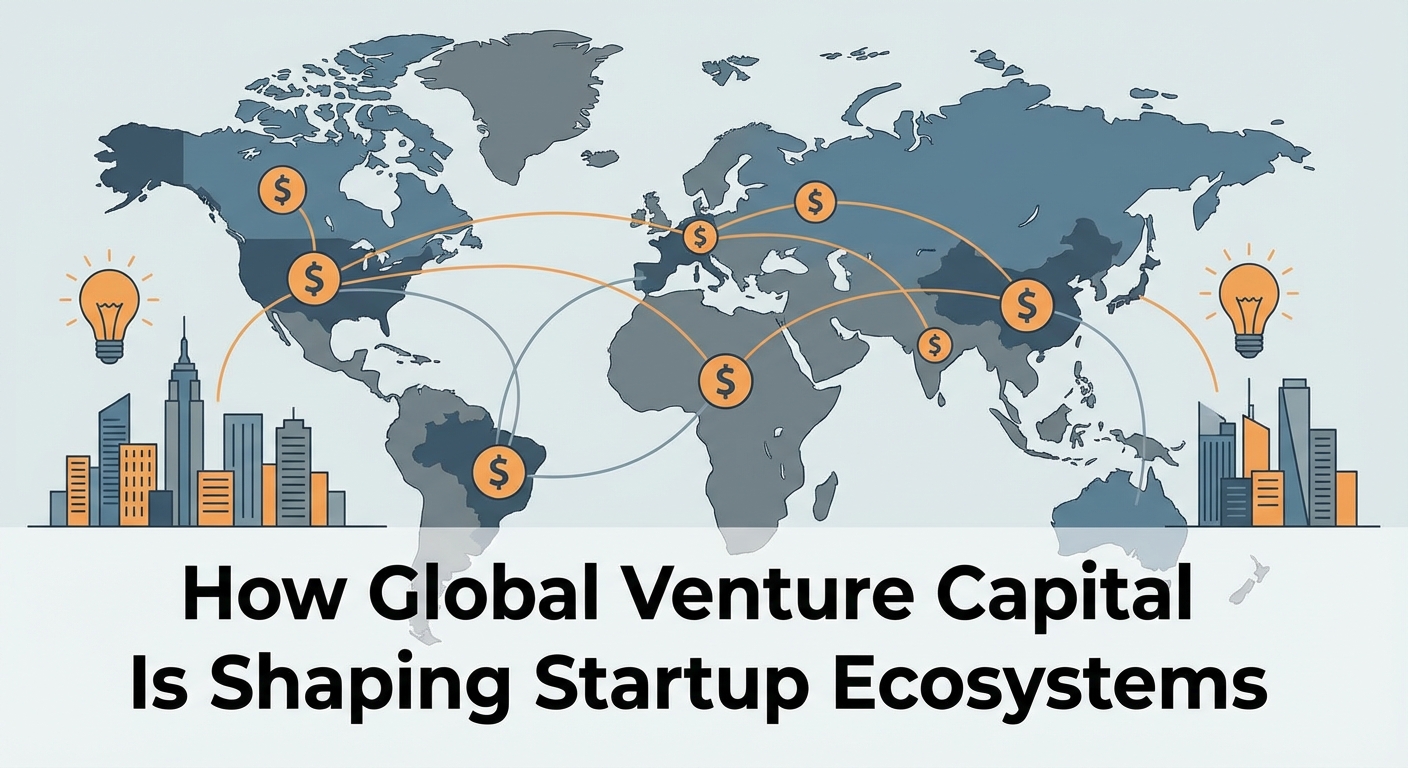
Capital flows increasingly cross borders. Investors in one country fund companies in another. Startups incorporate in favorable jurisdictions while operating globally. This internationalization spreads best practices but also creates new challenges.
Different regions develop distinct characteristics. Silicon Valley emphasizes software and consumer internet. Boston focuses on biotech and healthcare. Singapore attracts fintech and logistics companies. These specializations reflect local strengths in research, talent, and industry expertise.
Emerging markets face unique obstacles. Less developed financial systems make exits harder. Smaller domestic markets limit growth potential. Brain drain pulls talent toward established ecosystems. Yet these regions also offer advantages like lower costs, underserved customer needs, and government support.
Policy and regulatory considerations
Government policies profoundly influence ecosystem development. Tax treatment of capital gains affects investor returns. Immigration rules determine access to global talent. Securities regulations shape fundraising processes. Bankruptcy laws influence risk-taking behavior.
Some governments actively cultivate venture ecosystems through direct investment, tax incentives, and regulatory reforms. Others inadvertently hamper development through restrictive policies or bureaucratic barriers. The most successful approaches balance support with market discipline.
Regulatory frameworks must evolve as ecosystems mature. Early-stage ecosystems might need relaxed rules to encourage experimentation. Mature ecosystems require consumer protection and market integrity safeguards. Finding the right balance challenges policymakers worldwide.
Why this matters for your business
Understanding how venture capital shapes ecosystems helps you make better strategic decisions. If you’re founding a company, you can assess whether your location provides necessary support or whether relocation makes sense. If you’re investing, you can identify emerging ecosystems before they become crowded and expensive.
For professionals considering startup careers, ecosystem strength indicates opportunity availability. Strong ecosystems offer more jobs, better compensation, and greater learning opportunities. For service providers, ecosystem development signals where to build practices and develop expertise.
The relationship between venture capital and startup ecosystems will continue evolving. New funding models emerge. Technology enables remote work and distributed teams. Global competition for talent and capital intensifies. Staying informed about these dynamics positions you to capitalize on opportunities and avoid pitfalls as the landscape shifts.