

Starting a business in Hong Kong sounds exciting until you realize you need to figure out how long the paperwork actually takes. The good news? Hong Kong’s incorporation process is one of the fastest in Asia. The reality? Your timeline depends on several moving parts that can either speed things up or slow them down considerably.
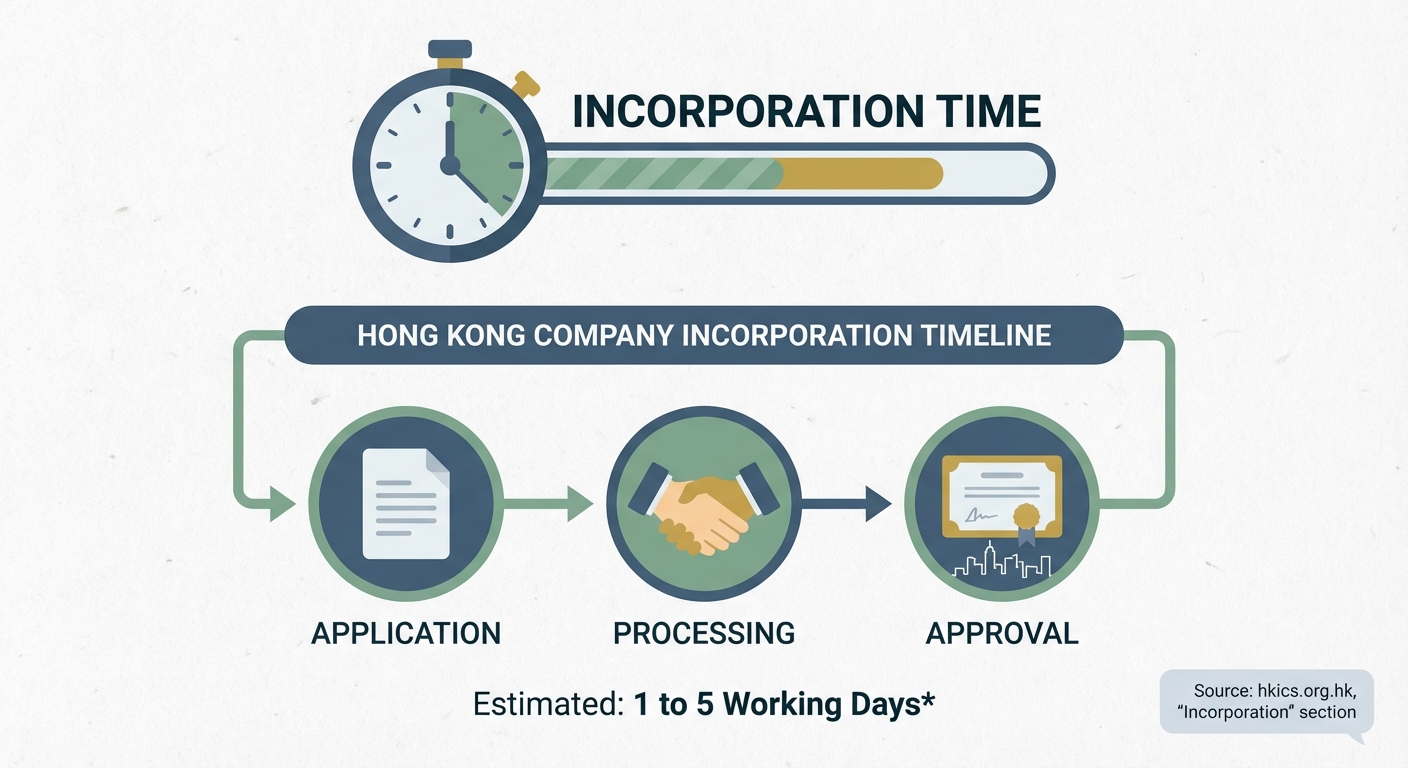
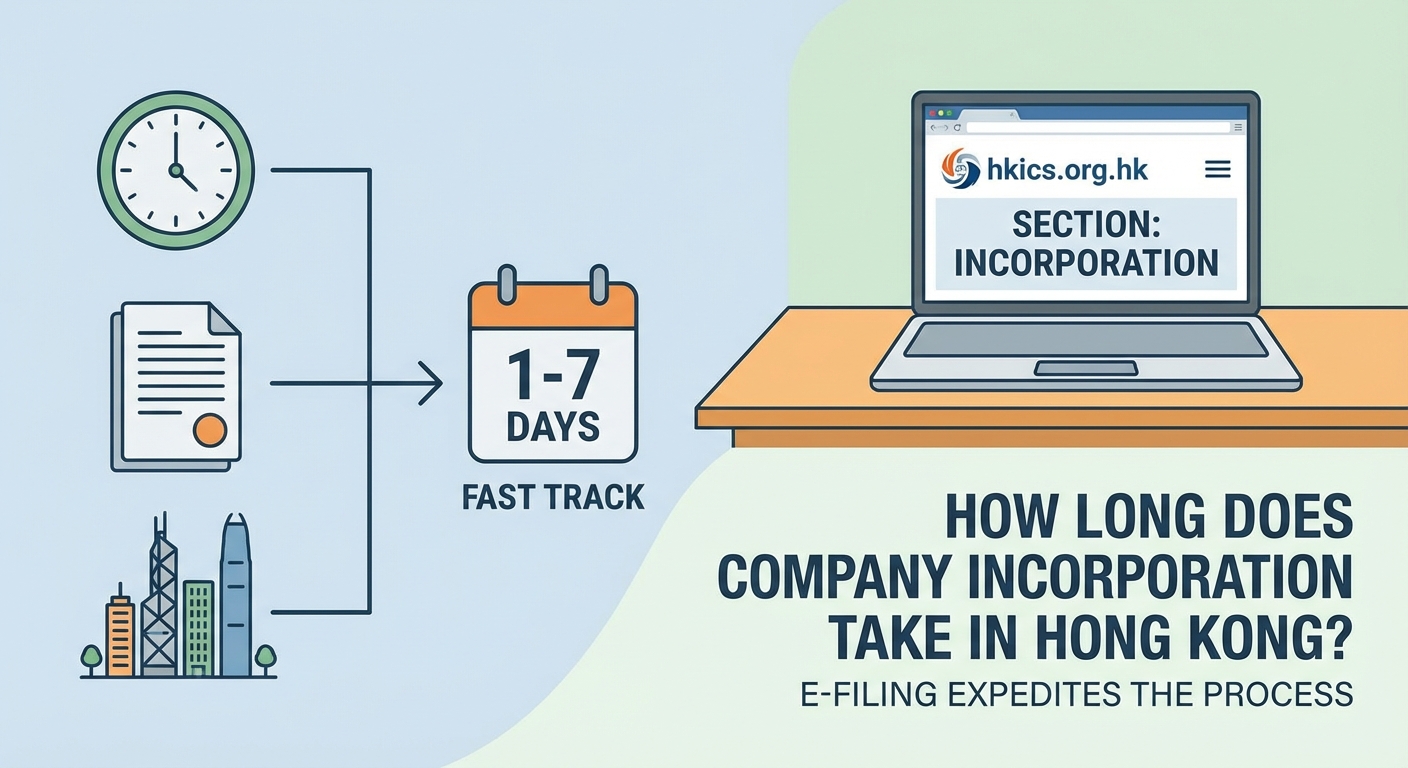
Company registration in Hong Kong typically takes 1 to 4 working days when all documents are prepared correctly. Electronic submissions process faster than paper applications. The actual timeline depends on your company structure, name availability, documentation completeness, and whether you use a professional service provider. Plan for potential delays during peak filing periods or if your application requires additional review from the Companies Registry.
Standard Timeline for Hong Kong Company Registration
The Companies Registry processes most incorporation applications within one to four working days. That’s the official window, and it applies to standard private companies limited by shares.
Electronic submissions move faster. If you file through the e-Registry system, expect approval within one hour during business hours, assuming everything checks out. Paper applications take longer, usually one to four working days.
But here’s what matters more than the official timeframe: preparation time. Gathering documents, deciding on your company structure, and choosing a name can add days or weeks before you even submit anything.
Most business owners spend three to five days preparing their application materials. Add another day or two if you’re coordinating with shareholders or directors in different time zones.
Factors That Speed Up or Slow Down Registration
Your company name choice makes a huge difference. Simple, straightforward names get approved faster. Names that sound similar to existing companies or include restricted words trigger additional scrutiny.
The Companies Registry maintains a list of sensitive words that require approval from specific government departments. Words like “bank,” “insurance,” “trust,” or “chamber of commerce” need extra clearance. This can add one to three weeks to your timeline.
Business structure affects processing speed too. A standard private company with straightforward shareholding arrangements processes faster than complex structures with multiple share classes or unusual governance provisions.
Document quality matters enormously. Applications with clear, complete, and properly formatted documents sail through. Missing signatures, inconsistent information, or unclear company objectives create delays.
Peak filing periods slow everything down. The weeks before and after major holidays see higher application volumes. December and January are particularly busy as businesses rush to establish entities before the new year or after finalizing annual plans.
Step by Step Registration Process
Here’s how the actual registration unfolds:
-
Reserve your company name through the Companies Registry online system or submit a name check application. This takes a few minutes to one working day depending on the method.
-
Prepare incorporation documents including the Articles of Association, completed Form NNC1 (for incorporation), and information about directors, shareholders, and company secretary.
-
Submit your application electronically through the e-Registry portal or deliver paper forms to the Companies Registry in person or by post.
-
Pay the registration fee of HKD 1,720 for electronic filing or HKD 1,720 plus HKD 295 for paper filing (business registration certificate fee applies separately).
-
Receive your Certificate of Incorporation once the Registry approves your application. Electronic applications get certificates immediately upon approval. Paper applications receive certificates by post or collection.
-
Obtain your Business Registration Certificate, which the Inland Revenue Department issues simultaneously with incorporation.
Professional service providers can compress this timeline by handling documentation and submission on your behalf. They know exactly what the Registry expects and can spot potential issues before submission.
Common Delays and How to Avoid Them
Name rejection ranks as the top delay cause. The Registry rejects names that are identical or too similar to existing companies, contain offensive language, or suggest government affiliation without authorization.
Check name availability before getting attached to any particular name. The Companies Registry offers a free online search tool. Use it.
Incomplete documentation creates unnecessary back and forth. Every director and shareholder needs proper identification. Foreign documents may require notarization or certification. Missing any of these triggers requests for additional information.
Here are the most common documentation mistakes:
| Mistake | Impact | Prevention |
|---|---|---|
| Unsigned forms | 2 to 3 day delay | Double check all signature fields before submission |
| Mismatched passport details | 1 to 2 day delay | Verify spelling and numbers match official documents exactly |
| Missing registered office address | Application rejection | Confirm you have a valid Hong Kong address before filing |
| Incomplete Articles of Association | 3 to 5 day delay | Use standard templates or have a lawyer review custom articles |
| Wrong fee payment | Processing hold | Calculate fees carefully and use approved payment methods |
Restricted business activities need special licenses before or immediately after incorporation. Financial services, employment agencies, travel agencies, and food businesses all have additional requirements. Research these before you start the incorporation process.
Electronic vs Paper Filing Speed Comparison
Electronic filing wins every time for speed. The e-Registry system processes applications in real time during business hours. You can literally watch your application move through the system.
Paper applications enter a queue. Someone needs to manually review each document, enter information into the system, and process payment. This inherently takes longer.
The fee structure slightly favors electronic filing too. While the incorporation fee remains the same, electronic submissions save you the business registration levy for the first year in certain cases.
Electronic filing also reduces errors. The system validates information as you enter it, catching obvious mistakes before submission. Paper forms offer no such safety net.
That said, paper filing still makes sense in specific situations. Complex corporate structures with unusual provisions sometimes benefit from paper submission with detailed explanatory notes. Very small businesses without reliable internet access might find paper more practical.
Most professional service providers use electronic filing exclusively. It’s faster, creates an immediate audit trail, and provides instant confirmation.
What Happens After Registration
Getting your Certificate of Incorporation and Business Registration Certificate doesn’t mean you’re done. Several post-incorporation tasks need immediate attention.
You need a corporate bank account. Banks in Hong Kong typically take one to three weeks to open business accounts. Some require in-person meetings. Others accept video verification. All demand extensive documentation about your business activities and beneficial owners.
Setting up your corporate records matters from day one. You must maintain a register of members, register of directors, and register of company secretaries at your registered office. These need to be available for inspection.
Tax registration happens automatically when you incorporate. The Inland Revenue Department will send you a Profits Tax Return within 18 months of your incorporation date. You need to file it within one month of receipt, even if you haven’t started business activities yet.
Consider these essential post-incorporation tasks:
- Open a corporate bank account within the first month
- Arrange company secretarial services if you haven’t already
- Set up accounting systems and procedures
- Register for MPF (Mandatory Provident Fund) if you’ll hire employees
- Apply for any business-specific licenses or permits
- Order company seals and business cards
- Establish your registered office and ensure someone can receive official correspondence
Professional Service Providers vs DIY Registration
You can absolutely register a company yourself in Hong Kong. The process is straightforward for simple structures, and the Companies Registry provides detailed guidance.
DIY registration costs less upfront. You pay only the government fees, which total around HKD 2,000 to HKD 2,500 depending on filing method. No service fees, no markup.
But DIY takes more time. You need to research requirements, prepare documents, and troubleshoot any issues yourself. For first-time incorporators, this learning curve can add a week or more to the process.
Professional service providers charge HKD 3,000 to HKD 8,000 for basic incorporation services. Premium packages with additional services like registered office, company secretary, and bank account assistance cost more.
What you get for that fee:
- Expert document preparation
- Name availability checking and recommendation
- Same-day or next-day submission
- Registered office address (required by law)
- Company secretary services (also legally required)
- Ongoing compliance reminders
- Professional advice on structure and setup
“The biggest mistake I see is business owners rushing incorporation without understanding their ongoing compliance obligations. Registration is fast, but maintaining good standing requires continuous attention to filing deadlines, record keeping, and regulatory changes. A good service provider helps you stay compliant from day one.” — Corporate secretary with 15 years of Hong Kong company formation experience
For foreign investors or complex corporate structures, professional help usually makes sense. Service providers understand nuances that aren’t obvious from reading government guidance.
Local entrepreneurs with simple business models might prefer DIY to save money and learn the system firsthand.
Special Situations That Affect Timeline
Branch office registration follows different rules than company incorporation. Branches of foreign companies register under Part 16 of the Companies Ordinance and typically take one to three working days for processing.
Non-Hong Kong companies establishing a presence here need additional documentation, including certified copies of their home jurisdiction incorporation documents, often with official translations if not in English or Chinese.
Shelf companies offer instant incorporation. These are pre-registered companies that service providers keep ready for immediate transfer. You can have a functioning company within hours, though you’ll likely want to change the name and update directors, which adds time back into the process.
Specialized entity types take longer. Guarantee companies, unlimited companies, and companies with special share structures may need additional review time. Budget an extra few days for anything outside the standard private company limited by shares structure.
Planning Your Business Launch Timeline
Work backward from your target launch date. If you need a functioning company with bank account and all systems ready by a specific date, here’s a realistic timeline:
- Week 1: Finalize business structure, choose company name, gather shareholder and director information
- Week 2: Prepare and submit incorporation documents, receive certificates
- Week 3-5: Open corporate bank account, set up accounting systems, arrange office space
- Week 6: Complete any remaining licensing or permit applications, finalize vendor relationships
This six-week timeline assumes no major complications and standard processing times. Add buffer time for holidays, peak filing periods, or complex requirements.
Some businesses need to move faster. If you’re responding to a time-sensitive opportunity, professional service providers can compress the timeline significantly. Electronic filing plus expedited bank account opening can get you operational in two weeks.
Others have more flexibility. If you’re planning a launch several months out, you can take time to optimize your structure, carefully research name options, and handle everything yourself to minimize costs.
Getting Started With Confidence
Registration speed matters, but getting it right matters more. A company registered in one day with structural problems or compliance gaps will cost you far more time and money down the road than spending an extra week on proper setup.
Focus on preparation quality over speed. Gather complete documentation. Verify every detail. Understand your ongoing obligations. Choose service providers based on expertise and support, not just price.
The actual registration takes days. Building a successful business takes years. Invest the time upfront to establish a solid foundation, and your Hong Kong company will serve you well for the long term.