

Every company registered in Hong Kong must appoint a company secretary within six months of incorporation. This isn’t just a formality. The role carries real legal weight, backed by statutory obligations that can result in fines or prosecution if ignored. Whether you’re a business owner hiring your first secretary or a professional stepping into the role, understanding these duties protects both you and your company.
Company secretaries in Hong Kong bear statutory responsibilities under the Companies Ordinance, including maintaining registers, filing returns, organizing meetings, and ensuring compliance. Failure to fulfill these duties can result in personal liability, fines up to HKD 50,000, and potential imprisonment. Understanding these obligations is essential for anyone serving in or appointing to this critical corporate role.
What makes the company secretary role legally significant
The Companies Ordinance treats the company secretary as an officer of the company. This means the person holding this position shares legal responsibility alongside directors for certain compliance matters.
Unlike administrative assistants or general managers, company secretaries have specific duties written into Hong Kong law. They act as the compliance backbone of the organization.
The role sits at the intersection of corporate governance and regulatory adherence. Secretaries don’t just keep records. They ensure the company meets its legal obligations to the Companies Registry, shareholders, and other stakeholders.
Mandatory qualifications and appointment requirements
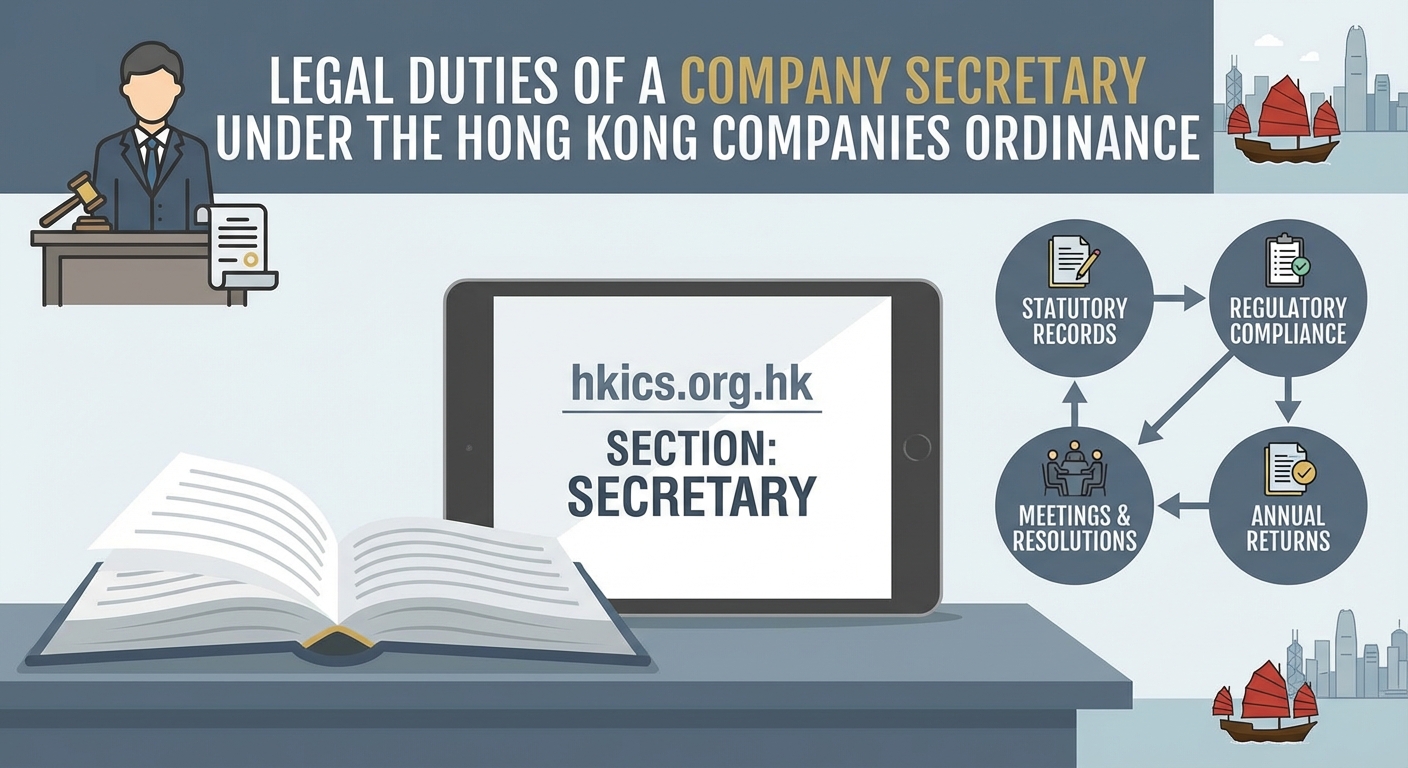
Not everyone can serve as a company secretary in Hong Kong. The law sets clear qualification standards.
An individual must be a Hong Kong resident, meaning they ordinarily reside in Hong Kong. Companies can also appoint a corporate body, but that entity must have its registered office or place of business in Hong Kong.
Professional qualifications matter too. The person should possess the necessary knowledge and experience to discharge secretarial functions. Common qualifications include:
- Membership in recognized professional bodies like HKICS or ICSA
- Legal or accounting qualifications
- Relevant corporate governance experience
The appointment must happen within six months of incorporation. If the position becomes vacant, the company has one month to fill it.
Directors cannot serve as the sole company secretary if the company has only one director. This prevents conflicts of interest and ensures proper checks and balances.
Core statutory duties under the Companies Ordinance
Company secretary duties in Hong Kong fall into several categories, each with specific legal requirements.
Maintaining statutory registers and records
Every company must keep accurate registers at its registered office. The secretary typically manages:
- Register of members showing current shareholders and their shareholdings
- Register of directors and company secretaries with personal particulars
- Register of charges documenting secured debts and mortgages
- Minutes of board meetings and general meetings
These registers must be available for inspection. Members can view them at any time. The public can access certain registers during business hours.
Failing to maintain proper registers carries penalties. Both the company and its officers can face fines up to HKD 50,000 and daily default fines.
Filing annual returns and notifications
The Companies Registry requires regular updates about company status. The secretary coordinates these filings:
- Annual returns within 42 days after the return date
- Changes in directors or secretaries within 15 days
- Changes in registered office address within 15 days
- Alterations to share capital or company constitution
Late filings trigger automatic penalties. The company pays a registration fee plus escalating late fees. Officers may face prosecution for persistent non-compliance.
Organizing and documenting meetings
Company secretaries orchestrate the meeting machinery that drives corporate decision making.
For annual general meetings, the secretary must:
- Send notice to all members at least 14 days before the meeting
- Prepare the agenda and supporting documents
- Arrange the venue and logistics
- Record attendance and voting results
- Draft minutes within a reasonable time after the meeting
Board meetings require similar coordination. The secretary ensures directors receive proper notice and meeting materials.
Minutes serve as the official record of decisions. Courts rely on them in disputes. Poor documentation can undermine the validity of corporate actions.
Ensuring compliance with the Companies Ordinance
The secretary acts as the company’s compliance conscience. This means monitoring deadlines, flagging potential violations, and advising directors on their obligations.
Specific compliance tasks include:
- Verifying that board meetings have proper quorum
- Checking that resolutions follow legal requirements
- Ensuring financial statements meet disclosure standards
- Confirming that share transactions comply with the constitution
A competent company secretary doesn’t just react to compliance issues. They build systems that prevent violations before they occur, protecting both the company and its directors from legal exposure.
Personal liability and consequences of non-compliance
The law holds company secretaries personally accountable for failures in their statutory duties.
If the secretary fails to file an annual return on time, they commit an offense. Conviction can result in a fine and imprisonment for up to 12 months.
The same applies to maintaining inaccurate registers or failing to notify changes. Each breach creates separate liability.
Directors often assume they bear sole responsibility for corporate compliance. This misunderstanding leaves secretaries exposed. Both parties need clarity about who handles specific obligations.
Professional indemnity insurance provides some protection, but it doesn’t eliminate the risk of prosecution or reputational damage.
Common mistakes and how to avoid them
Many compliance failures stem from preventable errors. Understanding these pitfalls helps secretaries stay on track.
| Mistake | Consequence | Prevention Strategy |
|---|---|---|
| Missing filing deadlines | Late fees and prosecution risk | Maintain a compliance calendar with advance reminders |
| Incomplete meeting minutes | Invalid resolutions and legal disputes | Use standardized templates and review within 48 hours |
| Outdated registers | Regulatory penalties and shareholder confusion | Update registers immediately after any change |
| Poor record organization | Inability to respond to audits or legal requests | Implement a document management system with version control |
| Ignoring constitutional requirements | Ultra vires acts and director liability | Cross-reference all major decisions against the constitution |
Small companies often treat secretarial duties casually. They assume minimal activity means minimal risk. But the law applies equally regardless of company size or transaction volume.
Practical steps for fulfilling your duties effectively
Success as a company secretary requires both legal knowledge and operational discipline.
- Create a master compliance calendar tracking all statutory deadlines
- Establish templates for common documents like meeting notices and minutes
- Set up a secure system for storing statutory registers and records
- Build relationships with the company’s auditors, lawyers, and bankers
- Schedule regular reviews with directors to discuss upcoming obligations
- Stay current on regulatory changes through professional development
Technology helps manage the workload. Many secretaries use specialized software to track deadlines, generate documents, and maintain registers.
But technology can’t replace professional judgment. The secretary must understand the substance of compliance, not just the mechanics.
Working with directors and shareholders
The company secretary serves multiple stakeholders, each with different needs and expectations.
Directors rely on the secretary for advice about governance matters. They need clear guidance about their duties, potential conflicts, and proper procedures for decision making.
Shareholders expect transparency and access to information. The secretary facilitates this by maintaining accurate registers and responding to inspection requests.
Balancing these relationships requires diplomacy. The secretary must remain independent while supporting the board’s work.
When directors propose actions that might breach the Companies Ordinance, the secretary must speak up. This can create tension, but it protects everyone involved.
Resources for staying compliant
Professional support strengthens your ability to meet statutory obligations.
The Companies Registry publishes guidance notes explaining filing requirements and procedures. These documents clarify technical aspects of compliance.
Professional bodies offer training programs covering company secretarial practice. Regular participation keeps your knowledge current.
Legal counsel becomes essential for complex situations like restructurings, disputes, or investigations. Knowing when to seek advice prevents costly mistakes.
Networking with other secretaries provides practical insights. Peer groups share solutions to common challenges and warn about emerging issues.
Your role in corporate governance
Company secretary duties in Hong Kong extend beyond checking boxes on compliance forms. The position shapes how companies make decisions, communicate with stakeholders, and maintain their legal standing.
Strong secretarial practice creates value. It prevents regulatory problems that distract management and drain resources. It builds confidence among investors and business partners. It establishes the foundation for sustainable growth.
Whether you’re serving as a company secretary or appointing one, treat the role with the seriousness it deserves. Invest in proper training, adequate resources, and ongoing professional development. The legal obligations are real, but so are the opportunities to contribute to your company’s success.