

The business landscape is shifting faster than ever. Technologies that seemed futuristic five years ago are now mainstream, and entirely new industries are emerging from unexpected corners. For entrepreneurs and investors looking ahead, understanding which sectors will dominate in 2026 isn’t just helpful, it’s essential for making smart decisions with limited resources.
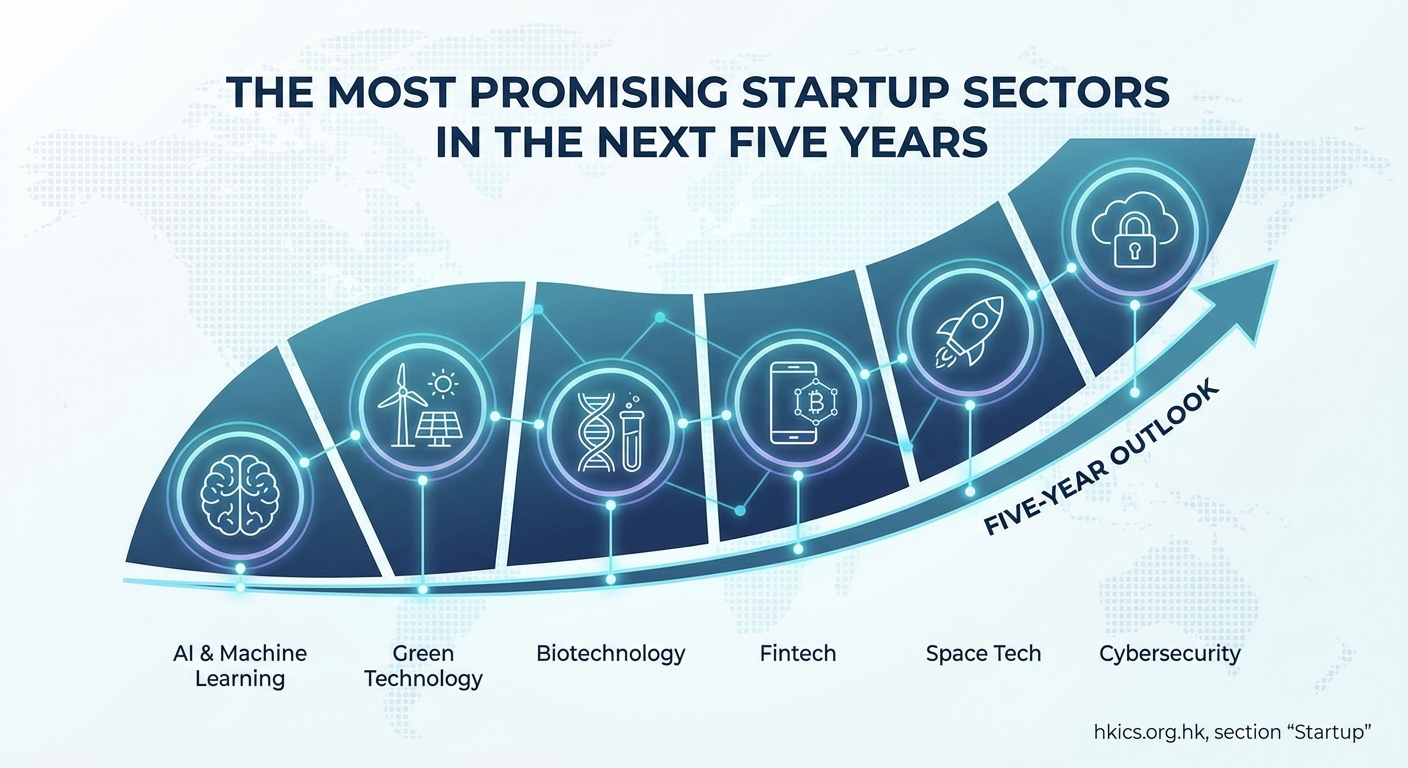
The most promising startup sectors 2026 include climate technology, AI-powered healthcare, decentralized finance platforms, sustainable food systems, and edge computing infrastructure. These industries combine strong market demand, regulatory support, technological maturity, and significant funding availability. Success requires understanding regulatory frameworks, building strategic partnerships, and focusing on practical solutions rather than theoretical innovations.
Climate Technology Gets Real Investment
Climate tech has moved beyond buzzwords and into serious commercial territory. Investors poured over $50 billion into climate startups in 2023, and that number keeps growing.
The difference now? Companies are building profitable businesses, not just mission statements. Carbon capture technology has reached commercial viability in several markets. Energy storage solutions are competing directly with traditional grid infrastructure. Sustainable materials are replacing plastics in manufacturing at scale.
Smart entrepreneurs are finding niches within climate tech that solve immediate problems. A startup creating biodegradable packaging for e-commerce isn’t waiting for government mandates. They’re addressing a pain point that retailers face today: customer demand for sustainable options.
The regulatory environment supports this growth. Carbon pricing mechanisms are expanding globally. Tax incentives for clean technology are increasing. Companies that position themselves ahead of these regulations gain competitive advantages that last years.
“The climate tech companies succeeding in 2026 aren’t the ones with the most ambitious goals. They’re the ones solving specific, measurable problems that customers will pay for today.” — Venture capital analyst at a leading Asian investment firm
Three subsectors stand out for their near-term potential:
- Industrial decarbonization tools that help manufacturers reduce emissions without overhauling entire facilities
- Climate risk assessment platforms that use satellite data and AI to help businesses and insurers understand exposure
- Circular economy marketplaces that connect waste producers with companies that can repurpose materials
Healthcare Meets Artificial Intelligence
AI in healthcare isn’t new, but the applications reaching market maturity in 2026 represent a fundamental shift in how medical care works.
Diagnostic tools powered by machine learning now match or exceed human accuracy for specific conditions. Radiology AI can spot early-stage cancers that human eyes miss. Pathology platforms analyze tissue samples faster and more consistently than traditional methods.
The real opportunity lies in integration, not just innovation. Hospitals and clinics need systems that work with existing infrastructure. A brilliant AI diagnostic tool that requires completely new equipment and training won’t gain traction. One that plugs into current imaging systems and enhances radiologist capabilities will.
Drug discovery has accelerated dramatically. AI platforms can screen millions of molecular combinations in the time it used to take to test hundreds. Several AI-discovered drugs are entering clinical trials, validating the approach and attracting massive investment.
Personalized medicine platforms represent another major opportunity. These systems analyze genetic data, lifestyle factors, and medical history to recommend tailored treatment plans. Insurance companies are starting to cover these services, creating a sustainable business model.
| Healthcare AI Application | Market Readiness | Regulatory Status | Investment Level |
|---|---|---|---|
| Diagnostic imaging | High | Approved in major markets | Very high |
| Drug discovery | Medium | Varies by region | High |
| Personalized treatment | Medium | Emerging frameworks | Growing |
| Administrative automation | High | Minimal barriers | Moderate |
| Remote monitoring | High | Established pathways | High |
Decentralized Finance Matures Beyond Hype
The crypto winter cleared out projects with no real utility. What remains are decentralized finance platforms solving actual financial access problems.
Traditional banking excludes billions of people globally. DeFi platforms provide services like lending, savings, and insurance without requiring traditional bank accounts. The technology has proven itself. Now the focus shifts to user experience and regulatory compliance.
Cross-border payments remain expensive and slow through traditional channels. DeFi solutions can settle international transactions in minutes for a fraction of the cost. Businesses that operate globally are adopting these platforms not for ideological reasons, but for practical efficiency.
Tokenization of real-world assets is gaining serious traction. Real estate, commodities, and even fine art are being represented as digital tokens that can be traded fractionally. This creates liquidity in markets that were previously illiquid and opens investment opportunities to people who couldn’t participate before.
Regulatory clarity is improving. Major financial centers are establishing frameworks for digital assets. This reduces uncertainty and allows institutional investors to enter the space with confidence.
Smart entrepreneurs are building DeFi platforms that prioritize compliance from day one. They’re working with regulators, not against them. They’re creating interfaces that feel familiar to traditional finance users while delivering the benefits of decentralization.
Sustainable Food Systems Address Global Needs
The food industry faces simultaneous pressures from population growth, climate change, and resource constraints. Startups addressing these challenges are attracting significant capital and customer interest.
Alternative protein sources have moved from novelty to mainstream. Plant-based meat alternatives are now available in major restaurant chains and grocery stores worldwide. Cultivated meat grown from cells is entering commercial production in several markets.
Vertical farming technology has matured to the point of profitability in high-cost urban markets. These facilities produce fresh vegetables year-round using a fraction of the water and land required by traditional agriculture. They eliminate transportation costs and emissions by locating production near consumers.
Food waste reduction platforms are creating value from inefficiency. Apps that connect restaurants with surplus food to consumers at discounted prices are expanding rapidly. Industrial solutions that convert food waste into animal feed or biofuels are scaling up.
Supply chain transparency tools using blockchain and IoT sensors help consumers understand where their food comes from and verify sustainability claims. This addresses growing demand for ethical sourcing and helps premium producers justify higher prices.
The investment case is straightforward. Global food demand is rising. Resources are constrained. Companies that produce more food with fewer inputs while meeting sustainability expectations will capture significant market share.
Key areas attracting funding:
- Precision agriculture platforms that use sensors and AI to optimize crop yields
- Alternative protein production at commercial scale
- Food waste valorization technologies
- Controlled environment agriculture systems
- Supply chain traceability solutions
Edge Computing Infrastructure Enables New Applications
Cloud computing centralized data processing in massive data centers. Edge computing brings processing power closer to where data is generated, enabling applications that require real-time responses.
Autonomous vehicles can’t wait for round-trip communication with distant servers. They need instant processing at the edge. Smart factories require real-time monitoring and adjustment that centralized cloud computing can’t provide. Augmented reality applications demand low latency that only edge infrastructure delivers.
The rollout of 5G networks creates the connectivity foundation for edge computing. Startups building edge infrastructure and applications are positioned to capture value as this architecture becomes standard.
Industrial IoT represents a massive opportunity. Factories, warehouses, and logistics operations generate enormous amounts of data. Edge computing platforms that process this data locally and provide actionable insights are transforming operations.
Smart city applications rely on edge computing. Traffic management systems that respond to real-time conditions, public safety networks that process video feeds locally, and utility grids that balance load dynamically all require edge infrastructure.
Content delivery is shifting to the edge. Streaming services and gaming platforms are deploying edge servers to reduce latency and improve user experience. This creates opportunities for infrastructure providers and optimization software companies.
Building Your Strategy for 2026
Choosing a sector is just the beginning. Success requires understanding specific market dynamics and regulatory environments.
Start by identifying a specific problem within your chosen sector. Climate tech is broad. A platform that helps commercial buildings optimize HVAC systems for energy efficiency is specific. Healthcare AI is massive. A tool that helps primary care physicians identify diabetic retinopathy during routine exams is focused.
Research the regulatory landscape thoroughly. Some sectors face extensive compliance requirements that can delay market entry. Others have clear pathways that well-prepared startups can navigate efficiently. Understanding this before you invest significant resources saves time and money.
Build relationships with potential customers early. The most successful startups in these sectors are solving problems that customers already recognize and are willing to pay to fix. Talking to potential users before building your product ensures you’re creating something people actually want.
Consider your funding strategy carefully. Some sectors require significant capital before generating revenue. Others allow for bootstrapping and organic growth. Match your approach to your sector’s realities and your own risk tolerance.
Look for sectors where multiple trends converge. The most promising opportunities often sit at the intersection of technological capability, regulatory support, and market demand. When all three align, growth can be explosive.
Common Mistakes That Derail Promising Startups
Even in hot sectors, startups fail. Understanding common pitfalls helps you avoid them.
| Mistake | Why It Happens | How to Avoid It |
|---|---|---|
| Building technology looking for problems | Founders fall in love with tech | Start with customer pain points |
| Ignoring regulatory requirements | Seems like bureaucracy | Engage regulators early and often |
| Targeting markets that are too broad | Fear of limiting opportunity | Focus on specific niches first |
| Underestimating go-to-market complexity | Assume great products sell themselves | Build distribution strategy from day one |
| Burning cash on premature scaling | Pressure from investors | Prove unit economics before expanding |
Many founders assume that being in a promising sector guarantees success. It doesn’t. Execution matters more than sector selection. A mediocre idea executed brilliantly beats a brilliant idea executed poorly every time.
Timing plays a crucial role. Entering a market too early means educating customers and waiting for infrastructure. Entering too late means facing established competitors with network effects. The sweet spot is when technology is proven, early adopters exist, but mainstream adoption hasn’t happened yet.
Partnership strategy separates winners from also-rans. No startup succeeds alone. Strategic partnerships provide distribution, credibility, and resources that would take years to build independently. Identify potential partners early and think creatively about mutually beneficial relationships.
Funding Landscape for Emerging Sectors
Capital availability varies significantly across these sectors. Understanding where money is flowing helps you position your startup effectively.
Climate tech is attracting both traditional venture capital and new impact-focused funds. Many institutional investors have mandates to allocate capital to climate solutions. This creates competition for quality deals and supports higher valuations.
Healthcare AI appeals to both tech investors and healthcare-focused funds. The sector’s regulatory complexity means investors often prefer teams with domain expertise. Pure technology backgrounds aren’t enough. You need people who understand healthcare operations and compliance.
DeFi funding comes from crypto-native investors and increasingly from traditional finance players. The key is demonstrating regulatory awareness and sustainable business models. The days of raising money based solely on token economics are over.
Sustainable food startups attract impact investors, agricultural corporations, and traditional VCs. The sector’s capital intensity means you’ll likely need multiple funding rounds. Plan for this from the beginning.
Edge computing infrastructure requires significant upfront investment. Corporate venture arms from telecommunications companies and cloud providers are active in this space. Strategic investors often provide not just capital but also distribution partnerships.
Your Path Forward
The promising startup sectors 2026 offers aren’t equally suited to every entrepreneur. Your background, network, and resources should influence your choice.
If you have deep expertise in a specific industry, look for opportunities to apply emerging technologies there. A healthcare professional might build AI diagnostic tools. A logistics expert might create edge computing solutions for supply chain optimization.
If you’re a technologist without domain expertise, partner with someone who has it. The most successful startups in these sectors combine technical capability with industry knowledge.
Start small and prove your concept before scaling. Build a minimum viable product that solves a real problem for a specific customer segment. Get paying customers. Demonstrate traction. Then raise capital to expand.
Stay focused on creating genuine value. The sectors highlighted here are promising because they address real needs. Startups that deliver tangible benefits to customers will thrive regardless of market conditions. Those chasing trends without substance will struggle.
The opportunities in 2026 are real and substantial. The entrepreneurs who succeed will be those who combine sector selection with excellent execution, customer focus, and adaptability. Choose your sector wisely, but remember that how you build matters more than what you build.