

Corporate scandals make headlines. Executive misconduct destroys shareholder value overnight. Regulatory penalties cripple operations.
These aren’t isolated incidents. They’re symptoms of opacity. When businesses operate behind closed doors, problems fester until they explode publicly.
The solution isn’t complicated. Transparency works.
Corporate transparency drives business success by building stakeholder trust, reducing operational risk, and improving decision-making quality. Organizations that embrace open communication about governance, finances, and operations attract better investors, retain talented employees, and navigate regulatory environments more effectively. Transparency isn’t just ethical compliance. It’s a competitive advantage that protects long-term business value while meeting rising expectations from customers, regulators, and the public.
Trust forms the foundation of business relationships
Investors write checks to companies they understand. Customers buy from brands they believe in. Employees stay with organizations that respect them.
All three groups demand visibility.
When you share financial performance openly, investors can assess risk accurately. They make informed decisions. Capital flows more freely to transparent organizations because fund managers can justify their allocations to their own stakeholders.
Customer loyalty depends on authenticity. People want to know where products come from, how workers are treated, and whether environmental claims hold up under scrutiny. A 2023 survey found that 86% of consumers expect companies to be transparent about business practices. That’s not a niche preference. That’s mainstream expectation.
Your workforce watches how leadership communicates during challenges. Do executives hide problems or address them directly? Transparent communication during difficult periods builds employee confidence. People tolerate setbacks better when they understand the context and see honest problem-solving.
Regulatory pressure keeps intensifying globally
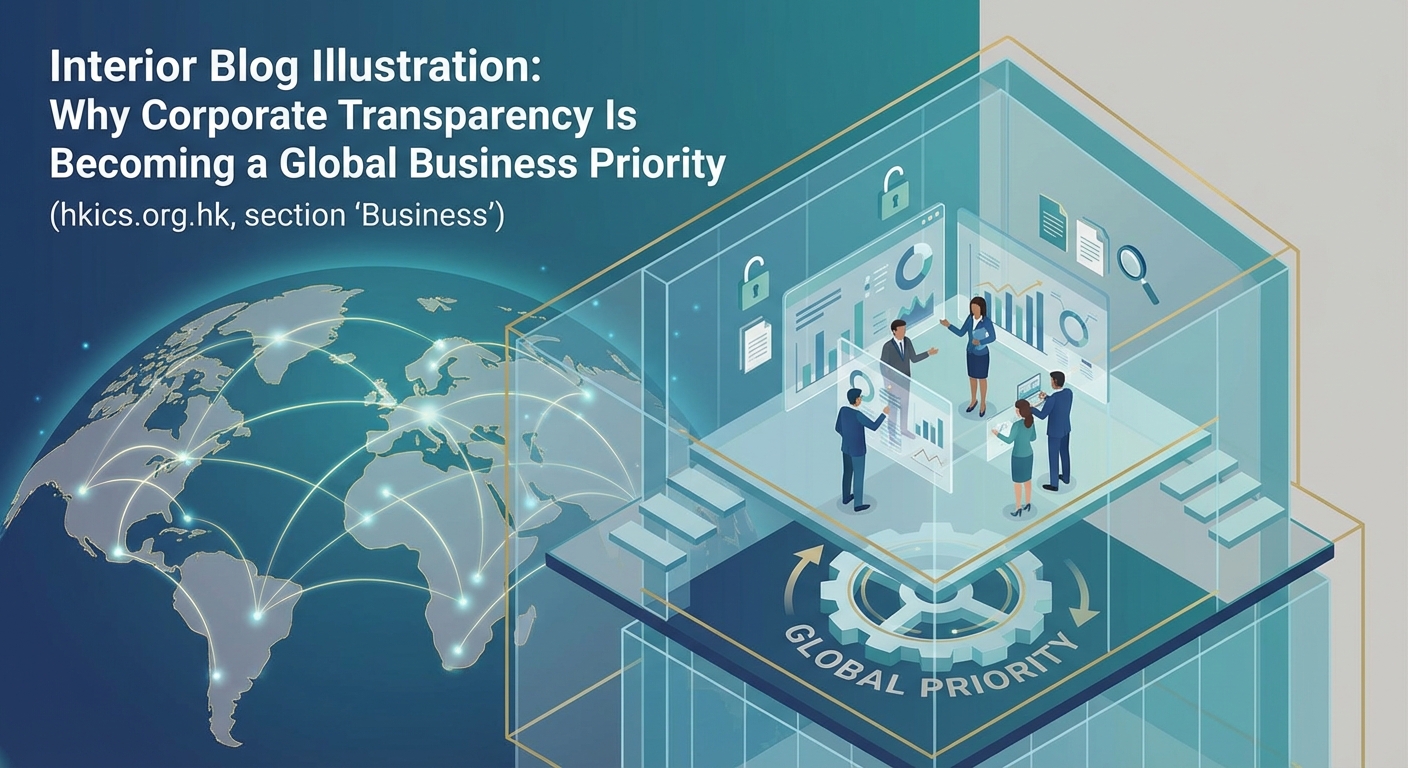
Governments worldwide are tightening disclosure requirements. The trend accelerates each year.
Hong Kong updated beneficial ownership registers. The European Union implemented the Corporate Sustainability Reporting Directive. The United States enhanced climate disclosure rules through the SEC.
These aren’t suggestions. They’re legal obligations with meaningful penalties for non-compliance.
Regulatory frameworks now cover:
- Beneficial ownership and control structures
- Environmental impact and carbon emissions
- Supply chain labor practices
- Political contributions and lobbying activities
- Executive compensation ratios
- Tax payments by jurisdiction
- Data privacy and security measures
Compliance costs money. But non-compliance costs more. Fines represent only part of the expense. Regulatory investigations consume executive time, damage reputation, and create uncertainty that depresses stock prices.
Organizations that build transparency into their operating model adapt faster when new rules emerge. They already collect the data. They already have disclosure processes. New requirements become updates rather than overhauls.
Risk management improves with visibility
Problems don’t disappear when you ignore them. They grow.
Transparent organizations identify issues earlier. When information flows freely internally, warning signs reach decision-makers before crises develop.
Consider fraud prevention. Companies with strong internal transparency make it harder for bad actors to hide misconduct. Multiple people review transactions. Documentation requirements create audit trails. Whistleblower channels provide reporting mechanisms.
Opacity enables corruption. Transparency disrupts it.
The same principle applies to operational risks. When supply chain visibility extends beyond first-tier suppliers, you can spot labor violations, environmental damage, or financial instability before they disrupt your business. You can’t manage risks you can’t see.
Transparency isn’t about having nothing to hide. It’s about choosing to show what matters. The companies that thrive long-term are those that make transparency a strategic priority rather than a compliance burden.
Better decisions come from accurate information
Executives make hundreds of decisions weekly. Decision quality depends entirely on information quality.
Internal transparency ensures leaders work with accurate data. When teams fear sharing bad news, executives operate on incomplete or misleading information. They optimize for the wrong variables. They miss critical risks.
Organizations that reward honest reporting get honest reporting. Leaders receive unfiltered assessments of project status, market conditions, and operational challenges. They can allocate resources effectively because they understand true priorities.
External transparency creates accountability that improves decision-making. When you know you’ll need to explain choices publicly, you think more carefully about those choices. You document reasoning. You consider stakeholder impacts. You avoid shortcuts that might embarrass the organization later.
Implementation requires systematic approaches
Building transparency doesn’t happen through good intentions alone. You need structured processes.
Here’s how to implement transparency systematically:
-
Establish clear disclosure policies that define what information gets shared with which stakeholders and on what timeline. Remove ambiguity about expectations.
-
Create accessible reporting systems that make information easy to find and understand. Transparency fails when data exists but remains buried in incomprehensible formats.
-
Train teams on communication standards so everyone understands how to share information appropriately. Transparency requires skill, not just willingness.
-
Build feedback mechanisms that let stakeholders ask questions and request additional information. One-way disclosure isn’t true transparency.
-
Review and update practices regularly as stakeholder expectations evolve and new tools become available. Transparency standards change over time.
-
Assign clear ownership for transparency initiatives so someone has accountability for results rather than diffused responsibility.
Common transparency mistakes and solutions
Many organizations stumble implementing transparency. The same mistakes appear repeatedly.
| Mistake | Why it happens | Better approach |
|---|---|---|
| Information overload | Sharing everything without curation | Focus on material information that affects decisions |
| Delayed disclosure | Waiting for perfect information | Share what you know when you know it, with appropriate caveats |
| Technical jargon | Subject matter experts write for peers | Translate complex topics for general audiences |
| Selective transparency | Only sharing positive developments | Address challenges directly alongside successes |
| Inconsistent timing | Ad hoc communication without rhythm | Establish regular reporting schedules |
| No context provided | Raw data without interpretation | Explain what information means and why it matters |
The solution in each case involves thinking from the stakeholder perspective. What do they need to know? When do they need it? How can you make it understandable?
Competitive advantages emerge from openness
Transparency creates differentiation in crowded markets.
When competitors hide behind vague statements, your specificity stands out. Detailed product information helps customers make confident purchases. Clear pricing structures build trust. Honest assessments of capabilities set realistic expectations that you can meet or exceed.
Talent acquisition benefits from transparency too. Job seekers research potential employers extensively. Glassdoor reviews, LinkedIn posts, and public financial filings all shape perceptions. Companies known for honest communication attract candidates who value that culture.
Supply chain partners prefer working with transparent organizations. When you share forecasts openly, suppliers can plan production efficiently. When you communicate challenges promptly, partners can adjust. Collaborative relationships built on transparency outperform transactional ones built on information asymmetry.
Financial performance connects to transparency practices
Research consistently links transparency to better financial outcomes.
A Harvard Business School study found that companies with higher transparency scores experienced lower cost of capital. Investors accept lower returns when they perceive lower risk, and transparency reduces perceived risk.
Stock price volatility decreases with better disclosure. When investors understand business fundamentals clearly, they react less dramatically to short-term news. Share prices reflect underlying value more accurately.
Transparent companies also recover faster from setbacks. When stakeholders trust that leadership communicates honestly, they give organizations more latitude during difficult periods. Trust built during good times pays dividends during bad ones.
Technology enables new transparency possibilities
Digital tools make transparency easier and more comprehensive than ever before.
Blockchain creates immutable records of transactions and supply chain movements. Stakeholders can verify claims independently rather than relying solely on company statements.
Data visualization platforms transform complex financial information into accessible graphics. Interactive dashboards let stakeholders explore information at whatever depth interests them.
Real-time reporting systems provide current information rather than outdated quarterly snapshots. Cloud-based tools enable secure information sharing with specific stakeholder groups.
These technologies reduce the cost and complexity of transparency. What once required armies of accountants and lawyers can now happen through automated systems and standardized formats.
Cultural shifts matter more than policies
You can write perfect transparency policies that nobody follows.
Real transparency requires cultural change. It starts with leadership modeling the behavior. When executives admit mistakes, acknowledge uncertainty, and share decision-making rationale, they signal that transparency is safe and valued.
Organizations need to remove penalties for sharing bad news. If people get punished for raising concerns, they stop raising concerns. Problems continue hidden until they become catastrophic.
Reward systems should recognize transparency. Promote people who communicate clearly. Celebrate teams that identify and address issues early. Make transparency a performance criterion, not just a compliance checkbox.
Your transparency journey starts with small steps
You don’t need to transform overnight. Start with one stakeholder group and one type of information.
Pick something material that matters to that audience. Share it clearly and consistently. Gather feedback. Adjust your approach. Then expand to additional topics and audiences.
Transparency builds momentum. Early successes create confidence for bigger initiatives. Teams develop skills through practice. Stakeholders begin expecting and appreciating openness.
The businesses thriving today aren’t necessarily the biggest or oldest. They’re the ones people trust. And trust comes from transparency about what you do, how you do it, and why it matters.