

The world economy is reorganizing itself into distinct trading neighborhoods. Countries that once championed global free trade are now drawing closer to their geographic neighbors, creating powerful regional partnerships that prioritize proximity over universality. This shift carries profound implications for how businesses plan their international operations, manage compliance obligations, and identify growth opportunities.
Regional trade blocs are economic agreements between neighboring countries that reduce barriers to commerce within defined geographic areas. These frameworks now govern over 60% of global trade, reshaping supply chains, regulatory compliance, and market access strategies. Understanding their structure, benefits, and operational requirements has become essential for businesses operating across borders in an increasingly regionalized global economy.
Understanding the structure of regional trade arrangements
Regional trade blocs come in several distinct forms, each with different levels of integration and commitment.
Free trade areas represent the most basic structure. Member countries eliminate tariffs and quotas on goods traded among themselves while maintaining independent trade policies with non-members. The North American Free Trade Agreement, which operated from 1994 to 2020, exemplified this model. Each country kept its own external tariff schedule.
Customs unions take integration one step further. Members not only trade freely among themselves but also adopt a common external tariff for goods entering from outside the bloc. The Southern Common Market (Mercosur) in South America operates this way, with Argentina, Brazil, Paraguay, and Uruguay applying unified tariffs to imports from other regions.
Common markets add free movement of labor and capital to the customs union framework. The European Economic Area allows workers from member states to seek employment anywhere within the bloc without special permits. Capital flows freely across borders for investment purposes.
Economic unions represent the deepest level of integration, harmonizing economic policies, regulations, and sometimes even currency. The European Union has moved furthest in this direction, with 20 member states sharing the euro and coordinating fiscal policies through Brussels-based institutions.
Why regions are prioritizing neighborhood partnerships
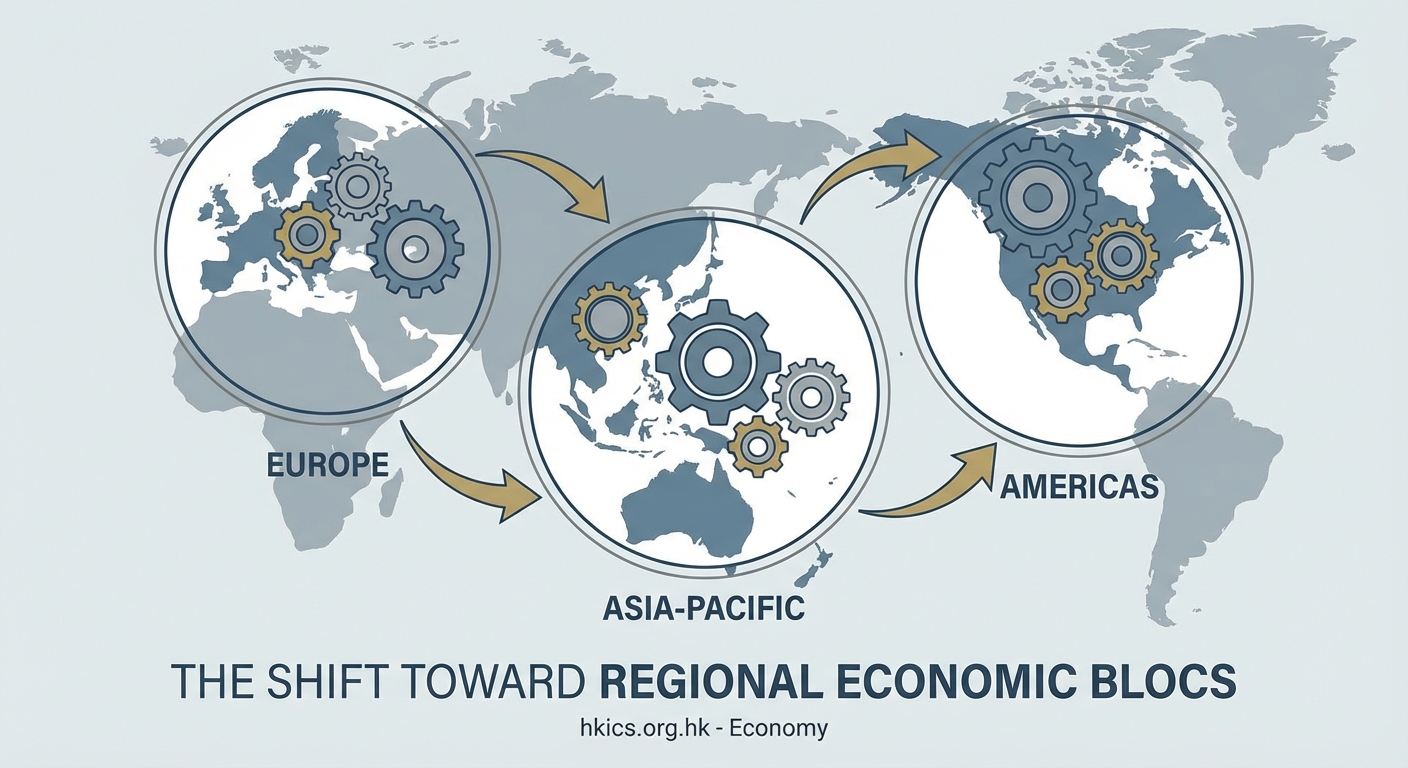
Several forces are driving countries toward regional rather than global trade frameworks.
Geographic proximity reduces transportation costs and delivery times. Shipping goods from Vietnam to Thailand takes days. Moving the same products from Vietnam to Brazil takes weeks. This physical reality makes regional supply chains more responsive to demand fluctuations and easier to manage during disruptions.
Cultural and linguistic similarities within regions facilitate business relationships. Negotiating contracts, resolving disputes, and building trust all become simpler when parties share common reference points. A Malaysian company expanding into Indonesia faces fewer cultural adaptation challenges than one entering Eastern Europe.
Political alignment often follows geographic proximity. Neighboring countries frequently share security concerns, environmental challenges, and infrastructure needs. These shared interests create natural foundations for economic cooperation. The Association of Southeast Asian Nations (ASEAN) emerged partly from regional security considerations during the Cold War.
The multilateral trading system has struggled to deliver new agreements. The World Trade Organization’s Doha Round, launched in 2001, failed to reach consensus after years of negotiations. Frustrated by global gridlock, countries turned to regional partners where agreement seemed more achievable.
Recent geopolitical tensions have accelerated the trend. Trade disputes between major powers have made countries wary of depending too heavily on distant markets. Building stronger ties with neighbors provides economic insurance against global instability.
Major regional frameworks shaping international commerce
Several large-scale agreements now define the regional trade landscape.
The Comprehensive and Progressive Agreement for Trans-Pacific Partnership (CPTPP) links 11 Pacific Rim economies including Japan, Australia, Canada, and Vietnam. The agreement eliminates over 95% of tariffs among members and sets common standards for intellectual property, labor rights, and environmental protection. Combined, CPTPP countries represent roughly 500 million people and 13% of global GDP.
The Regional Comprehensive Economic Partnership (RCEP) connects 15 Asia-Pacific nations including China, Japan, South Korea, and all 10 ASEAN members. Implemented in 2022, RCEP creates the world’s largest trade bloc by population, covering 2.2 billion people and approximately 30% of global economic output. The agreement focuses primarily on tariff reduction rather than regulatory harmonization.
The African Continental Free Trade Area (AfCFTA) aims to create a single market across 54 African countries. When fully implemented, the agreement will cover 1.3 billion people and a combined GDP of $3.4 trillion. Early implementation has focused on reducing tariffs on goods while developing frameworks for services and investment.
The European Union remains the world’s most integrated regional bloc. Its single market eliminates not just tariffs but also regulatory barriers to trade in goods, services, capital, and labor. Common product standards mean a manufacturer certified in Portugal can sell throughout the EU without additional approvals.
The United States-Mexico-Canada Agreement (USMCA) replaced NAFTA in 2020 with updated provisions for digital trade, labor standards, and automotive manufacturing. The agreement maintains duty-free access for most goods while tightening rules of origin requirements, particularly for vehicles.
How businesses adapt operations to regional frameworks
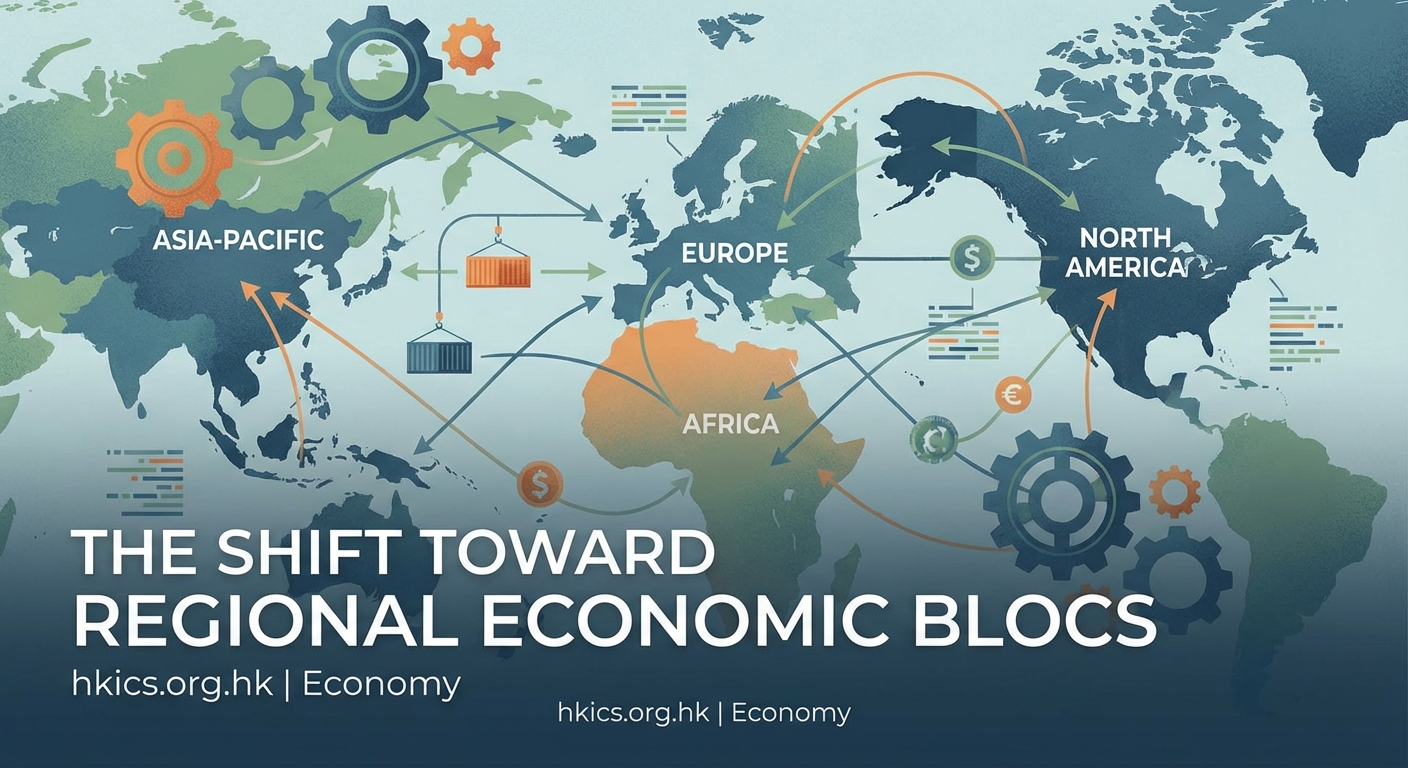
Companies operating across multiple regions must navigate different regulatory environments and strategic considerations.
Understanding rules of origin becomes critical. These provisions determine whether a product qualifies for preferential tariff treatment under a regional agreement. A shirt manufactured in Vietnam using Chinese fabric might not qualify for CPTPP benefits if the fabric content exceeds specified thresholds. Businesses must track input sources carefully and sometimes restructure supply chains to maximize preferential access.
Compliance requirements vary significantly across agreements. Some regional frameworks impose strict labor and environmental standards. Others focus narrowly on tariff elimination. A company sourcing from multiple regions needs different compliance protocols for each framework.
“The shift toward regional trade blocs requires businesses to think in terms of regional ecosystems rather than individual country markets. Success depends on understanding how different agreements interact and where regulatory arbitrage opportunities exist within frameworks.”
Strategic market entry decisions increasingly reflect regional rather than national considerations. A manufacturer choosing between Thailand and Vietnam as a production base now evaluates not just local costs but also which regional agreements each location provides access to. Vietnam’s CPTPP membership might outweigh Thailand’s lower labor costs for certain products.
Investment in regional expertise has become essential. Companies need staff who understand specific agreement provisions, can navigate customs procedures under preferential schemes, and track regulatory changes across member states. This specialized knowledge often determines whether businesses can actually capture the benefits regional frameworks theoretically provide.
Practical steps for leveraging regional trade benefits
Businesses can follow a systematic approach to maximize advantages from regional frameworks.
-
Conduct a comprehensive regional mapping exercise. Identify which agreements cover your current and potential markets. Document tariff rates under each framework, rules of origin requirements, and non-tariff provisions affecting your products or services. This baseline assessment reveals where preferential access creates competitive advantages.
-
Analyze your supply chain through a regional lens. Map where inputs originate and how products move between production stages. Calculate whether current sourcing patterns allow products to meet rules of origin requirements. Identify opportunities to adjust sourcing to qualify for preferential treatment without compromising quality or significantly increasing costs.
-
Develop region-specific compliance capabilities. Train staff on documentation requirements for claiming preferential tariffs. Establish systems for tracking input origins and maintaining records that customs authorities require. Consider whether third-party trade compliance services make sense for regions where you lack internal expertise.
-
Build relationships with regional industry associations. These organizations often provide practical guidance on navigating trade agreements, alert members to regulatory changes, and facilitate connections with potential partners. Their insights can help you avoid costly mistakes and identify opportunities competitors might miss.
-
Monitor agreement developments and expansion. Regional frameworks evolve constantly. New members join, coverage expands to additional sectors, and provisions get updated. Staying current on these changes allows you to adjust strategies proactively rather than reactively.
Common pitfalls and how to avoid them
Businesses frequently encounter specific challenges when working with regional trade frameworks.
| Challenge | Why It Happens | How to Address It |
|---|---|---|
| Failing to claim preferential tariffs | Lack of awareness or documentation gaps | Implement systematic processes for identifying eligible shipments and preparing required certificates |
| Misunderstanding origin rules | Complex technical requirements vary by product and agreement | Invest in specialized training or consulting for high-value product categories |
| Overlooking non-tariff provisions | Focus exclusively on duty elimination | Review entire agreement texts for regulatory harmonization or standard-setting provisions |
| Ignoring cumulation opportunities | Unfamiliarity with how agreements interact | Study whether inputs from one agreement can count toward origin requirements in another |
| Underestimating compliance costs | Assuming preferential access is automatic | Calculate full costs of documentation, certification, and tracking before committing to regional strategies |
The assumption that all regional agreements work similarly causes significant problems. Each framework has unique provisions, procedures, and enforcement mechanisms. A compliance approach that works for USMCA may fail completely under RCEP. Businesses need agreement-specific knowledge rather than generic regional trade expertise.
Timing issues create unexpected complications. Some agreements allow retroactive claims for preferential treatment within specified periods. Others require advance certification. Missing procedural deadlines can mean paying standard tariffs even when products technically qualify for preferences.
Changes in political leadership can alter regional trade dynamics rapidly. A government committed to deepening regional integration might be replaced by one skeptical of multilateral commitments. Businesses with strategies built around specific regional frameworks need contingency plans for political shifts.
The intersection of regional and global strategies
Regional trade blocs exist alongside continuing global trade relationships, creating complex strategic landscapes.
Companies must balance regional optimization with global efficiency. A supply chain designed purely around CPTPP benefits might prove inefficient for serving markets outside the agreement. The optimal approach often involves hybrid strategies that capture regional advantages while maintaining flexibility for global operations.
Some sectors face greater regional fragmentation than others. Automotive manufacturing has become highly regionalized, with distinct supply chains for North America, Europe, and Asia. Technology products often maintain more global supply networks despite regional agreements. Understanding your sector’s trajectory helps inform strategic choices.
Digital services complicate traditional regional frameworks. A software company can serve customers globally from a single location, making geographic proximity less relevant. Yet regional agreements increasingly include digital trade provisions affecting data flows, privacy requirements, and platform regulations. These provisions can create new barriers or opportunities depending on where you operate.
Sustainability standards are emerging as regional differentiators. The European Union’s Carbon Border Adjustment Mechanism will effectively impose costs on imports from regions with weaker climate policies. Similar environmental provisions in other regional frameworks may create competitive advantages for businesses that meet higher standards.
Tracking regulatory developments across regions
Staying current with regional trade frameworks requires systematic monitoring approaches.
Government trade portals provide official information on agreement texts, implementation schedules, and procedural requirements. Most countries maintain dedicated websites for their regional trade partnerships. These resources offer authoritative guidance but often lack practical implementation details.
Industry publications and trade associations fill gaps in official resources. They translate complex agreement provisions into sector-specific implications and share practical experiences from businesses navigating new frameworks. Subscribing to relevant newsletters and attending industry conferences keeps you informed about emerging issues.
Professional service providers offer specialized monitoring services. Law firms, consulting companies, and customs brokers track regulatory changes across multiple agreements and alert clients to relevant developments. These services make sense for businesses operating in numerous regions or dealing with particularly complex products.
International organizations publish research and analysis on regional trade trends. The World Trade Organization, International Monetary Fund, and regional development banks regularly assess how trade blocs affect global commerce. Their reports provide valuable context for strategic planning.
Building organizational capabilities for regional commerce
Success with regional trade frameworks requires more than understanding agreement provisions.
Cross-functional collaboration becomes essential. Legal teams need to work with supply chain managers, finance staff, and operations personnel. Regional trade strategies touch multiple business functions, and siloed decision-making leads to missed opportunities or compliance failures.
Technology investments can automate compliance tasks and reduce errors. Trade management software helps track rules of origin, generate required documentation, and maintain audit trails. These systems become particularly valuable as businesses operate under multiple regional frameworks simultaneously.
Talent development ensures your organization can execute regional strategies effectively. Training programs should cover both technical agreement provisions and practical implementation skills. Consider rotating staff through different regional operations to build firsthand knowledge of local business environments.
External partnerships extend your capabilities beyond internal resources. Freight forwarders, customs brokers, and local legal counsel provide specialized expertise for specific regions. Building a network of trusted partners allows you to enter new markets more confidently.
Making regional trade work for your business
Regional trade blocs represent neither a passing trend nor a complete replacement for global commerce. They are permanent features of the international economic landscape that businesses must understand and navigate effectively.
The key is matching your approach to your specific circumstances. A small exporter serving a few nearby markets needs different capabilities than a multinational manufacturer with complex global supply chains. Start by understanding which regional frameworks affect your current operations, then systematically build the knowledge and processes needed to capture available benefits.
The businesses that thrive in this regionalized environment will be those that view trade agreements not as abstract policy documents but as practical tools for competitive advantage. Take time to understand the frameworks relevant to your markets, invest in the capabilities needed to use them effectively, and stay alert to how regional dynamics continue evolving. Your competitors are already doing this work. The question is whether you will keep pace or fall behind.