

The boardroom feels different these days. Economic shifts happen faster. Geopolitical tensions flare without warning. Technology disrupts entire industries overnight. Board directors and executives face a reality where yesterday’s playbook no longer applies, and the pressure to make sound decisions has never been higher.
Boards navigate uncertainty by building adaptive risk frameworks, diversifying information sources, and maintaining decision-making flexibility. Successful directors balance scenario planning with real-time monitoring, establish clear escalation protocols, and create cultures where challenging assumptions is encouraged. The most resilient boards treat uncertainty not as a problem to solve but as a condition to manage through disciplined processes and open communication.
Building a framework that bends without breaking
Traditional risk management assumes you can predict most threats. That assumption fails when markets swing wildly or regulations change overnight.
Smart boards now build frameworks designed for flexibility. They identify core business principles that remain constant while allowing tactical approaches to shift as conditions change.
Start by separating what must stay fixed from what can adapt. Your company values and legal obligations are non-negotiable. But market entry strategies, supply chain configurations, and even product roadmaps can flex.
This distinction matters because it prevents paralysis. When everything feels uncertain, knowing your anchor points lets you move confidently in other areas.
Consider a manufacturing board facing supply disruptions. Their commitment to quality standards stays firm. But their supplier network, inventory levels, and production schedules all become variables they can adjust.
The framework also needs clear triggers. Define specific conditions that require board attention versus issues management can handle. Revenue drops of 15% trigger a review. Customer complaints below a threshold stay with operations.
These triggers prevent two common mistakes: micromanaging during normal volatility and ignoring genuine warning signs until they become crises.
Information flow that actually informs decisions
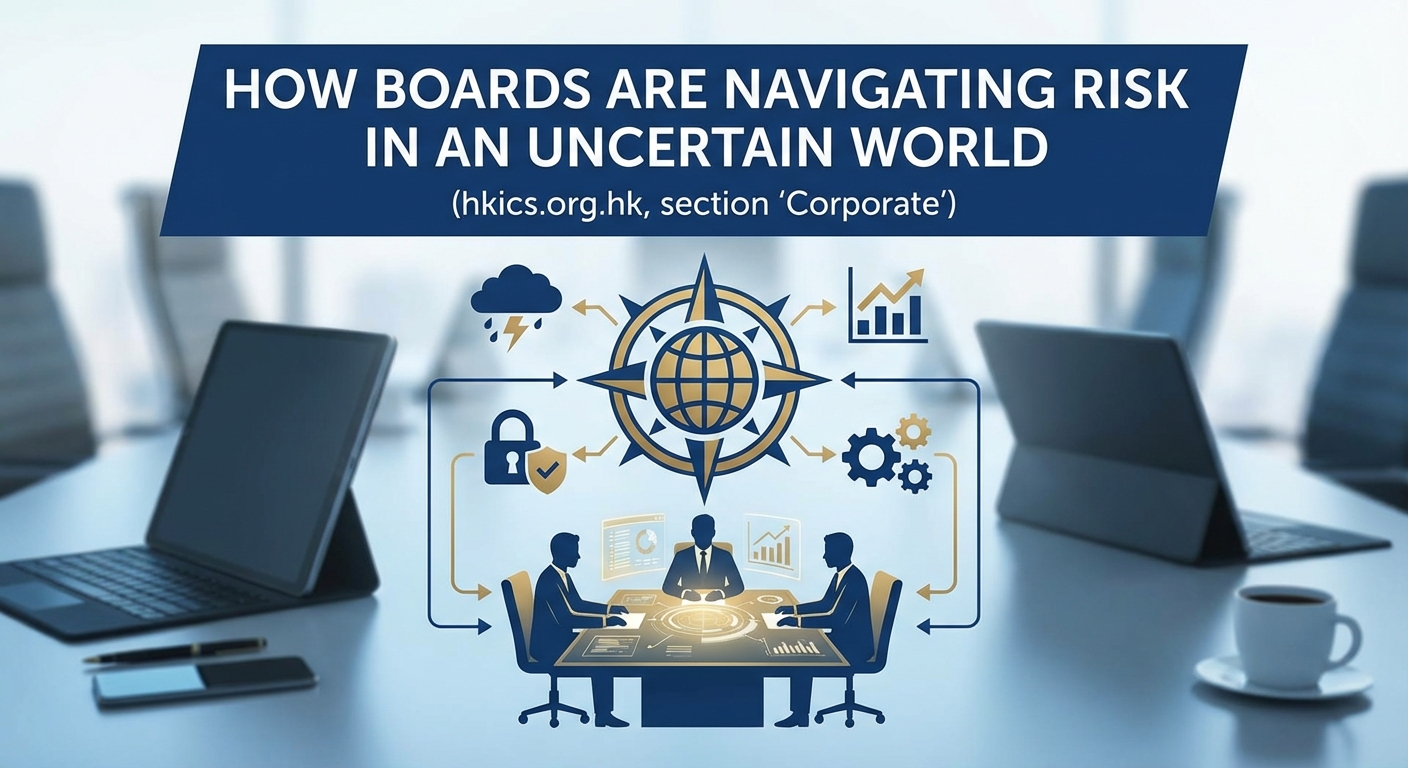
Boards often drown in data while starving for insight. Monthly financial reports arrive too late. Management presentations filter out uncomfortable truths. External perspectives never reach the boardroom.
Effective boards redesign how information reaches them.
They demand leading indicators, not just lagging results. Customer acquisition costs matter more than last quarter’s revenue. Employee sentiment surveys predict retention issues before they show up in turnover numbers.
They also cultivate multiple information channels:
- Direct conversations with middle managers who see problems firsthand
- Independent market research that challenges management assumptions
- Peer networks where directors share what they’re seeing across industries
- Structured sessions with customers, suppliers, or regulators
- Real-time dashboards that flag anomalies immediately
One technology board schedules quarterly sessions where product teams present directly to directors, without executive filtering. The unvarnished view of technical challenges and market feedback proves invaluable.
Another board requires each director to spend time annually with frontline staff. The insights from sales teams, customer service, and operations often contradict what executive summaries suggest.
The goal is creating information diversity. When everyone hears the same story from the same sources, groupthink becomes inevitable.
Scenario planning that goes beyond best and worst case
Most boards do scenario planning badly. They create three versions: optimistic, pessimistic, and realistic. Then they plan for the realistic scenario and hope for the best.
Better approaches recognize that uncertainty doesn’t follow neat probability curves.
Start by identifying the critical uncertainties that could reshape your business. Not risks you can quantify, but genuine unknowns. Will remote work become permanent? Will regulators fragment the market? Will new technology make your core product obsolete?
Pick the two or three uncertainties with the biggest potential impact. Then build scenarios around different combinations of how they might resolve.
A retail board might examine scenarios based on consumer behavior shifts and supply chain reliability:
| Consumer Behavior | Supply Chain | Strategic Response |
|---|---|---|
| Return to physical stores | Stable international shipping | Invest in flagship locations |
| Permanent digital shift | Regionalized production | Build local fulfillment networks |
| Hybrid shopping patterns | Continued disruption | Focus on inventory flexibility |
| Experience-driven purchases | Stable international shipping | Create destination retail spaces |
Each scenario demands different capabilities and investments. The exercise reveals which strategic moves help across multiple futures and which only work in specific conditions.
The board then monitors signals that indicate which scenario is emerging. They don’t wait for certainty. They watch for patterns that suggest the world is moving in a particular direction.
This approach prevents the common trap of planning for one future while a different reality unfolds. It also helps boards recognize when their current strategy no longer fits the emerging environment.
Decision-making processes for when time is short
Uncertainty often demands faster decisions with less information. Boards structured for quarterly reviews struggle when markets move weekly.
Successful boards establish clear protocols for different decision types.
- Define which decisions require full board approval versus committee action versus management authority. Write it down. Update it regularly.
- Create expedited review processes for urgent matters. Know how to convene directors on short notice. Have secure communication channels ready.
- Establish decision criteria in advance. What information is essential versus nice to have? What risk tolerance applies to different decision categories?
These protocols prevent two problems. They stop boards from slowing down time-sensitive responses. They also prevent management from making major decisions without proper oversight just because “there wasn’t time” to consult the board.
One financial services board maintains a standing committee of three directors authorized to approve certain strategic moves between regular meetings. The full board reviews these decisions at the next session, but the company can act when opportunities arise.
Another board uses a decision matrix that maps choices against strategic priorities and risk appetite. Management can proceed independently in the green zones. Yellow zones require chair consultation. Red zones need board approval.
The key is building these systems before crisis hits. Trying to design decision processes during an emergency leads to confusion and conflict.
The questions that reveal hidden risks
Boards often miss risks because they ask the wrong questions. They focus on what could go wrong with current plans instead of challenging whether the plans still make sense.
Powerful questions reframe how directors think about uncertainty:
“What would have to be true for this strategy to fail completely? What early signals would we see if those conditions were developing?”
This question forces specific thinking about failure modes rather than vague concerns about “execution risk” or “market conditions.”
“What is our competition seeing that we might be missing? What would explain their recent moves if they have information we don’t?”
This shifts attention from internal assumptions to external reality. It’s especially valuable when competitor behavior seems puzzling.
“If we were starting this company today, would we make the same strategic choices? If not, what’s stopping us from changing direction?”
This combats the sunk cost fallacy and status quo bias that trap many boards in outdated strategies.
“What could we learn in the next 90 days that would change our decision? Can we delay committing until we have that information?”
This question tests whether decisions are genuinely urgent or just feel that way. It also identifies valuable experiments or research that could reduce uncertainty.
Directors who consistently ask these questions shift board culture from defensive risk avoidance to active uncertainty management.
Governance structures that support adaptive strategy
Board composition matters more during volatile periods. The directors who excelled at overseeing stable growth may lack experience managing through disruption.
Evaluate whether your board has:
- Directors who have led organizations through major transitions
- Industry outsiders who can challenge sector groupthink
- Technical expertise relevant to emerging threats and opportunities
- Geographic and demographic diversity that broadens perspective
- Willingness to admit uncertainty rather than project false confidence
Consider whether board tenure patterns create problems. Long-serving directors bring valuable institutional knowledge but may resist needed changes. Constant turnover prevents boards from developing the trust required for difficult conversations.
Committee structures also need review. Traditional audit, compensation, and governance committees may need supplementing with strategy or technology committees that meet more frequently.
Some boards create temporary task forces to address specific uncertainties. A sustainability task force examines climate risks and opportunities. A digital transformation group oversees technology investments. These focused groups can move faster than the full board while maintaining proper oversight.
Meeting frequency and format matter too. Quarterly meetings made sense when business moved slowly. Monthly or even weekly check-ins may be necessary during turbulent periods.
Virtual meetings enable more frequent contact without excessive travel. But they also reduce the informal conversations where directors often surface concerns. Hybrid approaches that mix virtual check-ins with periodic in-person strategy sessions often work best.
Creating a culture where bad news travels fast
The biggest risk in uncertain times is learning about problems too late. Yet many boards inadvertently discourage early warnings.
Directors who shoot the messenger train management to hide problems. Boards that punish missed forecasts encourage sandbagging. Cultures that demand certainty get false confidence instead of honest assessment.
Building a culture where bad news surfaces quickly requires deliberate effort.
Thank people who raise concerns, even when those concerns prove unfounded. A director who asks about a potential market shift shouldn’t feel foolish if that shift doesn’t materialize. The question was still valuable.
Separate performance evaluation from forecasting accuracy. Judge management on how they respond to changing conditions, not whether they predicted those changes perfectly.
Create explicit forums for surfacing worries. Some boards start each meeting with a round where every director shares their biggest concern. This normalizes expressing uncertainty.
Invite dissenting views. When consensus emerges too easily, ask someone to argue the opposite case. The exercise often reveals assumptions worth questioning.
One board adopted a practice from intelligence agencies: red team exercises where a group deliberately tries to poke holes in proposed strategies. The adversarial process feels uncomfortable but consistently identifies blind spots.
Another board requires management to present not just their recommended strategy but the strongest alternative they considered. Seeing what was rejected and why helps directors evaluate whether all options received fair consideration.
Maintaining stakeholder confidence without false promises
Boards face a communication challenge during uncertain times. Stakeholders want reassurance. But false confidence damages credibility when reality doesn’t match promises.
The solution is communicating clearly about both what you know and what remains uncertain.
Tell investors which aspects of your strategy are firm and which you’re prepared to adjust. Explain the signals you’re monitoring and the triggers that would prompt changes.
Share with employees how you’re thinking about risks without creating panic. People handle uncertainty better when they understand the plan for managing it.
Be honest with customers about potential disruptions while emphasizing your commitment to serving them. Most customers prefer transparency to surprises.
This approach requires confidence. Admitting uncertainty feels risky. But stakeholders usually know conditions are volatile. Pretending otherwise just makes you look out of touch.
The key is pairing uncertainty about conditions with certainty about values and process. “We don’t know how the market will develop, but we’re monitoring these indicators closely and we’re prepared to adjust our approach while staying true to our commitment to quality and customer service.”
That message acknowledges reality while providing genuine reassurance about what matters most.
When boards make uncertainty worse
Some board behaviors amplify rather than manage uncertainty.
Constantly changing strategic direction creates confusion and wastes resources. Yes, strategies need to adapt. But pivoting every quarter prevents any approach from getting fair testing.
Micromanaging operational decisions undermines management and slows response times. Boards should set parameters and monitor results, not approve every tactical move.
Ignoring early warning signs because acknowledging them feels uncomfortable. The problem doesn’t disappear. It just gets worse while you pretend everything is fine.
Treating every problem as a crisis. When boards overreact to normal volatility, they exhaust the organization and obscure genuine threats.
Failing to invest in capabilities needed for an uncertain future. Cutting all discretionary spending might preserve short-term cash but leaves you unable to respond when conditions improve or threats materialize.
These mistakes share a common root: letting anxiety drive decisions rather than following disciplined processes.
The antidote is returning to your framework. What do your triggers say? What do your scenarios suggest? What do your decision protocols require? Following the system you built for managing uncertainty prevents reactive mistakes.
Making uncertainty an advantage
The best boards eventually realize something counterintuitive: uncertainty creates opportunities.
While competitors freeze or flail, organizations with strong uncertainty management can act decisively. They spot emerging trends earlier. They adapt faster. They take calculated risks others avoid.
This advantage requires treating uncertainty as a permanent condition, not a temporary problem to solve. Build systems that work regardless of whether markets stabilize or volatility increases.
Develop organizational muscles for sensing changes, evaluating options, and executing pivots. These capabilities compound over time. Each cycle of monitoring, deciding, and adapting builds confidence and skill.
Invest in the relationships and information networks that help you see around corners. The director who maintains connections across industries hears about disruptions before they hit your sector. The board that talks regularly with customers spots preference shifts early.
Stay disciplined about your processes even when conditions calm. The frameworks and practices that help you manage volatility also improve decision-making during stable periods. They just become even more valuable when uncertainty returns.
Turning anxiety into action
Uncertainty feels uncomfortable. That discomfort never fully disappears. But it becomes manageable when you have systems for working through it.
The boards that handle volatile conditions best aren’t the ones with perfect foresight. They’re the ones with robust processes, diverse information, clear decision protocols, and cultures where people can speak honestly about what they don’t know.
Start by examining your current practices against the approaches outlined here. Where are the gaps? What would it take to close them?
Then build incrementally. You don’t need to overhaul everything at once. Pick one area where better uncertainty management would help most. Implement improvements. Learn from the results. Expand to other areas.
The goal isn’t eliminating uncertainty. That’s impossible. The goal is building an organization that stays clear-headed and decisive even when the future remains unclear.
That capability matters more than any specific strategic choice. Because the one certainty is that conditions will keep changing, and boards that know how to respond will keep finding ways forward.