

Investors want one thing above all else: the truth. They need to know what’s happening inside your company, how you’re performing, and where risks hide. Without clear, honest disclosure, trust evaporates. Share prices fall. Capital dries up. The relationship between corporate transparency and investor expectations isn’t just about compliance anymore. It’s about survival.
Corporate transparency directly shapes investor confidence and capital allocation decisions. Companies that provide timely, accurate, and comprehensive disclosures attract better valuations, lower cost of capital, and stronger stakeholder relationships. Meeting investor expectations requires clear financial reporting, proactive risk communication, governance accountability, and consistent engagement across all material business developments and operational changes.
Why investors demand transparency now more than ever
Markets move faster than they did a decade ago. Information spreads instantly. A single undisclosed risk can trigger massive sell-offs before management even drafts a response.
Institutional investors now control trillions in assets. They have sophisticated analytics teams scanning for red flags. They compare your disclosures against peers, industry benchmarks, and regulatory filings from other jurisdictions. If your reporting looks thin, they notice.
Retail investors have access to the same data. They read annual reports, listen to earnings calls, and participate in online forums where corporate behavior gets dissected in real time. They expect the same level of access that professionals enjoy.
Environmental, social, and governance factors have become investment criteria, not optional extras. Investors want to know how you manage climate risk, treat employees, and structure board oversight. These aren’t soft topics anymore. They affect long term value.
What transparency actually means in practice
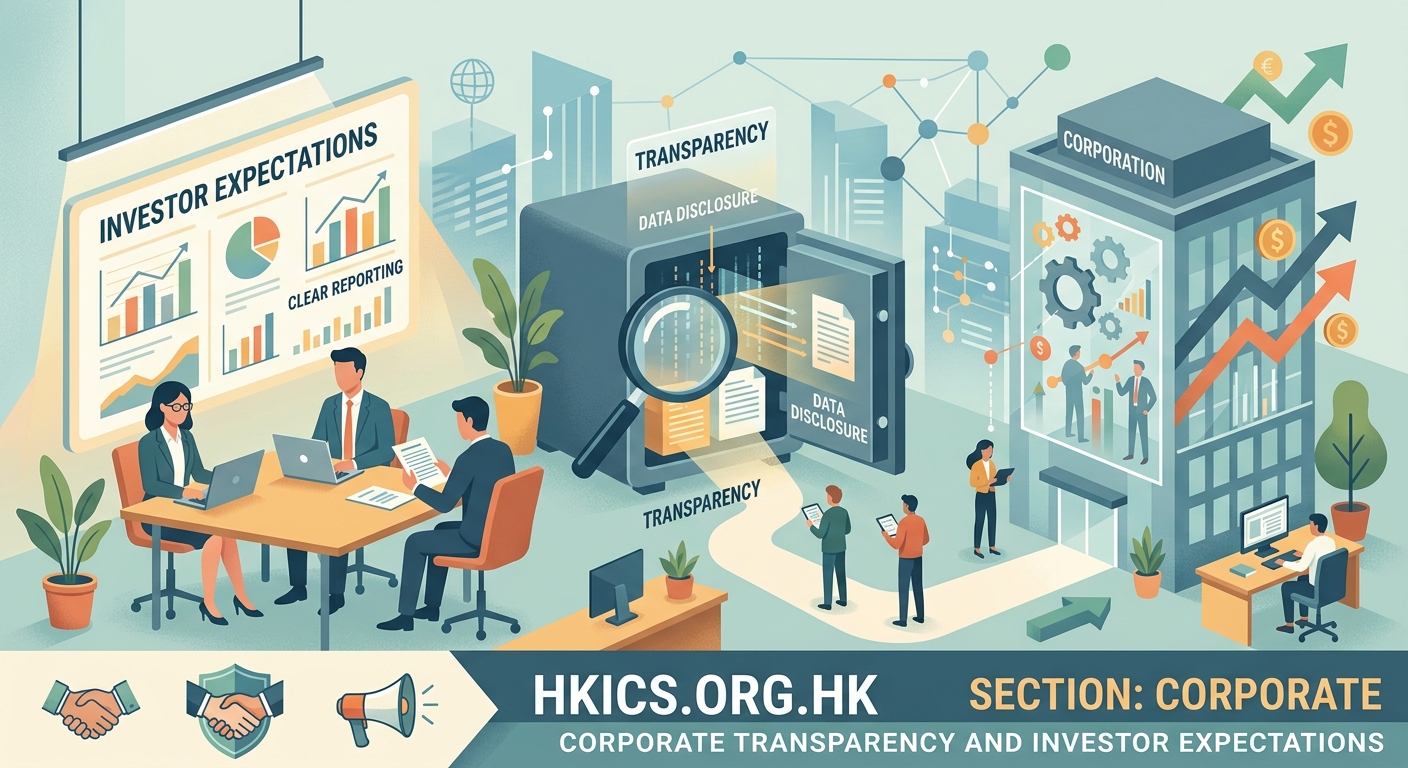
Transparency doesn’t mean sharing every internal email or revealing competitive strategy. It means providing material information that affects investment decisions.
Financial performance comes first. Revenue, margins, cash flow, debt levels, and forward guidance need to be clear and consistent. Investors compare your numbers quarter after quarter. Any sudden change in presentation raises suspicion.
Risk disclosure matters just as much. Every business faces threats. Supply chain disruptions, regulatory changes, technological shifts, competitive pressures. Investors respect companies that acknowledge risks honestly and explain mitigation strategies.
Governance structures tell investors who makes decisions and how accountability works. Board composition, executive compensation, related party transactions, and internal controls all signal whether management acts in shareholder interests.
Operational metrics give context to financial numbers. Customer retention rates, production volumes, market share data, and key performance indicators help investors understand business health beyond accounting figures.
Building a disclosure framework that works
Creating transparency takes planning. You can’t just publish whatever feels right each quarter.
- Map all stakeholder information needs across investor types, analysts, regulators, and media contacts.
- Establish disclosure committees that review material developments before public release and ensure consistency across channels.
- Create disclosure calendars that schedule earnings releases, annual reports, sustainability updates, and governance filings with clear ownership and deadlines.
- Implement review processes that verify accuracy, check regulatory compliance, and assess completeness before any public statement.
- Train spokespersons across finance, operations, and legal teams so everyone understands what can be shared and when.
- Monitor feedback from earnings calls, investor meetings, and analyst reports to identify gaps in your current disclosures.
This framework prevents rushed decisions during crises. When unexpected events happen, you already have processes to evaluate what needs disclosure and how to communicate it.
Common disclosure mistakes that damage trust

Even well-intentioned companies make transparency errors. Some happen from inexperience. Others come from misguided attempts to control narratives.
| Mistake | Why It Hurts | Better Approach |
|---|---|---|
| Selective disclosure | Sharing material information privately before public release | Release all material news through official channels simultaneously |
| Vague language | Using ambiguous terms that hide actual performance | Provide specific metrics and clear definitions |
| Delayed reporting | Waiting too long to disclose material changes | Establish triggers for immediate disclosure |
| Inconsistent metrics | Changing how you calculate or present data | Maintain consistent methodology and explain any changes |
| Ignoring bad news | Only highlighting positive developments | Address challenges directly with context |
| Complex formatting | Burying important information in dense documents | Use clear structure with executive summaries |
Investors remember these mistakes. One instance of selective disclosure can permanently damage credibility, even if regulators don’t take action.
How transparency affects your cost of capital
Companies with strong disclosure practices pay less for funding. This isn’t theory. Research consistently shows that transparency reduces information risk.
When investors can’t assess risk accurately, they demand higher returns to compensate for uncertainty. Your equity trades at a discount. Debt costs more. Strategic opportunities slip away because capital isn’t available at reasonable prices.
Transparent companies attract long term investors who provide stable capital. These shareholders understand your business model and stick around through normal volatility. They don’t panic at the first sign of trouble because they already knew the risks.
Analysts cover transparent companies more thoroughly. Better coverage means more institutional interest. More interest means better liquidity. Better liquidity reduces trading costs and supports higher valuations.
Credit rating agencies reward transparency too. Clear financial reporting and risk disclosure lead to better ratings. Better ratings mean lower interest costs on debt.
Meeting investor expectations across different channels
Investors consume information through multiple touchpoints. Your transparency strategy needs to work across all of them.
Annual reports remain the foundation. They provide comprehensive financial statements, management discussion, governance details, and forward-looking information. Make them readable. Use graphics. Explain technical terms.
Quarterly earnings releases keep investors updated between annual reports. Include financial highlights, operational updates, and revised guidance. Host earnings calls where management discusses results and answers questions.
Investor presentations at conferences and roadshows let you tell your story directly. Keep them consistent with public disclosures. Never share material non-public information in these settings.
Corporate websites serve as transparency hubs. Post all investor materials in easily accessible formats. Include historical data so investors can track trends. Update regularly.
Social media and digital channels reach retail investors and media. Use them to announce major developments and direct audiences to full disclosures on your investor relations site.
Handling difficult disclosures without losing credibility
Bad news tests your commitment to transparency. How you communicate setbacks determines whether investors maintain trust.
The companies that maintain investor confidence through difficult periods are those that disclose problems early, explain root causes honestly, and present credible action plans. Waiting until problems become undeniable destroys credibility far more than the original issue ever could.
Announce problems as soon as you understand their materiality. Don’t wait for perfect information. Share what you know and commit to updates as you learn more.
Explain what went wrong without making excuses. Investors respect accountability. They lose patience with management teams that blame external factors for every disappointment.
Present your response plan. What are you doing differently? What metrics will show improvement? When should investors expect results?
Follow through on commitments. If you promise monthly updates, deliver them. If you set targets, track progress publicly. Consistency matters more during crises than during good times.
Regulatory requirements versus investor expectations
Compliance sets the floor, not the ceiling. Meeting minimum regulatory disclosure requirements doesn’t satisfy investor expectations.
Different jurisdictions have different rules. Hong Kong requires certain disclosures. The United States demands others. European regulations add more layers. If you operate across borders or have international investors, you face multiple frameworks.
Smart companies don’t just meet the strictest applicable standard. They consider what information investors actually need to make decisions, then provide it regardless of whether regulations require it.
Voluntary disclosure of non-financial information has become standard practice among leading companies. Sustainability reporting, diversity metrics, and stakeholder engagement summaries aren’t legally required in most places. Investors expect them anyway.
The gap between regulatory minimums and investor expectations keeps growing. Regulations change slowly. Investor information needs evolve constantly. Companies that wait for regulatory mandates before improving transparency fall behind competitors who anticipate investor needs.
Measuring whether your transparency efforts work
You can track whether investors value your disclosure practices.
- Analyst coverage breadth and depth indicate whether your disclosures provide enough information for thorough evaluation
- Investor meeting requests show institutional interest levels and whether your transparency attracts serious capital
- Trading volume and bid-ask spreads reflect information availability and investor confidence
- Valuation multiples compared to peers reveal whether markets reward your disclosure quality
- Shareholder composition changes indicate whether you attract long term investors or short term traders
- Proxy voting results demonstrate shareholder satisfaction with governance transparency
Survey investors directly. Ask what information they need but aren’t getting. Find out which disclosures they value most. Learn where confusion exists.
Monitor questions during earnings calls. Repeated questions on the same topics signal disclosure gaps. If analysts keep asking for the same data, start including it in standard reporting.
Track media coverage. Are stories based on your official disclosures or speculation? Good transparency reduces speculative reporting because journalists have solid information to work with.
Building transparency into company culture
Disclosure quality ultimately reflects organizational values. You can’t bolt transparency onto a secretive culture.
Leadership sets the tone. If executives dodge questions, delay bad news, or spin negative developments, everyone else follows that example. If they communicate openly and acknowledge mistakes, transparency becomes normal.
Incentive structures matter. If compensation depends entirely on short term stock performance, management faces pressure to manage information flow rather than share it honestly. Align incentives with long term value creation.
Internal communication practices predict external transparency. Companies that share information openly internally tend to communicate well with investors too. Organizations that hoard information internally struggle with external disclosure.
Training helps everyone understand their role. Finance teams need to know disclosure rules. Operations staff need to recognize material developments. Legal counsel needs to balance risk management with transparency obligations.
Technology tools that improve disclosure processes
Modern platforms make transparency easier to execute and harder to mess up.
Disclosure management systems centralize all public communications. They track what’s been disclosed, maintain version control, and ensure consistency across documents. They flag potential conflicts between different statements.
Data analytics tools identify trends in investor questions and information requests. They help you understand which disclosures matter most and where gaps exist.
Collaboration platforms connect teams across finance, legal, operations, and communications. Everyone sees the same information and contributes to disclosure decisions in real time.
Automated reporting tools pull data directly from source systems, reducing manual errors and ensuring consistency. They generate standard reports faster, freeing time for analysis and narrative development.
Investor relations websites with robust search and filtering let stakeholders find exactly what they need. Good organization signals that you take transparency seriously.
Transparency as competitive advantage
Most companies view disclosure as obligation. Smart ones see it as opportunity.
Strong transparency attracts better investors. You want shareholders who understand your business, support your strategy, and provide patient capital. Clear disclosure helps them find you.
Transparency reduces volatility. When investors understand your business model and risk profile, they react more rationally to normal fluctuations. Stock price stability makes planning easier and reduces pressure for short term decisions.
Good disclosure strengthens relationships with all stakeholders. Employees feel more confident working for transparent companies. Customers trust companies that operate openly. Suppliers prefer reliable partners who communicate honestly.
Transparency builds reputation capital that protects you during crises. Companies with long track records of honest disclosure get the benefit of the doubt when problems arise. Those with poor transparency histories face immediate skepticism.
Making transparency sustainable for the long term
Building disclosure excellence takes time. Maintaining it requires ongoing commitment.
Review your disclosure framework annually. Investor expectations change. Regulatory requirements evolve. Your business develops new risks and opportunities. Your transparency approach needs to keep pace.
Benchmark against leading companies in your sector and across markets. What are they disclosing that you aren’t? How do they present information? Where do they set standards higher than regulations require?
Invest in disclosure capabilities. Train teams. Upgrade systems. Allocate budget for investor relations and communications. Treat transparency infrastructure as seriously as financial reporting systems.
Engage with investors proactively, not just during mandatory reporting periods. Regular dialogue helps you understand what information they need and builds relationships that support your business through all conditions.
Document your disclosure decisions. When you choose to disclose something voluntarily, record why. When you decide information isn’t material, document that reasoning. This creates institutional knowledge and protects against inconsistency as teams change.
Trust built through consistent action
Corporate transparency and investor expectations will keep evolving. New technologies create new disclosure possibilities. Changing social priorities shift what counts as material information. Regulatory frameworks adapt to market developments.
The fundamental principle stays constant. Investors need truth to make informed decisions. Companies that provide it consistently, clearly, and comprehensively earn trust that translates directly into capital access, valuation support, and operational freedom.
Start with honest assessment of your current practices. Identify gaps between what you disclose and what investors need. Build processes that make transparency systematic rather than sporadic. Then commit to continuous improvement as expectations rise and your business changes.
Your investors are watching. Give them reasons to believe in your company for the long term.