

Regulatory pressure arrives without warning. A new data protection law passes overnight. Trade sanctions shift supply chains. Environmental standards force operational overhauls. Companies that survive these shifts don’t just react. They build systems that turn compliance into competitive advantage.
Companies respond to regulatory pressure through five core strategies: establishing proactive monitoring systems, building cross-functional compliance teams, investing in technology infrastructure, fostering transparent cultures, and maintaining flexible operational frameworks. Organizations that integrate these approaches transform regulatory challenges into opportunities for innovation, risk reduction, and market differentiation while protecting long-term business sustainability and stakeholder trust.
Why regulatory pressure keeps intensifying
Global corporations face more regulations today than at any point in history. Governments worldwide introduced over 50,000 regulatory updates in 2023 alone. This number continues climbing.
Several forces drive this trend. Public demand for corporate accountability grows stronger each year. Technology creates new risks that lawmakers scramble to address. Climate change pushes environmental standards higher. Data breaches force stricter privacy rules.
Companies operating across borders face compounded complexity. A multinational might answer to dozens of regulatory bodies simultaneously. Each jurisdiction brings unique requirements, reporting timelines, and penalty structures.
The cost of non-compliance has skyrocketed. Financial penalties now reach billions for major violations. Reputational damage can erase decades of brand building overnight. Criminal liability increasingly extends to individual executives.
Building a proactive monitoring system
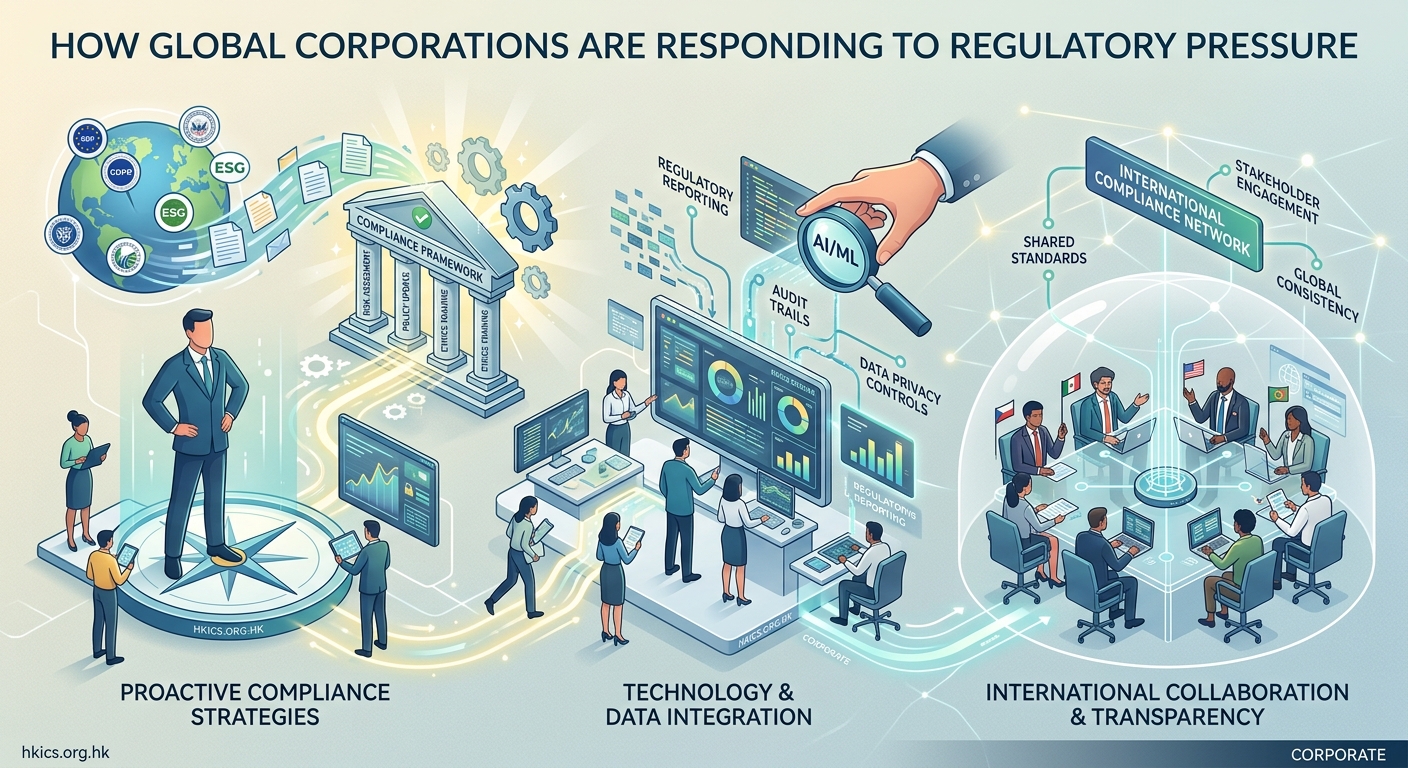
Smart companies don’t wait for regulators to knock. They build early warning systems.
The first step involves mapping your regulatory landscape. List every jurisdiction where you operate. Identify which agencies govern your industry in each location. Document existing compliance obligations with renewal dates and reporting schedules.
Next, establish monitoring channels. Subscribe to regulatory bulletins from relevant agencies. Join industry associations that track legislative developments. Assign team members to watch specific regulatory domains.
Technology amplifies this effort. Regulatory tracking software aggregates updates from thousands of sources. These platforms filter noise and highlight changes affecting your specific operations. Some use artificial intelligence to predict regulatory trends before they materialize.
Create a central repository for all regulatory intelligence. This database should be searchable, regularly updated, and accessible to stakeholders across your organization. Include interpretation notes explaining how each regulation affects different business units.
Set up alert protocols. When significant regulatory changes emerge, designated personnel should receive immediate notifications. Define thresholds for what constitutes “significant” based on potential business impact.
Assembling your compliance dream team
No single department can handle regulatory pressure alone. Effective responses require cross-functional collaboration.
Your core compliance team should include:
- Legal counsel who interpret regulatory language and assess legal risk
- Operations managers who understand implementation realities on the ground
- Finance professionals who model compliance costs and budget allocation
- Technology specialists who evaluate systems requirements and data security
- Communications experts who manage stakeholder messaging and transparency
This team needs clear authority. They must be able to pause projects, redirect resources, and escalate concerns directly to executive leadership without bureaucratic delays.
Regular meeting cadence matters. Weekly check-ins work for high-pressure periods. Monthly reviews suffice during stable times. These sessions should review new regulatory developments, assess ongoing compliance initiatives, and identify emerging risks.
External advisors strengthen your team. Specialized consultants bring deep expertise in specific regulatory domains. They’ve seen how other companies navigate similar challenges. Their outside perspective catches blind spots internal teams miss.
Don’t forget frontline employees. The people actually doing the work often spot compliance issues first. Create channels for them to raise concerns without fear of retaliation. Their insights prove invaluable.
Technology as your compliance backbone
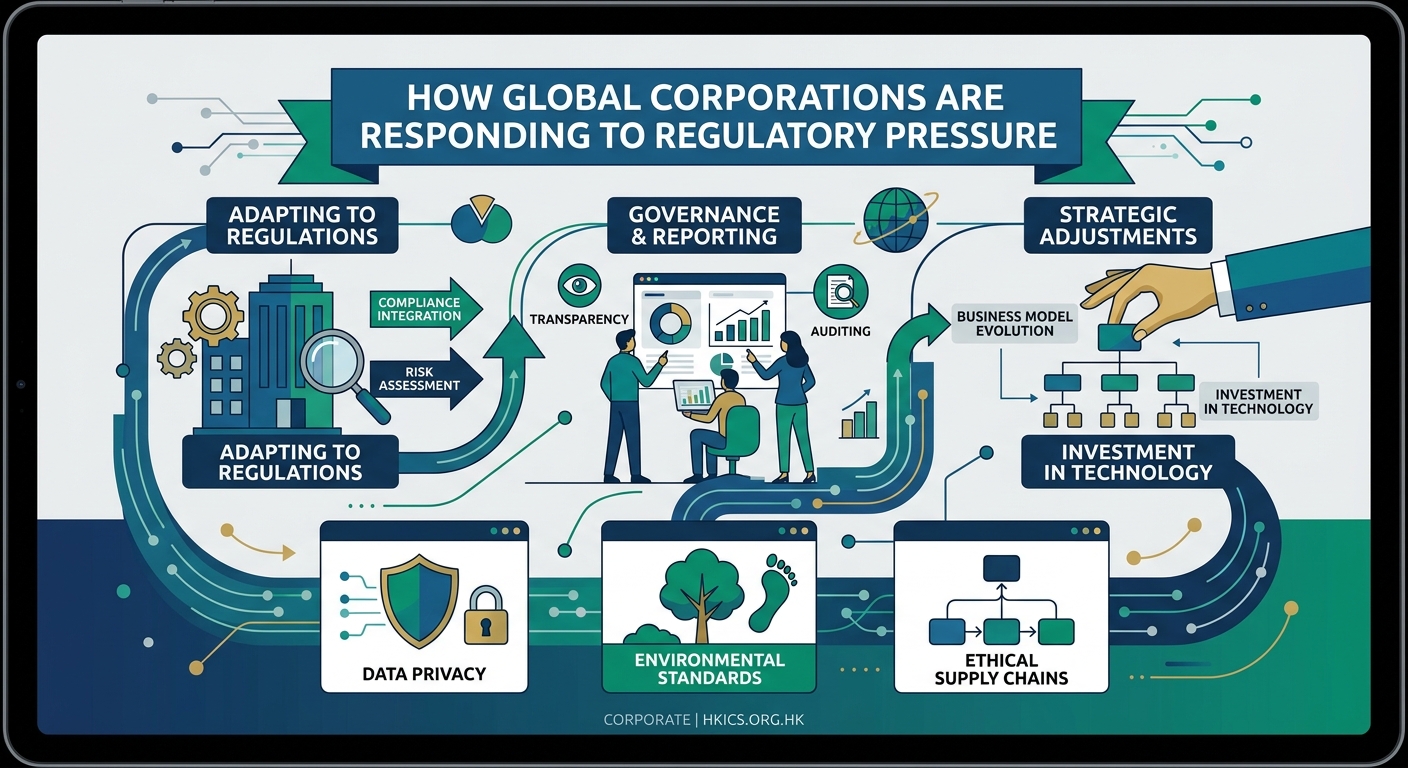
Manual compliance processes break down at scale. Technology provides the infrastructure needed for sustainable regulatory adaptation.
| Technology Solution | Primary Function | Common Mistakes to Avoid |
|---|---|---|
| Compliance management platforms | Centralize obligations, deadlines, documentation | Choosing overly complex systems that staff won’t use |
| Automated reporting tools | Generate regulatory filings from operational data | Failing to validate output accuracy regularly |
| Data governance systems | Control information access, track data lineage | Implementing without clear ownership structure |
| Risk assessment software | Model scenarios, quantify exposure | Relying solely on algorithms without human judgment |
| Training management systems | Deliver and track mandatory employee education | Creating generic content that doesn’t resonate |
Start with your data infrastructure. Regulatory compliance depends on accurate, accessible information. You need systems that capture relevant data at its source, maintain integrity throughout its lifecycle, and produce it on demand for reporting.
Automation reduces human error. Automated controls can flag transactions that violate policies, block non-compliant actions before they occur, and generate alerts when thresholds are breached. This real-time intervention prevents violations rather than discovering them during audits.
Document management systems create audit trails. Every compliance decision, approval, and action should be recorded with timestamps and responsible parties. This documentation protects your organization during investigations and demonstrates good-faith efforts.
Cloud solutions offer flexibility. They scale with your needs, update automatically with new features, and enable remote access for distributed teams. Security concerns have largely been addressed through encryption and access controls.
Integration matters more than individual tools. Your compliance technology should connect with existing business systems. Data should flow seamlessly between platforms without manual transfers that introduce errors.
Cultivating a compliance-first culture
Technology and processes fail without the right organizational culture. How companies respond to regulatory pressure ultimately depends on employee mindset and behavior.
Leadership sets the tone. When executives visibly prioritize compliance, employees follow. This means more than policy statements. Leaders must allocate resources generously to compliance initiatives, celebrate teams that identify risks, and hold violators accountable regardless of their performance in other areas.
“Compliance cannot be an afterthought or a checkbox exercise. It must be woven into how we make every business decision, from product development to customer service. When our people see compliance as enabling our mission rather than blocking it, we transform regulatory pressure into a source of competitive strength.”
Transparency builds trust. Share regulatory challenges openly with your organization. Explain why certain rules exist and how they protect the company. When violations occur, communicate what happened, what you’re doing about it, and what everyone can learn.
Training makes compliance practical. Generic annual modules don’t work. Effective training connects regulatory requirements to specific job functions. Use real scenarios employees actually encounter. Make it interactive and test comprehension.
Incentives shape behavior. Performance evaluations should include compliance metrics alongside business results. Bonus structures can reward teams that proactively identify and address regulatory risks. Recognition programs can celebrate compliance champions.
Psychological safety enables reporting. Employees must feel comfortable raising concerns without career consequences. Anonymous hotlines help, but they’re not enough. Managers need training on receiving bad news gracefully and protecting those who speak up.
Adapting operations without breaking the business
Regulatory changes often require operational adjustments. The challenge is implementing them without disrupting revenue-generating activities.
Phased implementation reduces risk. Rather than overhauling everything at once, break changes into manageable stages. Pilot new processes in limited areas first. Learn from early implementation before rolling out company-wide.
Impact assessments guide prioritization. Before implementing any regulatory change, analyze how it affects different business units, customer experiences, supplier relationships, and competitive positioning. This analysis reveals which adjustments matter most and where you have flexibility.
Stakeholder engagement prevents resistance. Involve affected teams early in planning. Listen to their concerns and incorporate their insights. People support changes they help design.
Communication plans manage expectations. Tell customers, suppliers, and partners what’s changing and why. Explain how it affects them and what actions they need to take. Proactive communication prevents confusion and maintains trust.
Contingency planning prepares for setbacks. New compliance processes rarely work perfectly from day one. Build in buffer time, backup procedures, and troubleshooting resources. Plan for what you’ll do if systems fail or deadlines slip.
Turning compliance into competitive advantage
The best companies don’t just tolerate regulatory pressure. They use it strategically.
Early compliance creates market barriers. When you meet new standards before competitors, you can continue operating while they scramble to catch up. This first-mover advantage can translate into market share gains.
Compliance excellence attracts customers. Many buyers now evaluate suppliers based on regulatory track records. Strong compliance becomes a differentiator, especially for risk-averse clients in regulated industries.
Operational efficiency emerges from compliance work. The process improvements, data quality enhancements, and control mechanisms you build for regulatory purposes often reveal broader operational inefficiencies. Fixing these creates value beyond compliance.
Talent acquisition benefits from reputation. Top professionals want to work for companies that do things right. A strong compliance culture attracts high-caliber employees who might avoid organizations with ethical questions.
Innovation opportunities hide in regulations. New rules often create demand for products and services that help others comply. Companies that understand regulations deeply can develop offerings that serve emerging market needs.
Measuring what matters in compliance
You can’t manage what you don’t measure. Effective compliance programs track specific metrics.
Leading indicators predict problems before they occur:
- Number of policy exceptions requested and granted
- Time between regulatory change and implementation completion
- Employee compliance training completion rates and test scores
- Internal audit findings by severity and business unit
- Near-miss incidents reported through internal channels
Lagging indicators show actual outcomes:
- Regulatory violations and citations received
- Financial penalties and settlement costs paid
- Remediation expenses for compliance failures
- Customer complaints related to regulatory issues
- Employee turnover in compliance-sensitive roles
Benchmark against peers when possible. Industry associations often collect anonymized compliance metrics. Understanding where you stand relative to competitors helps calibrate your program’s maturity.
Trend analysis matters more than point-in-time snapshots. Look at how metrics change over quarters and years. Improving trends indicate your program is working even if absolute numbers aren’t perfect.
Report metrics to leadership regularly. Executive dashboards should include compliance KPIs alongside financial and operational metrics. This visibility reinforces that compliance is a core business function, not a support activity.
Preparing for regulatory uncertainty
Future regulatory landscapes remain unpredictable. Geopolitical tensions, technological disruption, and social movements will drive unexpected changes.
Scenario planning builds resilience. Identify plausible regulatory developments that could significantly impact your business. Model how you’d respond to each scenario. This exercise reveals capabilities you need regardless of which future materializes.
Flexibility in contracts and commitments helps. Where possible, build regulatory change clauses into supplier agreements, customer contracts, and partnership terms. These provisions clarify how parties will handle new compliance requirements that emerge.
Capital allocation should include compliance buffers. Budget for regulatory adaptation even when you can’t specify exactly what will change. Companies that scramble to find compliance funding make poor decisions under pressure.
Network with regulators directly. Many agencies welcome dialogue with industry participants. These relationships provide insight into regulatory thinking and sometimes influence rule development in practical directions.
Industry collaboration amplifies your voice. Working through trade associations and industry groups, companies can advocate for sensible regulations that achieve policy goals without unnecessary business disruption.
Making regulatory response sustainable
Regulatory pressure won’t decrease. The companies that thrive will be those that build sustainable response capabilities.
This means moving beyond reactive firefighting. Each regulatory challenge should strengthen your overall compliance infrastructure. Extract lessons from every implementation. Document what worked and what didn’t. Share knowledge across your organization.
Invest in your compliance team’s development. Send them to specialized training. Support professional certifications. Give them exposure to different parts of the business. Strong compliance professionals become increasingly valuable as regulatory complexity grows.
Balance standardization with customization. Core compliance principles should apply consistently across your organization. But implementation details often need tailoring to local contexts, business unit characteristics, and operational realities.
Regular program reviews keep you sharp. Annually assess your compliance program’s effectiveness. Invite external auditors to provide independent perspectives. Be willing to make significant changes when assessments reveal gaps.
Remember that perfect compliance is impossible. You’ll make mistakes despite best efforts. What matters is catching them early, fixing them thoroughly, and learning from them completely.
Building your regulatory resilience
Companies that master regulatory response don’t have secret formulas. They simply commit to systematic preparation, cross-functional collaboration, and continuous improvement.
Start where you are. Assess your current capabilities honestly. Identify your biggest regulatory risks and most critical gaps. Then build incrementally rather than trying to fix everything at once.
The organizations that struggle with regulatory pressure are usually those that treated compliance as a cost center to minimize. Those that succeed recognize it as a strategic capability that protects and enables their business.
Your competitors face the same regulatory pressures you do. The difference between those who stumble and those who stride forward comes down to preparation, culture, and commitment. Build those foundations now, and regulatory pressure becomes manageable rather than overwhelming.