

The world’s most powerful nations and largest technology companies are locked in an unprecedented competition. Artificial intelligence has become the defining technology of our era, and whoever leads in AI development will shape economic power, military capability, and global influence for decades to come.
The global AI race involves fierce competition between the United States, China, and the European Union, alongside tech giants like Google, Microsoft, and Alibaba. Success depends on research investment, talent acquisition, data access, regulatory frameworks, and computing infrastructure. This competition will determine economic leadership, reshape governance standards, and influence how societies balance innovation with ethical considerations for artificial intelligence deployment across industries and national borders.
Why nations are investing billions in AI supremacy
Countries recognize that artificial intelligence represents more than just technological advancement. It determines who controls the next generation of economic growth, military technology, and social infrastructure.
The United States has invested over $50 billion in AI research and development across government agencies and private partnerships. China announced plans to become the world leader in AI by 2030, committing similar resources through state-backed initiatives. The European Union created a coordinated AI strategy worth billions of euros, focusing on trustworthy and human-centric development.
These investments aren’t abstract. They fund research labs, attract top scientists, build supercomputing facilities, and create regulatory frameworks that either accelerate or constrain development.
National AI strategies typically focus on five key areas:
- Research and development funding for universities and labs
- Talent recruitment and education programs for AI specialists
- Data infrastructure and computing power expansion
- Regulatory frameworks that balance innovation with safety
- Industry partnerships that commercialize research findings
Countries that succeed in these areas gain significant advantages. Their companies can deploy AI solutions faster. Their militaries develop smarter defense systems. Their governments can provide better public services through automation and prediction.
The major players shaping AI development
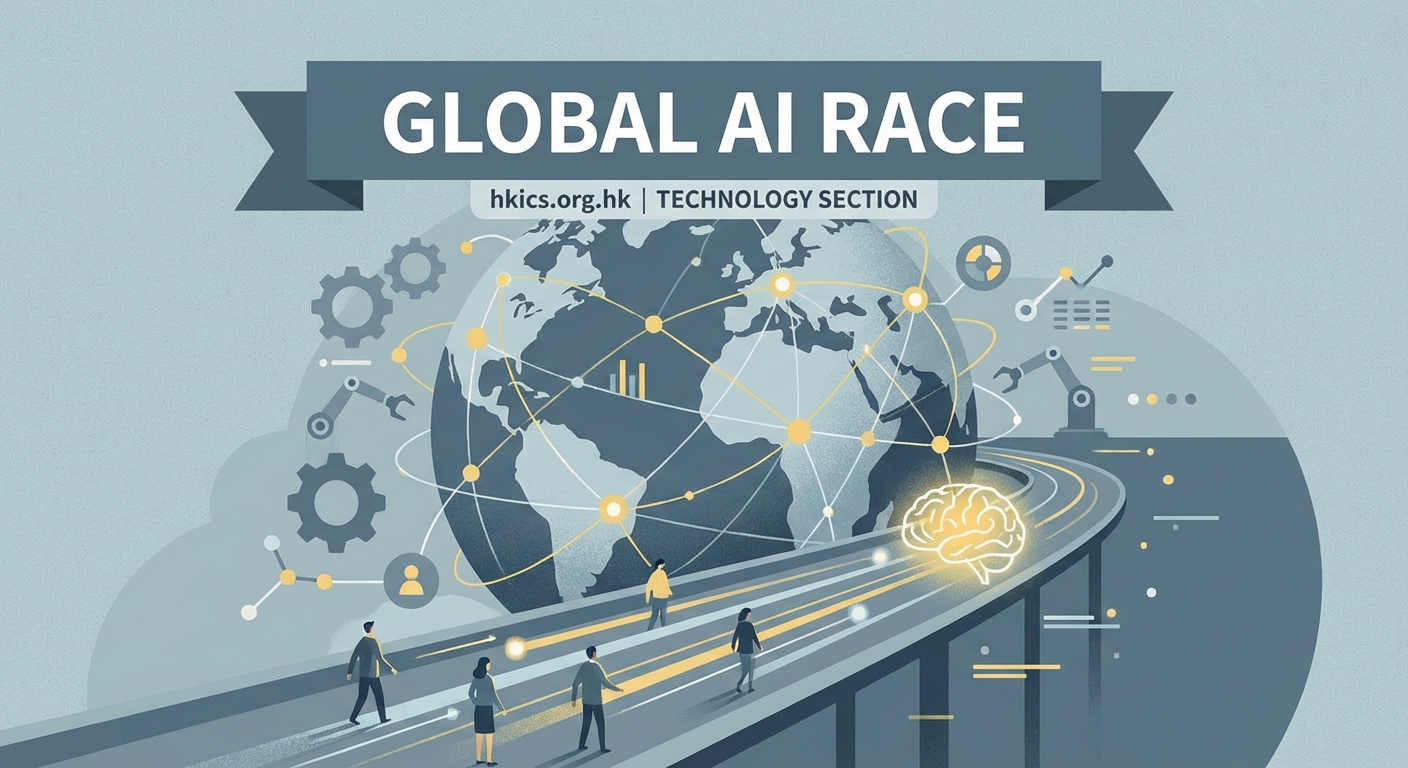
Three regions dominate the competitive landscape. Each brings different strengths and faces unique challenges.
The United States leads in foundational research and commercial deployment. American companies like OpenAI, Google, and Microsoft have produced breakthrough models that define current capabilities. Silicon Valley’s venture capital ecosystem funds thousands of AI startups annually. Top universities like MIT, Stanford, and Carnegie Mellon produce cutting-edge research.
China excels at rapid deployment and scale. Chinese companies have access to massive datasets from their domestic market. Government support allows for faster implementation across industries. Companies like Baidu, Alibaba, and Tencent compete directly with American counterparts. China’s focus on applied AI has produced impressive results in facial recognition, natural language processing for Mandarin, and autonomous systems.
The European Union prioritizes ethical frameworks and regulation. The EU AI Act establishes comprehensive rules for high-risk applications. European researchers contribute significantly to theoretical advances. However, the region struggles with fragmented markets and lower venture capital availability compared to the US and China.
Other nations are carving specialized niches. Israel focuses on cybersecurity applications. Canada has become a hub for deep learning research. Singapore positions itself as a testing ground for smart city technologies. The United Kingdom maintains strong academic research despite Brexit complications.
How tech giants compete for AI dominance
Private companies drive much of the actual innovation. Their competition shapes what AI can do and who benefits from it.
Google invested early and heavily. The company’s DeepMind division produced AlphaGo, which defeated world champions in the complex game of Go. Google’s Transformer architecture became the foundation for modern language models. The company integrates AI across search, advertising, cloud services, and consumer products.
Microsoft partnered strategically with OpenAI, investing billions while maintaining its own research division. The company integrated GPT models into Office products, search engines, and developer tools. Azure cloud services provide AI infrastructure to thousands of businesses.
Amazon focuses on practical applications. Alexa brought voice AI into millions of homes. Amazon Web Services offers machine learning tools to customers. The company uses AI extensively for logistics, recommendation systems, and warehouse automation.
Meta (formerly Facebook) invests heavily in AI research, often releasing findings publicly. The company uses AI for content moderation, ad targeting, and recommendation algorithms. Meta’s open-source contributions have accelerated industry progress.
Chinese tech giants operate with different advantages. They access larger domestic datasets and face fewer privacy restrictions. Tencent, Alibaba, and Baidu have developed sophisticated models for Chinese language processing and deployed AI across payment systems, e-commerce, and social platforms.
Understanding the competitive advantages that matter
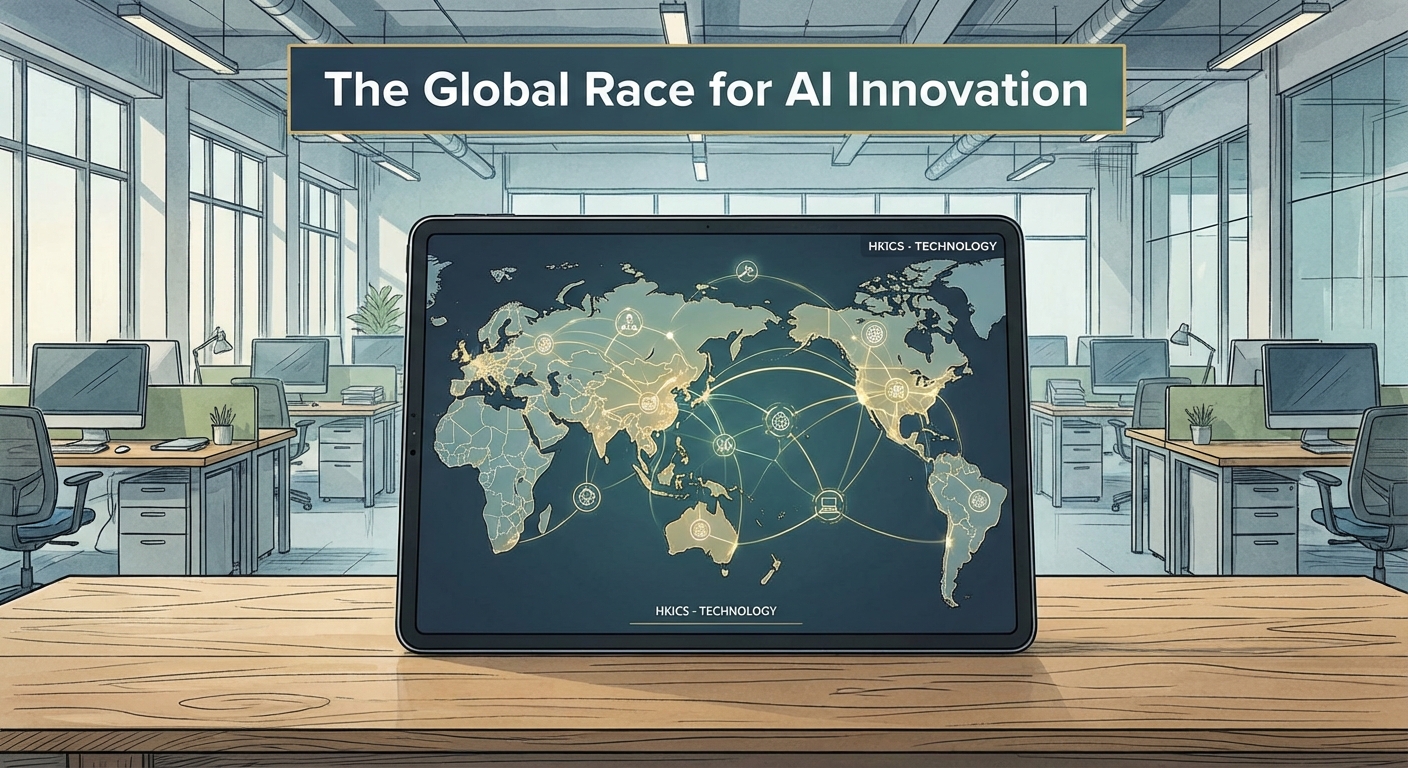
Success in AI development requires specific resources and capabilities. Not all countries or companies can compete equally across every dimension.
| Competitive Factor | Why It Matters | Leaders |
|---|---|---|
| Computing power | Training advanced models requires massive GPU clusters | US tech giants, China state projects |
| Research talent | Top AI researchers are scarce and highly mobile | US universities, Canadian labs, UK institutions |
| Data access | More data enables better model training | China (fewer restrictions), US platforms |
| Capital investment | AI development is expensive and long-term | US venture capital, Chinese state funding |
| Regulatory environment | Rules determine deployment speed and scope | China (permissive), US (moderate), EU (restrictive) |
Talent remains the most contested resource. AI researchers with expertise in machine learning, neural networks, and natural language processing command seven-figure salaries. Countries compete through immigration policies, research grants, and university programs.
Data access creates significant advantages. Chinese companies can collect and use consumer data with fewer restrictions than American or European competitors. This allows faster iteration and larger training datasets. However, this advantage comes with ethical concerns and potential backlash.
Computing infrastructure determines what’s possible. Training frontier AI models requires thousands of specialized chips running for months. Only well-funded organizations can afford this. The United States currently leads in chip design and manufacturing partnerships, though China is investing heavily to close the gap.
What this competition means for businesses and governance
Corporate leaders and policy makers face new challenges as AI capabilities expand. The global race creates both opportunities and risks.
Companies must decide which AI providers to partner with. Choosing American, Chinese, or European platforms has implications beyond technical features. It affects data sovereignty, regulatory compliance, and geopolitical positioning.
“Every major business decision now has an AI component. Where you source your AI capabilities determines your competitive position, regulatory exposure, and even diplomatic relationships. This wasn’t true five years ago.”
Governments struggle to balance competing priorities. They want domestic AI champions but also need to protect citizens from potential harms. They want to attract talent but worry about technology transfer to rivals. They want innovation but fear losing control over critical infrastructure.
Regulatory approaches vary dramatically. China emphasizes state control and social stability. The United States relies more on market competition with sector-specific rules. The European Union creates comprehensive frameworks that prioritize individual rights and transparency.
These different approaches create fragmentation. An AI system approved in one jurisdiction might be banned in another. Companies developing global products must navigate conflicting requirements. This adds costs and complexity.
Practical steps for navigating the AI landscape
Business professionals and policy makers need frameworks for making decisions in this competitive environment. Here’s how to think through the implications:
- Assess your organization’s AI dependencies and identify which providers or platforms you currently rely on for critical functions.
- Evaluate regulatory requirements across all jurisdictions where you operate, not just your home market.
- Develop contingency plans for scenarios where geopolitical tensions disrupt access to AI services or talent.
- Build internal AI literacy so leadership can make informed decisions rather than relying entirely on technical staff or vendors.
- Engage with policy processes in your region to ensure regulations account for practical business realities.
For corporate secretaries and governance professionals, AI competition creates specific challenges. Board oversight of AI systems requires new expertise. Risk management frameworks must account for algorithmic decisions. Compliance programs need to address rapidly changing regulations across multiple jurisdictions.
Documentation becomes critical. Companies should maintain clear records of how AI systems make decisions, what data they use, and how they’re monitored. This protects against regulatory scrutiny and potential liability.
The emerging battlegrounds shaping future competition
Several specific domains will determine who leads the next phase of AI development. Understanding these areas helps predict where resources will flow and where breakthroughs might occur.
Autonomous systems represent a major frontier. Self-driving vehicles, delivery robots, and automated manufacturing depend on AI that can perceive environments and make real-time decisions. Companies and countries that master these technologies gain advantages in logistics, transportation, and industrial production.
Healthcare applications offer enormous potential value. AI can analyze medical images, predict disease progression, and suggest treatments. However, this domain faces strict regulations and requires careful validation. Countries with integrated healthcare systems and strong patient data protections may have advantages.
Cybersecurity applications create both opportunities and threats. AI can detect attacks, patch vulnerabilities, and defend networks. It can also enable more sophisticated offensive capabilities. This dual-use nature makes it a focus for military and intelligence agencies.
Natural language processing continues advancing rapidly. Models that understand and generate human language enable new interfaces, automate customer service, and analyze vast text datasets. Whoever leads in language AI gains advantages in information processing and communication.
Scientific research acceleration may prove most transformative. AI systems can now propose new drug candidates, design materials, and generate hypotheses. Countries that integrate AI into their research infrastructure could accelerate discovery across fields from medicine to climate science.
How smaller nations and companies can compete effectively
Not every country or organization can match the investments of superpowers and tech giants. However, strategic focus can create competitive niches.
Specialized expertise offers opportunities. Estonia became a leader in digital government despite its small size. Israel punches above its weight in cybersecurity. Singapore attracts AI investment through regulatory clarity and infrastructure.
Companies can succeed by focusing on specific industries or problems rather than building general-purpose AI. A firm that deeply understands logistics, healthcare, or finance can create valuable AI applications without competing directly with tech giants.
Partnerships and alliances help smaller players access resources. Universities collaborate across borders. Companies license models from larger providers while adding specialized capabilities. Countries join research initiatives that pool resources.
Open-source contributions level the playing field somewhat. When companies release models and tools publicly, others can build on them without starting from scratch. This accelerates overall progress while creating opportunities for those who can apply existing tools creatively.
Why the race extends beyond technology alone
The global AI competition isn’t purely technical. Cultural, political, and ethical dimensions shape outcomes as much as algorithms and computing power.
Different societies have varying tolerance for AI deployment. Chinese citizens generally accept extensive surveillance systems that would face resistance in Western democracies. European voters prioritize privacy protections more than Americans. These cultural differences influence what AI applications succeed in each market.
Political systems affect development paths. Authoritarian governments can mandate AI adoption and access data more easily. Democratic systems require broader consensus but may produce more robust and accepted solutions. Neither approach guarantees success.
Ethical frameworks are diverging. Western AI ethics emphasizes fairness, transparency, and individual rights. Chinese approaches prioritize social harmony and collective benefit. These philosophical differences produce different AI systems optimized for different values.
International cooperation faces challenges. While researchers collaborate across borders, governments increasingly view AI as a strategic asset requiring protection. Export controls limit technology transfer. Visa restrictions impede talent mobility. Trust between nations erodes.
Making sense of an accelerating competition
The global AI race shows no signs of slowing. Investments continue growing. Breakthroughs arrive with increasing frequency. Stakes rise as AI capabilities expand.
For business professionals, this means AI considerations now factor into nearly every strategic decision. Supply chains, customer service, product development, and risk management all increasingly depend on AI systems. Understanding the competitive landscape helps you choose partners, anticipate disruptions, and identify opportunities.
For policy makers, the challenge involves fostering innovation while protecting citizens and maintaining sovereignty. Getting this balance right determines whether your jurisdiction attracts investment and talent or falls behind.
The competition will produce winners and losers. Some nations will develop robust AI ecosystems that drive economic growth and improve quality of life. Others will become dependent on foreign technology with limited domestic capabilities. Some companies will harness AI to dominate their industries. Others will struggle to compete as rivals deploy superior systems.
Understanding these dynamics doesn’t require becoming an AI expert. It requires recognizing that this technology reshapes power relationships between nations and companies. Your decisions about AI partnerships, investments, and governance frameworks will have lasting consequences. Making them wisely requires staying informed about how the global race unfolds and what it means for your specific context.