

Economic shifts force companies to rethink how they operate. Markets change, customer needs evolve, and business models that worked last year suddenly fall short. Corporate restructuring becomes not just an option but a survival mechanism for organizations facing these pressures.
Corporate restructuring strategies help organizations adapt to economic uncertainty through systematic changes in operations, finances, and structure. Successful transformations require clear objectives, stakeholder engagement, and measurable milestones. Companies that restructure proactively position themselves for sustainable growth, while reactive approaches often lead to rushed decisions and poor outcomes. The right strategy depends on your specific challenges, market position, and long-term vision.
Understanding what restructuring actually means
Corporate restructuring changes how your company operates at a fundamental level. It affects organizational charts, financial arrangements, operational processes, or all three at once.
Some leaders confuse restructuring with simple cost cutting. Cutting expenses might be part of the plan, but real restructuring transforms how value flows through your organization.
The goal centers on creating a more competitive, efficient, or sustainable business model. You might merge departments, spin off divisions, renegotiate debt, or completely redesign your service delivery.
Timing matters enormously. Companies that restructure during stable periods have more options and breathing room. Those waiting until crisis hits face limited choices and urgent deadlines.
Common reasons companies restructure
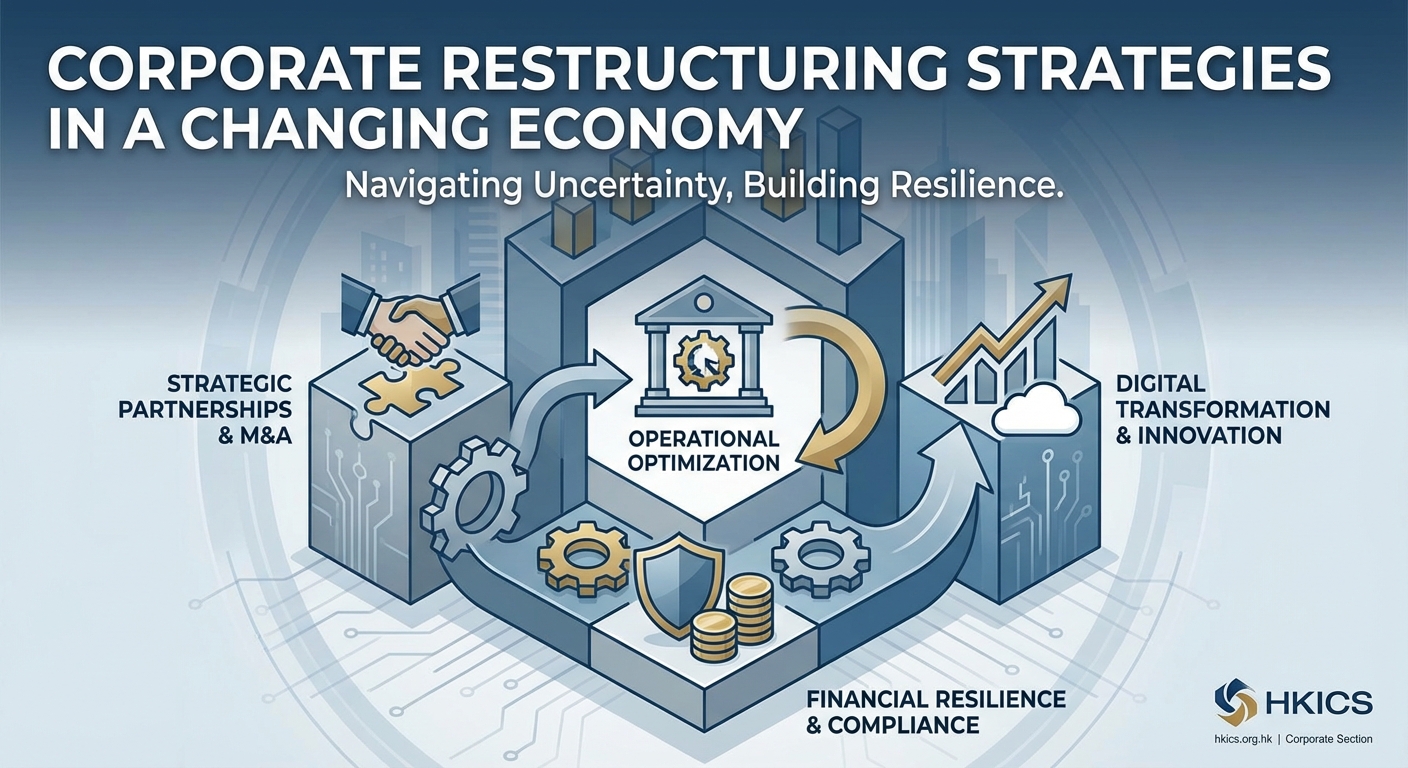
Financial pressure tops the list. When debt becomes unmanageable or cash flow dries up, restructuring offers a path forward without liquidation.
Market disruption forces change too. New competitors, technology shifts, or regulatory changes can make your current structure obsolete overnight.
Mergers and acquisitions create natural restructuring moments. Combining two organizations means duplicate functions, conflicting cultures, and overlapping markets that need resolution.
Growth creates its own problems. A startup structure that worked for 20 people breaks down at 200. Scaling requires different systems, hierarchies, and processes.
Poor performance signals the need for change. When targets consistently miss and morale drops, the structure itself might be the problem rather than the people within it.
Types of restructuring strategies
| Strategy Type | Primary Focus | Best Used When |
|---|---|---|
| Financial | Debt, equity, capital structure | Cash flow problems, overleveraged balance sheet |
| Operational | Processes, efficiency, cost base | Declining margins, competitive pressure |
| Organizational | Reporting lines, departments, roles | Growth phase, cultural issues, merger integration |
| Portfolio | Business units, product lines, assets | Diversification needs, underperforming divisions |
Financial restructuring tackles the balance sheet. You might renegotiate loan terms, convert debt to equity, sell assets, or raise new capital. The structure of your operations stays mostly the same, but how you fund them changes completely.
Operational restructuring changes how work gets done. This means process redesign, automation, outsourcing decisions, and supply chain optimization. You keep the same legal entity but transform the engine under the hood.
Organizational restructuring reshapes reporting relationships and decision rights. Departments merge, layers disappear, or new divisions form. The org chart looks completely different when you finish.
Portfolio restructuring decides which businesses you should own. Selling non-core units, acquiring complementary companies, or spinning off divisions all fall here. Your corporate footprint changes size and shape.
Steps to plan your restructuring

-
Diagnose the real problem before proposing solutions. Symptoms like falling revenue or high turnover point to underlying issues. Spend time understanding root causes rather than treating surface problems.
-
Define clear success metrics. What does better look like in measurable terms? Revenue targets, cost ratios, customer satisfaction scores, or market share give you objective ways to track progress.
-
Map stakeholder impacts. Every restructuring affects employees, customers, suppliers, and investors differently. Understanding these impacts early helps you manage resistance and build support.
-
Design the future state in detail. Vague aspirations fail during implementation. Specify new structures, processes, systems, and roles with enough clarity that people know what to build.
-
Create a realistic timeline with milestones. Breaking the transformation into phases makes it manageable. Each milestone should deliver tangible value, not just mark time passing.
-
Communicate relentlessly. People need to hear the message multiple times through different channels before it sinks in. Transparency about challenges builds trust even when news is difficult.
-
Monitor and adjust as you go. No plan survives contact with reality unchanged. Build feedback loops that let you course correct without abandoning the overall direction.
Critical success factors
Leadership alignment makes or breaks restructuring efforts. When executives send mixed messages or protect their own territories, the initiative stalls. Get the leadership team genuinely committed before announcing anything publicly.
Employee engagement determines implementation quality. People execute the changes, so their understanding and buy-in matter enormously. Involve them early, listen to concerns, and address fears honestly.
Clear governance prevents chaos. Who makes which decisions? How do conflicts get resolved? What authority do project teams have? Answer these questions upfront with documented processes.
The companies that restructure successfully treat it as a strategic transformation, not a cost cutting exercise. They invest in new capabilities while eliminating what no longer serves them. The focus stays on building something better, not just spending less.
Adequate resources separate real initiatives from wishful thinking. Restructuring requires time, money, expertise, and attention. Underfunding the effort guarantees mediocre results.
Common mistakes that derail restructuring
Moving too fast creates confusion and errors. Yes, some changes need speed, but wholesale transformation takes time. Rushing implementation leads to overlooked dependencies and poor change management.
Focusing solely on costs misses growth opportunities. Cutting your way to prosperity rarely works long term. The best restructuring balances efficiency gains with investments in future capabilities.
Ignoring culture causes silent sabotage. Organizational culture either supports or undermines structural changes. A new org chart means nothing if old behaviors persist underneath.
Poor communication breeds rumors and resistance. When leaders stay silent, employees fill the void with speculation. Transparent, frequent updates prevent fear from taking over.
Neglecting customers during internal changes damages relationships. Your restructuring might make perfect sense internally but create confusion or service gaps for customers. Keep external impacts front of mind.
Declaring victory too early stops momentum. Initial wins feel great but sustainable change takes sustained effort. Celebrate milestones while maintaining focus on the full transformation.
Managing the human side
People experience restructuring as personal disruption, not strategic necessity. Jobs change, colleagues leave, familiar processes disappear. Acknowledging this emotional reality shows respect and builds trust.
Transparency about job impacts matters enormously. Will roles be eliminated? When will people know? What support will you provide? Answering these questions honestly, even when answers are difficult, beats leaving people in limbo.
Training and support help people adapt. New structures require new skills and behaviors. Investing in development shows commitment to bringing people along rather than leaving them behind.
Celebrating small wins maintains momentum. Restructuring takes months or years. Recognizing progress keeps energy high and shows the effort is working.
Measuring restructuring success
Financial metrics show bottom line impact. Track cost savings, revenue growth, profit margins, and return on invested capital. These numbers prove whether the restructuring delivered economic value.
Operational indicators reveal efficiency gains. Cycle times, error rates, productivity per employee, and customer satisfaction scores all signal whether processes improved.
Organizational health measures long term sustainability. Employee engagement, retention rates, and leadership bench strength indicate whether you built a stronger foundation or just rearranged deck chairs.
Market position reflects competitive impact. Market share changes, customer acquisition costs, and brand perception show whether restructuring strengthened your external position.
Maintaining momentum after restructuring
The end of formal restructuring does not mean the work stops. New structures need time to stabilize. Processes require refinement. People need ongoing support as they adjust.
Embedding changes into daily operations prevents backsliding. Update performance metrics, compensation structures, and career paths to reinforce new ways of working. What gets measured and rewarded gets done.
Continuous improvement mindsets keep organizations adaptable. Markets will shift again. Customer needs will evolve. Building the capability to adapt continuously matters more than any single restructuring project.
Making restructuring work for your organization
Corporate restructuring strategies offer powerful tools for organizational transformation. They help companies adapt to economic uncertainty, competitive pressure, and internal challenges.
Success requires more than good planning. You need leadership commitment, employee engagement, clear communication, and patient execution. The companies that restructure well treat it as a strategic opportunity, not just a cost reduction exercise.
Start by understanding your specific challenges and desired outcomes. Choose restructuring approaches that address root causes rather than symptoms. Build detailed plans but stay flexible enough to adjust as you learn.
Most importantly, remember that restructuring ultimately serves your customers and creates value in the market. Keep that external focus even while managing internal changes. The organizations that emerge stronger use restructuring to build capabilities that matter for the future, not just fix problems from the past.