

The world economy stands at a crossroads as we move through 2026. Central banks are recalibrating monetary policy after years of aggressive rate hikes. Trade patterns continue shifting as geopolitical tensions reshape supply chains. Inflation pressures ease in some regions while persisting stubbornly in others. For business professionals and investors, understanding these dynamics isn’t optional anymore. It’s essential for survival and growth.
The global economic outlook 2026 shows moderate growth averaging 2.8% worldwide, with inflation declining but remaining above target in major economies. Regional divergence intensifies as Asia Pacific leads expansion while Europe faces stagnation. Trade fragmentation, technological disruption, and climate transition create both risks and opportunities. Success depends on adaptive strategies that account for policy shifts, currency volatility, and evolving consumer behavior across markets.
Growth projections across major economies
The International Monetary Fund projects global GDP growth at 2.8% for 2026, a modest improvement from 2025 but still below the pre-pandemic average of 3.6%. This tepid expansion reflects structural headwinds that won’t disappear overnight.
The United States economy is expected to grow around 2.1%, supported by resilient consumer spending and a robust labor market. However, productivity gains remain elusive despite massive technology investments. Corporate profit margins face pressure from wage growth and higher borrowing costs.
Europe presents a more challenging picture. The eurozone faces near-stagnation with projected growth of just 1.3%. Germany, the region’s industrial powerhouse, struggles with high energy costs and weak demand from China. France and Italy grapple with fiscal constraints and aging populations that limit expansion potential.
China’s economy shows signs of stabilization after years of property sector turbulence. Growth forecasts hover around 4.5%, a significant slowdown from the double-digit rates of the past but more sustainable. The shift from investment-led to consumption-driven growth continues, though unevenly.
Emerging markets in Asia demonstrate stronger momentum. India leads with projected growth exceeding 6%, driven by infrastructure spending, digital transformation, and favorable demographics. Southeast Asian nations benefit from supply chain diversification as companies reduce China exposure.
Inflation dynamics and monetary policy shifts
Inflation remains the dominant concern for policymakers and business planners alike. After peaking in 2022-2023, price pressures have moderated but haven’t returned to central bank targets in most developed economies.
The United States sees core inflation settling around 2.8%, still above the Federal Reserve’s 2% goal. Services inflation proves particularly sticky, reflecting tight labor markets and wage growth. The Fed maintains a cautious stance, reluctant to cut rates aggressively despite political pressure.
European inflation shows more variation. Germany and the Netherlands approach target levels while southern European countries face persistent price pressures. The European Central Bank navigates this divergence carefully, balancing the needs of different member states.
Japan experiences a fundamental shift after decades of deflation. Inflation stabilizes around 2.5%, prompting the Bank of Japan to normalize policy gradually. This marks a historic transition with profound implications for global bond markets and currency flows.
Central banks face an impossible trilemma in 2026: supporting growth, controlling inflation, and maintaining financial stability. Something has to give, and the choices they make will define market conditions for years to come.
Emerging markets deal with imported inflation from currency depreciation and commodity price volatility. Countries with strong fiscal positions and credible central banks manage better than those with twin deficits and political instability.
Trade fragmentation and supply chain restructuring
The era of seamless globalization has ended. Trade patterns in 2026 reflect geopolitical realities more than pure economic efficiency.
Companies continue reshoring and nearshoring production. Mexico benefits enormously from this trend, attracting manufacturing investment from firms serving the North American market. Vietnam, Thailand, and Indonesia gain from businesses diversifying away from China.
Trade blocs solidify along political lines. The Regional Comprehensive Economic Partnership strengthens intra-Asian commerce. The United States deepens ties with allied nations through targeted agreements. Europe pursues strategic autonomy in critical sectors.
This fragmentation carries costs. Supply chains become less efficient and more expensive. Redundancy replaces optimization. Companies maintain multiple sourcing options for critical inputs, accepting higher inventory costs for greater resilience.
Technology transfer restrictions tighten. Semiconductor equipment, artificial intelligence systems, and quantum computing face export controls. This bifurcation creates parallel technology ecosystems with limited interoperability.
Regional opportunities and challenges
Asia Pacific leads global expansion
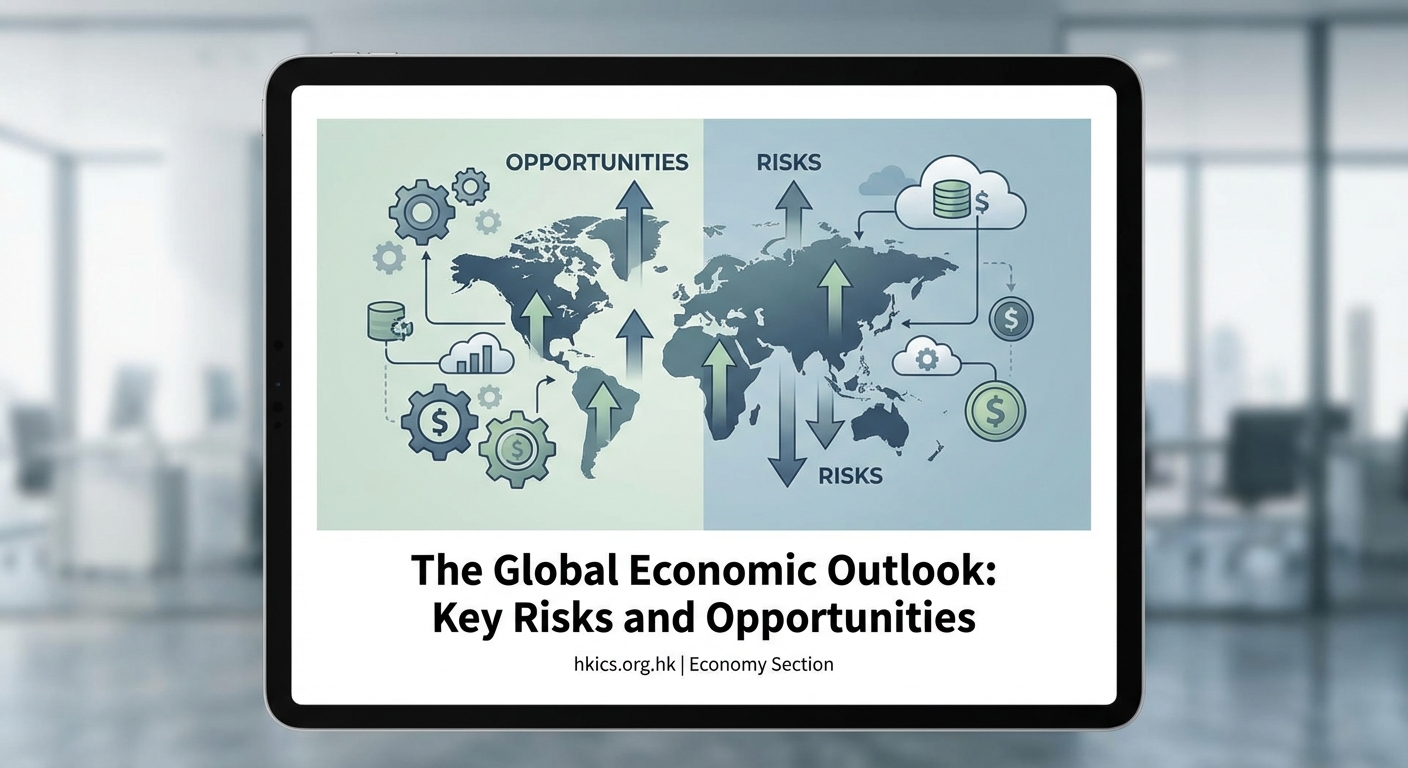
Asia Pacific remains the growth engine of the world economy. Several factors drive this outperformance.
Infrastructure investment continues at scale. Governments fund transportation networks, digital connectivity, and energy systems. Private capital follows, particularly in renewable energy and data centers.
The middle class expands rapidly. Hundreds of millions of consumers enter income brackets where discretionary spending accelerates. This creates massive opportunities in retail, entertainment, financial services, and healthcare.
Digital adoption reaches new heights. Mobile payment systems, e-commerce platforms, and fintech services achieve penetration rates that exceed Western markets. This leapfrogging of legacy systems enables innovation.
Europe faces structural headwinds
European economies confront deep-seated challenges that won’t resolve quickly.
Demographic decline accelerates. Working-age populations shrink while dependency ratios rise. This strains public finances and reduces potential growth rates.
Energy transition costs mount. The shift to renewable power requires enormous capital investment. Industrial competitiveness suffers from higher electricity prices compared to the United States and China.
Regulatory burdens increase. Well-intentioned policies around data privacy, artificial intelligence, and environmental protection create compliance costs that disadvantage European firms.
Emerging markets show divergence
Not all emerging economies perform equally. Success factors become clearer.
Countries with strong institutions, rule of law, and policy credibility attract investment. Those plagued by corruption, political instability, and arbitrary regulation struggle.
Commodity exporters face mixed fortunes. Energy producers benefit from sustained demand despite energy transition efforts. Agricultural exporters gain from food security concerns. Metal producers see demand from infrastructure and green technology.
Key risks that could derail forecasts
Economic projections always carry uncertainty. Several risks deserve close monitoring.
-
Geopolitical escalation could disrupt trade and investment flows far beyond current expectations. Regional conflicts have global spillovers in interconnected markets.
-
Financial stability risks lurk beneath calm surfaces. Commercial real estate stress, particularly in office properties, threatens bank balance sheets. Shadow banking vulnerabilities exist in less regulated corners of the financial system.
-
Climate shocks increase in frequency and severity. Extreme weather events disrupt agriculture, damage infrastructure, and force population movements. Insurance costs rise sharply in vulnerable regions.
| Risk Factor | Probability | Potential Impact | Mitigation Strategy |
|---|---|---|---|
| Trade war escalation | Medium | High | Diversify markets and suppliers |
| Banking sector stress | Low | Very High | Monitor credit spreads and liquidity |
| Inflation resurgence | Medium | High | Lock in costs, hedge currency exposure |
| Cyber disruption | High | Medium | Invest in security and redundancy |
| Policy error | Medium | High | Maintain flexibility in capital allocation |
Debt sustainability concerns grow in several countries. Rising interest rates make existing debt burdens more expensive to service. Refinancing risks emerge for governments and corporations that borrowed heavily at low rates.
Technological disruption accelerates unpredictably. Artificial intelligence advances faster than regulatory frameworks can adapt. Labor markets face displacement that social safety nets weren’t designed to handle.
Sector-specific outlook and implications
Different industries face distinct conditions shaped by the broader economic environment.
Technology sector growth moderates from pandemic highs but remains above average. Cloud computing, cybersecurity, and artificial intelligence see continued investment. Hardware faces cyclical pressures as replacement cycles extend.
Financial services adapt to higher interest rates and stricter regulation. Net interest margins improve for traditional banks. Asset managers face pressure from passive investing and fee compression.
Healthcare demand grows inexorably with aging populations. Biotechnology innovation continues despite funding challenges. Healthcare services face labor shortages and cost pressures.
Energy sector navigates the transition paradox. Fossil fuel demand remains robust despite long-term decline projections. Renewable energy investment accelerates but faces supply chain and permitting bottlenecks.
Consumer discretionary spending shows bifurcation. Luxury goods and premium experiences perform well as wealth concentrates. Mass market retailers struggle with price-sensitive consumers trading down.
Strategic implications for business leaders
The global economic outlook 2026 demands adaptive strategies rather than static plans.
Scenario planning becomes essential. Companies need frameworks for multiple futures rather than single point forecasts. Stress testing against various economic conditions identifies vulnerabilities before they become crises.
Geographic diversification reduces concentration risk. Relying on single markets or supply sources creates fragility. Balanced exposure across regions provides natural hedges.
Balance sheet strength matters more than ever. Access to capital during disruptions separates survivors from casualties. Maintaining liquidity and manageable leverage provides options when opportunities emerge.
Talent strategies require rethinking. Remote work enables access to global talent pools. Skills development and retention become competitive advantages as labor markets tighten.
- Monitor leading indicators beyond GDP: purchasing manager indices, freight volumes, credit conditions
- Build relationships across political and regulatory environments to anticipate policy shifts
- Invest in technology that improves productivity and resilience simultaneously
- Develop pricing power through differentiation rather than competing on cost alone
- Maintain optionality in capital allocation rather than committing everything to single bets
Currency markets and capital flows
Exchange rate volatility remains elevated as monetary policy diverges across major economies.
The US dollar maintains strength despite calls for its decline. Interest rate differentials, safe haven demand, and the lack of credible alternatives support the greenback. This creates headwinds for emerging market borrowers with dollar-denominated debt.
The euro struggles with internal divergence and growth challenges. Political uncertainty in major member states weighs on sentiment. The currency trades in a range without clear direction.
Asian currencies show varied performance. The Chinese yuan faces depreciation pressure from capital outflows and growth concerns. The Indian rupee demonstrates relative stability backed by strong fundamentals. The Japanese yen experiences historic volatility as policy normalizes.
Capital flows favor quality over yield. Risk premiums on emerging market debt remain elevated. Investors demand compensation for political risk, currency volatility, and refinancing concerns.
Looking ahead with clear eyes
The global economic outlook 2026 offers no simple narratives. Growth continues but unevenly. Inflation moderates but persists. Opportunities exist alongside significant risks.
Success requires moving beyond wishful thinking to rigorous analysis. Understanding regional dynamics, sector trends, and policy trajectories enables better decisions. Building resilience while maintaining growth ambitions represents the central challenge.
Business leaders who embrace complexity rather than seeking false certainty will navigate these conditions most effectively. The economic environment rewards preparation, flexibility, and disciplined execution. Those qualities never go out of style, regardless of what the forecasts say.