

Operating across borders means juggling dozens of regulatory frameworks at once. A compliance misstep in one country can trigger penalties, operational shutdowns, or reputational damage that ripples across your entire organization. For multinational corporations, global compliance isn’t just a legal checkbox. It’s a strategic function that protects revenue, maintains market access, and builds trust with stakeholders.
Multinational corporations global compliance requires centralized governance, localized execution, and continuous monitoring. Successful programs integrate technology platforms, clear accountability structures, and cross-functional collaboration. Companies that prioritize compliance as a strategic asset reduce risk exposure, streamline operations, and maintain competitive advantages in regulated markets. Regular audits, employee training, and adaptive policies ensure long-term resilience across jurisdictions.
Why compliance complexity grows with geographic expansion
Adding a new market means adopting new rules. Tax codes, labor laws, environmental standards, data privacy regulations, and anti-corruption measures vary dramatically between countries. A practice that’s standard in one jurisdiction might be illegal in another.
Consider data handling. The European Union enforces strict rules under GDPR. China requires data localization. The United States applies sector-specific frameworks. A single customer database might need three different compliance approaches depending on where users live.
Regulatory change happens constantly. Governments update laws, courts issue new interpretations, and enforcement priorities shift. What worked last year might expose you to liability today. Staying current across multiple jurisdictions demands dedicated resources and systematic processes.
Building a centralized compliance framework
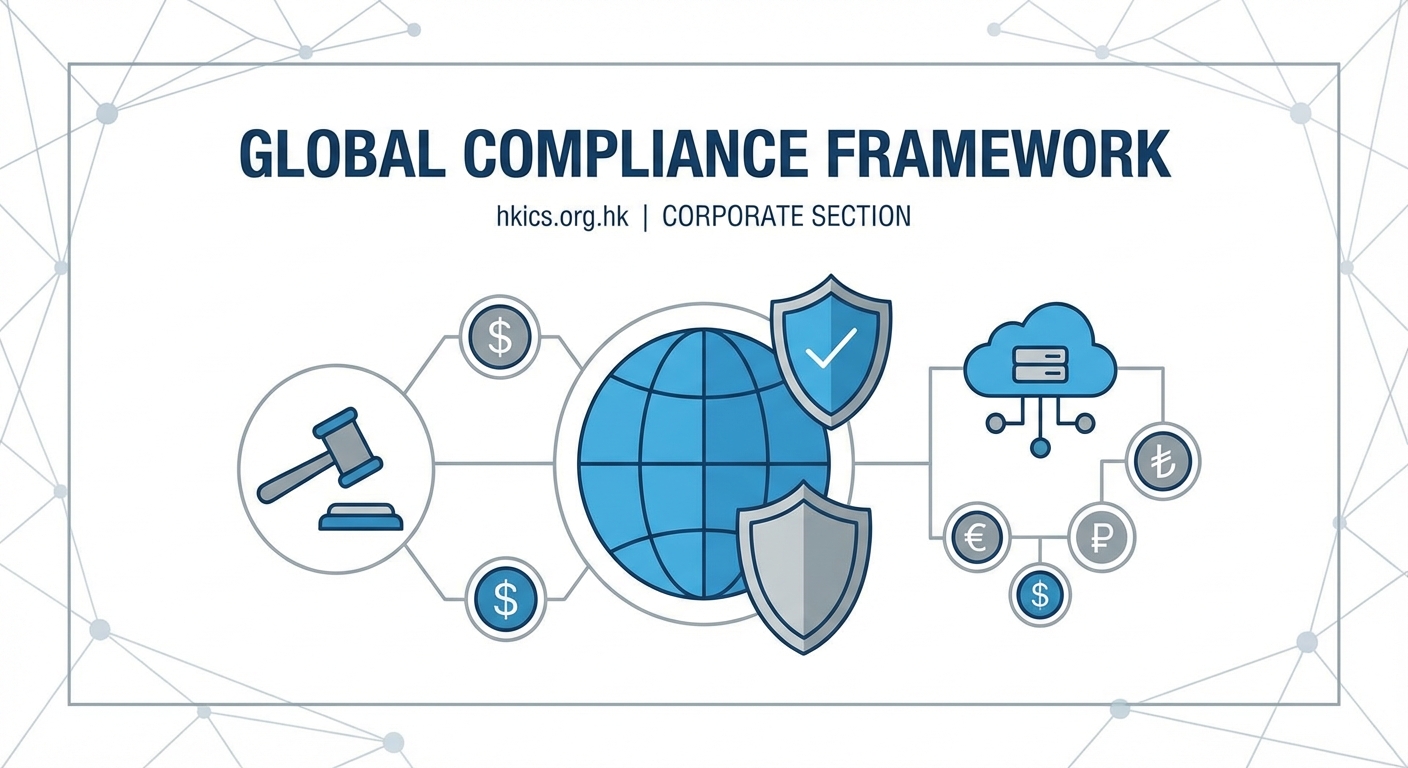
Centralization creates consistency. A unified framework establishes baseline standards that apply across all operations. This doesn’t mean ignoring local requirements. It means building a foundation that supports regional adaptation.
Start with core principles. Define your organization’s stance on anti-corruption, data protection, labor practices, and environmental responsibility. These principles should reflect the strictest standards you face anywhere in your footprint. When your baseline meets the highest bar, you avoid the risk of inadvertently violating tougher regulations.
Document everything. Create a compliance manual that covers policies, procedures, approval workflows, and escalation paths. Make it accessible to every employee who needs it. Update it regularly as regulations change or your operations expand.
Assign clear ownership. Designate a Chief Compliance Officer or equivalent role with authority to enforce policies across business units. This person should report directly to senior leadership and have budget authority for compliance initiatives.
Implementing localized execution strategies
Global standards need local translation. Each jurisdiction requires someone who understands both your corporate policies and the specific regulatory environment.
Appoint regional compliance managers. These individuals serve as the bridge between headquarters and local operations. They monitor regulatory changes, train local teams, and flag issues before they become violations.
Build relationships with local advisors. External counsel, accountants, and consultants provide specialized knowledge that internal teams can’t always maintain. They help interpret ambiguous regulations and advise on enforcement trends.
Adapt communication styles. Compliance training that works in one culture might fall flat in another. Use local languages, relevant examples, and culturally appropriate teaching methods. A cookie-cutter approach wastes time and money.
Creating effective monitoring and reporting systems
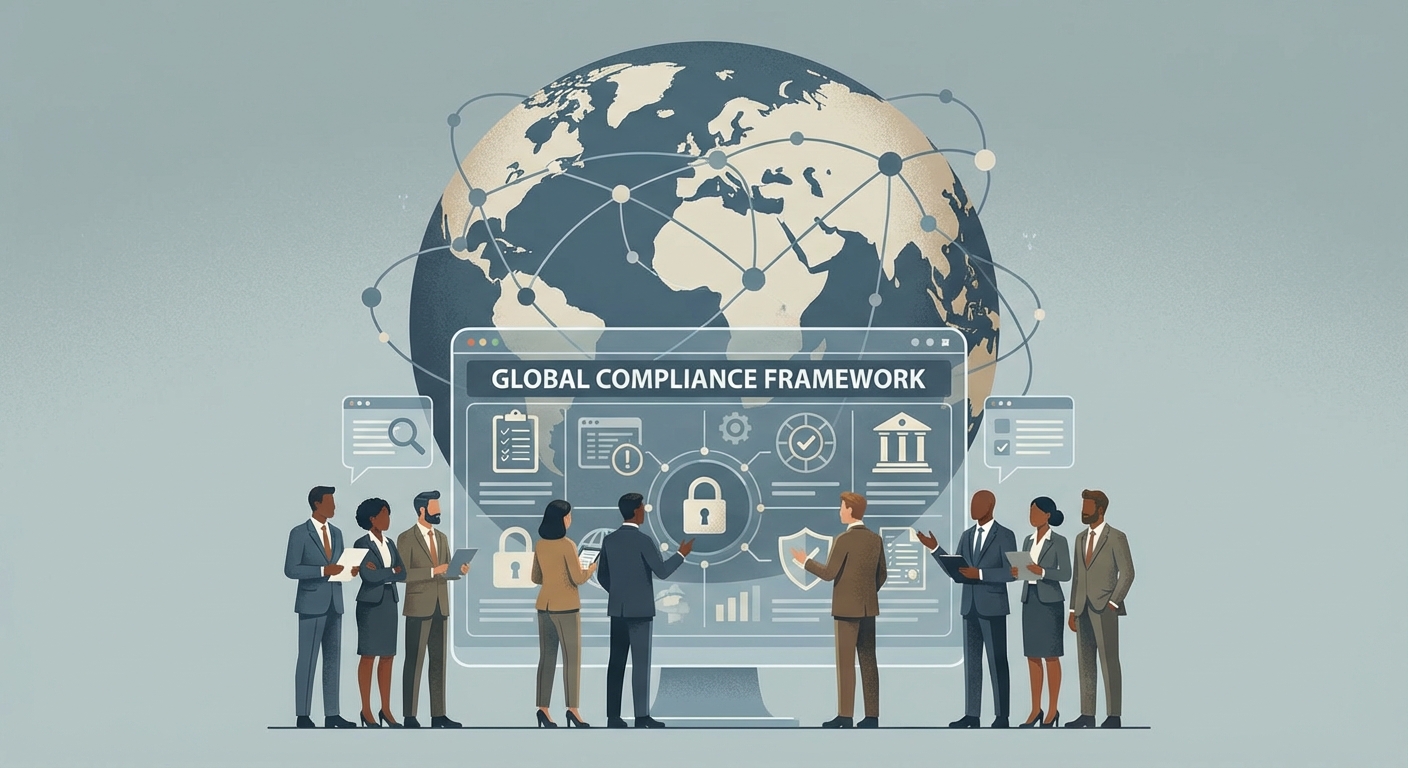
You can’t manage what you don’t measure. Robust monitoring identifies problems early and demonstrates good faith efforts to regulators.
Implement these tracking mechanisms:
- Regular compliance audits across all jurisdictions, conducted by internal audit teams or external firms
- Real-time transaction monitoring for high-risk activities like payments, data transfers, and supply chain interactions
- Incident reporting channels that allow employees to flag concerns anonymously without fear of retaliation
- Key performance indicators that measure compliance metrics like training completion rates, audit findings, and response times
Technology platforms centralize this data. Compliance management systems aggregate information from multiple sources, flag anomalies, and generate reports for leadership review. Choose platforms that integrate with your existing enterprise systems to avoid creating data silos.
Managing third-party compliance risks
Your compliance obligations extend beyond your employees. Distributors, suppliers, agents, and joint venture partners can create liability if they violate laws while acting on your behalf.
Conduct thorough due diligence before engaging third parties. Screen for corruption risks, regulatory violations, and reputational issues. Check sanctions lists, verify business registrations, and review financial stability.
Include compliance clauses in contracts. Require partners to follow your code of conduct, permit audits, and report potential violations. Build in termination rights if they breach compliance obligations.
Monitor ongoing relationships. Third-party compliance isn’t a one-time check. Regular reviews, periodic audits, and continuous screening help catch problems before they escalate.
Common compliance pitfalls and how to avoid them
| Mistake | Consequence | Prevention Strategy |
|---|---|---|
| Assuming home country rules apply everywhere | Violations in foreign markets, penalties, operational disruptions | Conduct jurisdiction-specific legal reviews before entering new markets |
| Treating compliance as purely a legal function | Disconnection from business operations, delayed issue identification | Integrate compliance into business unit decision-making processes |
| Relying solely on annual training | Knowledge gaps, policy drift, outdated practices | Implement continuous learning with regular updates and scenario-based exercises |
| Ignoring small violations | Pattern development, regulatory scrutiny, cultural normalization of non-compliance | Address every violation consistently regardless of size |
| Failing to document compliance efforts | Inability to demonstrate good faith, harsher penalties during investigations | Maintain detailed records of policies, training, audits, and remediation actions |
Leveraging technology for compliance efficiency
Manual compliance processes don’t scale. As your organization grows, technology becomes essential for managing complexity.
Automation reduces human error. Automated systems can screen transactions against sanctions lists, flag unusual patterns, and route approvals to appropriate personnel. This speeds up legitimate business while catching potential problems.
Artificial intelligence enhances monitoring. Machine learning algorithms identify anomalies that human reviewers might miss. They adapt to new patterns and improve accuracy over time.
Cloud platforms enable global collaboration. Teams across time zones can access the same information, update shared documents, and coordinate responses to emerging issues.
Don’t over-rely on technology. Systems fail, algorithms make mistakes, and automated processes can create blind spots. Maintain human oversight and periodic manual reviews to catch what automation misses.
Training employees across cultures and languages
Compliance knowledge needs to reach every employee who makes decisions that could create risk. That means overcoming language barriers, cultural differences, and varying education levels.
Develop tiered training programs. Entry-level employees need basic awareness of key policies. Managers require deeper knowledge of risk identification and escalation procedures. Senior leaders need strategic understanding of compliance as a business function.
Use multiple formats. Written materials work for some learners. Videos, interactive modules, and in-person sessions engage others. Offer options that accommodate different learning preferences and accessibility needs.
Test comprehension. Training completion doesn’t equal understanding. Use assessments to verify that employees grasp key concepts. Require passing scores before granting access to high-risk activities.
Refresh regularly. Annual training isn’t enough when regulations change frequently. Send updates when new rules take effect, reinforce key concepts quarterly, and require recertification for critical roles.
Responding to compliance violations
Even strong programs experience violations. Your response determines whether an incident becomes a crisis.
Investigate immediately. Gather facts, preserve evidence, and determine the scope of the problem. Use internal resources for minor issues and external counsel for serious violations that might trigger regulatory scrutiny.
Take corrective action. Address the root cause, not just the symptom. If an employee violated policy, determine whether inadequate training, poor supervision, or systemic pressure contributed to the behavior.
Report when required. Many jurisdictions mandate disclosure of certain violations to regulators. Voluntary disclosure often reduces penalties. Consult legal counsel before deciding whether to self-report.
“The companies that handle compliance violations best treat them as learning opportunities. They analyze what went wrong, update their systems to prevent recurrence, and communicate transparently about the steps they’ve taken. This approach builds credibility with regulators and strengthens the overall compliance culture.”
Adapting to regulatory change
Regulations evolve constantly. New laws emerge, enforcement priorities shift, and court decisions reinterpret existing rules. Static compliance programs become obsolete.
Monitor regulatory developments systematically. Subscribe to official government publications, join industry associations, and maintain relationships with legal advisors who track changes in key jurisdictions.
Assess impact promptly. When new regulations appear, evaluate how they affect your operations. Identify gaps between current practices and new requirements. Estimate the cost and timeline for achieving compliance.
Update policies and procedures. Revise your compliance manual, modify training materials, and adjust monitoring systems. Communicate changes clearly to affected employees.
Plan for phase-in periods. Many new regulations include transition windows. Use this time to implement necessary changes without disrupting operations. Don’t wait until the deadline approaches.
Measuring compliance program effectiveness
How do you know if your compliance program actually works? Effective measurement goes beyond counting training sessions or audit reports.
Track leading indicators:
- Employee awareness survey scores
- Time to resolve compliance inquiries
- Third-party due diligence completion rates
- Policy acknowledgment percentages
Monitor lagging indicators:
- Number and severity of violations
- Regulatory penalties or enforcement actions
- Audit findings and remediation timelines
- Whistleblower complaints
Compare performance across regions. Identify jurisdictions with higher violation rates or slower response times. Investigate whether these differences reflect genuine risk factors or program weaknesses.
Benchmark against peers. Industry associations and consulting firms publish compliance metrics that help you understand whether your program performs at, above, or below industry standards.
Fostering a culture of compliance
Technology and policies matter, but culture determines whether compliance becomes embedded in daily operations or remains a box-checking exercise.
Leadership sets the tone. When executives visibly prioritize compliance, employees follow. When leaders cut corners or dismiss compliance concerns, the organization develops blind spots.
Reward good behavior. Recognize employees who identify risks, report concerns, or suggest process improvements. Make compliance performance a factor in promotion decisions and compensation reviews.
Make it easy to do the right thing. Complicated approval processes encourage workarounds. Confusing policies lead to mistakes. Simplify wherever possible without compromising control.
Address pressure points. Sales teams facing aggressive targets might overlook red flags. Procurement teams under cost pressure might skip due diligence. Identify situations where business objectives create compliance risks and provide additional support.
Preparing for cross-border investigations
Regulatory investigations can span multiple jurisdictions simultaneously. Preparation reduces disruption and improves outcomes.
Establish investigation protocols before you need them. Document who leads the response team, how you preserve evidence, when you engage external counsel, and how you communicate with regulators.
Understand privilege rules. Attorney-client privilege protects some communications in many jurisdictions, but rules vary. Structure your investigation to maximize privilege protection where possible.
Coordinate across borders. Different regulators might investigate the same conduct. Manage information sharing carefully to avoid creating inconsistencies or waiving privileges.
Plan for business continuity. Investigations can freeze operations, block access to systems, or require employee interviews that disrupt productivity. Maintain backup processes and cross-trained personnel.
Balancing compliance costs with business objectives
Compliance requires investment. Resources spent on policies, systems, and personnel aren’t available for other priorities. Finding the right balance protects the organization without stifling growth.
Quantify compliance costs. Track spending on personnel, technology, training, and external advisors. Understand where money goes and whether you’re getting appropriate value.
Calculate the cost of non-compliance. Penalties, legal fees, remediation expenses, and reputational damage often dwarf compliance program costs. Present this comparison to leadership when advocating for resources.
Integrate compliance into business planning. Evaluate compliance requirements during market entry decisions, product development, and partnership negotiations. Addressing compliance early costs less than retrofitting later.
Prioritize based on risk. Not every compliance requirement deserves equal attention. Focus resources on areas with the highest potential impact: heavily regulated activities, jurisdictions with aggressive enforcement, and processes with weak controls.
Making compliance a competitive advantage
Most organizations view compliance as a cost center. Forward-thinking companies recognize it as a strategic asset.
Strong compliance programs attract customers. Businesses increasingly require proof of compliance from suppliers and partners. Robust programs open doors that competitors with weaker controls can’t access.
Compliance capabilities enable faster expansion. Companies with mature programs can enter new markets more efficiently because they already have frameworks for understanding and meeting local requirements.
Good compliance reduces operational friction. Clear policies, efficient approval processes, and well-trained employees make decisions faster and with greater confidence.
Compliance excellence enhances reputation. In an era of increased scrutiny, companies known for ethical operations and regulatory adherence earn trust from customers, investors, and regulators.
Turning compliance into operational strength
Multinational corporations global compliance isn’t a burden to minimize. It’s a capability to develop. The companies that thrive across borders treat compliance as integral to their operations, not separate from them.
Start with strong foundations: clear policies, capable people, and appropriate technology. Build local expertise while maintaining global consistency. Monitor continuously, respond decisively to problems, and adapt as regulations change.
The investment pays dividends. You protect your organization from preventable risks. You maintain access to markets. You build trust with stakeholders. And you create competitive advantages that drive long-term success.
Your compliance program reflects your organizational values. Make it count.