

The accounting landscape in Hong Kong has shifted dramatically over the past five years. What once required stacks of paper receipts, manual data entry, and hours of reconciliation now happens in seconds through cloud-based platforms and intelligent automation. For business owners and finance managers across the city, this transformation isn’t just about new software. It’s about fundamentally rethinking how financial data flows through your organization.
Digital accounting in Hong Kong combines cloud software, automation, and real-time reporting to streamline financial operations. Businesses adopting these technologies reduce manual errors, improve compliance with local regulations, and gain instant visibility into cash flow. The shift requires selecting appropriate platforms, training teams, and integrating systems with existing workflows while maintaining data security and regulatory standards.
What digital accounting actually means for Hong Kong businesses
Digital accounting replaces traditional paper-based and desktop software systems with cloud-connected platforms that automate data capture, processing, and reporting. Instead of manually entering invoices or bank transactions, the software pulls information directly from your bank feeds, receipt scanning apps, and payment gateways.
The technology handles tasks that used to consume hours of staff time. Bank reconciliation happens automatically. Invoice creation and delivery takes seconds. Tax calculations update in real time as transactions occur.
For Hong Kong companies, this matters because of the city’s unique regulatory environment. The Inland Revenue Department accepts digital records. The Companies Registry allows electronic filing. Your accounting system can now connect directly to these government platforms, reducing the friction between your books and compliance requirements.
The shift also addresses a practical problem many Hong Kong businesses face. Office space costs money. Physical storage for years of paper records becomes expensive. Digital systems eliminate these costs while making historical data searchable in seconds.
Core technologies powering modern accounting systems
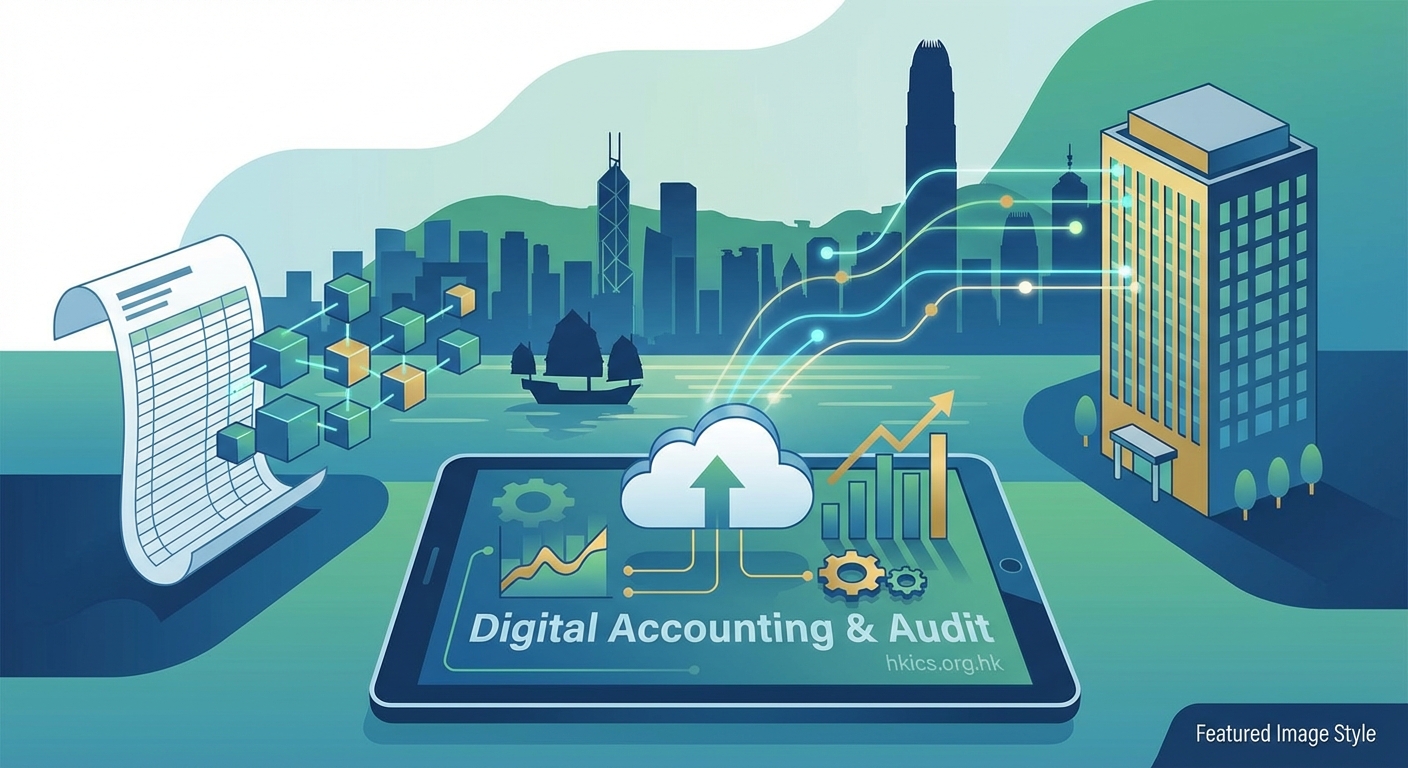
Cloud accounting platforms form the foundation. These systems store your financial data on secure servers accessible from anywhere with internet connection. Popular options in Hong Kong include Xero, QuickBooks Online, and MYOB.
These platforms connect to your bank accounts through secure APIs. Each morning, new transactions appear in your accounting software automatically. No manual downloads. No spreadsheet imports.
Optical character recognition (OCR) technology reads receipts and invoices. Snap a photo with your phone, and the software extracts vendor name, amount, date, and tax information. The system then creates the accounting entry and files the digital receipt.
Artificial intelligence handles categorization. After learning your patterns, the software automatically assigns transactions to the correct expense accounts, cost centers, and tax codes. Accuracy improves over time as the system processes more data.
Application programming interfaces (APIs) connect different business systems. Your e-commerce platform talks to your accounting software. Your point-of-sale system sends sales data automatically. Your payroll provider shares wage information. Everything flows together without manual intervention.
Benefits that matter to Hong Kong finance teams
Time savings appear immediately. Tasks that took hours now take minutes. Month-end close processes that stretched across days now complete in hours.
Real-time visibility changes decision making. You can check cash position from your phone while meeting with suppliers. Sales reports update by the hour instead of waiting for monthly statements. Budget versus actual comparisons happen instantly.
Error reduction improves financial accuracy. Manual data entry creates mistakes. Automation eliminates most of these errors. When the system pulls bank transactions directly, there’s nothing to mistype.
Collaboration becomes easier. Multiple team members can work in the same system simultaneously. Your bookkeeper in Kowloon, your accountant in Central, and you at home all see the same current data. No more emailing spreadsheets back and forth.
Compliance gets simpler. The software tracks changes, maintains audit trails, and stores supporting documents automatically. When tax time arrives, everything sits ready for your accountant or auditor.
Cost structure shifts from capital to operating expenses. Instead of buying expensive software licenses and servers, you pay monthly subscriptions. This makes advanced accounting technology accessible to smaller businesses that couldn’t afford traditional enterprise systems.
Implementing digital accounting step by step
-
Assess your current processes and identify pain points. Document how transactions flow through your business today. Note where delays occur, errors happen, or information gets lost.
-
Select software that matches your business model and size. Consider how many transactions you process monthly, whether you need multi-currency support, and what integrations matter most.
-
Plan your chart of accounts and data structure. Clean up account naming. Establish clear categories. Define how you’ll track departments, projects, or locations.
-
Migrate historical data selectively. You don’t need to import every transaction from the past decade. Focus on opening balances and recent activity needed for comparisons.
-
Connect bank feeds and payment systems first. This creates immediate value by automating your highest-volume data entry tasks.
-
Train your team in phases. Start with basic transaction entry. Add reporting and analysis skills next. Build expertise gradually rather than overwhelming people.
-
Run parallel systems briefly during transition. Keep your old system running while you verify the new platform produces accurate results. This safety net prevents disruption.
-
Establish regular review routines. Set weekly times to check categorization accuracy, reconcile accounts, and review reports. Consistency matters more than perfection.
Common challenges and practical solutions
| Challenge | Why it happens | How to address it |
|---|---|---|
| Staff resistance to new systems | People comfortable with familiar processes fear change | Involve team members in software selection; highlight time savings for tasks they dislike |
| Data migration complexity | Historical records use different structures and categories | Import only essential data; use transition date for fresh start when possible |
| Integration gaps between systems | Not all business software offers modern APIs | Use middleware platforms like Zapier or consider switching incompatible legacy systems |
| Security concerns about cloud storage | Uncertainty about data protection and access controls | Choose providers with ISO 27001 certification; enable two-factor authentication; review access logs regularly |
| Reconciliation discrepancies during transition | Timing differences and duplicate entries during parallel operation | Mark cutover date clearly; reconcile both systems to same point; document known differences |
Choosing the right platform for your Hong Kong business
Size matters when selecting software. Sole proprietors and small companies need different features than mid-market firms or listed corporations.
Consider transaction volume first. If you process fewer than 500 transactions monthly, most entry-level platforms handle your needs. Higher volumes require more robust systems with better automation.
Multi-currency capability matters for import-export businesses or companies with overseas operations. The software should handle foreign exchange gains and losses automatically according to Hong Kong accounting standards.
Industry-specific features add value. Retail businesses need point-of-sale integration. Construction companies require job costing. Professional services firms benefit from time tracking and billing modules.
Reporting flexibility determines how easily you can answer business questions. Can you customize reports? Does the system offer real-time dashboards? Will it export data for deeper analysis?
Mobile access makes a difference if you travel frequently or manage multiple locations. Good mobile apps let you approve invoices, check cash flow, and review reports from anywhere.
Local support and expertise matter. When problems arise, you want help from people who understand Hong Kong tax regulations, banking systems, and business practices.
The best accounting software is the one your team will actually use. Sophisticated features mean nothing if the interface confuses people or the learning curve prevents adoption. Test the user experience before committing.
Regulatory considerations for Hong Kong companies
The Inland Revenue Department accepts electronic records under the Inland Revenue Ordinance. Your digital accounting system must maintain records for at least seven years. The software should prevent unauthorized changes to historical data and maintain audit trails.
Tax computation still follows traditional rules. Digital systems make calculations easier, but you remain responsible for accuracy. The software helps, but doesn’t replace professional tax advice.
Companies Registry filing can connect to some accounting platforms. This speeds up annual return preparation and reduces errors from manual data transfer.
Data privacy regulations apply to financial information. The Personal Data (Privacy) Ordinance requires appropriate security measures. Choose accounting software with encryption, access controls, and regular security audits.
Banking relationships may require specific features. Some Hong Kong banks offer direct data feeds to accounting software. Others require file uploads. Verify compatibility with your banking partners before selecting a platform.
Integration strategies that actually work
Start with your bank connections. These provide the highest volume of data and the biggest time savings. Most Hong Kong banks support feeds to major accounting platforms.
Connect payment gateways next. If you accept credit cards or online payments, automatic sync eliminates manual entry and speeds up reconciliation.
Link your invoicing process. Many accounting platforms include built-in invoicing. Alternatively, connect specialized invoicing tools through APIs.
Integrate payroll carefully. Payroll data affects multiple accounts and tax obligations. Ensure the connection handles MPF contributions, tax withholding, and other Hong Kong-specific requirements correctly.
Consider inventory systems if you sell physical products. Real-time stock levels and cost of goods sold calculations improve accuracy and decision making.
Connect e-commerce platforms for online sellers. Sales data, fees, and payment processing information should flow automatically into your accounting records.
Training your team for digital success
Different roles need different skills. Bookkeepers require deep knowledge of transaction processing and reconciliation. Managers need reporting and analysis capabilities. Executives want dashboard access and high-level insights.
Hands-on practice beats theoretical training. Set up a sandbox company file where people can experiment without affecting real data. Let them make mistakes and learn.
Create simple reference guides for common tasks. Screenshots with step-by-step instructions help people remember processes between uses.
Schedule regular check-ins during the first months. Address questions before they become problems. Share tips as people discover useful features.
Celebrate wins as automation starts working. When bank reconciliation that used to take hours completes in minutes, acknowledge the improvement. Positive reinforcement builds enthusiasm.
Security measures you cannot skip
Two-factor authentication should be mandatory for all users. This prevents unauthorized access even if passwords get compromised.
Role-based access controls limit what each person can see and change. Your sales team doesn’t need access to payroll information. Contractors shouldn’t see sensitive financial data.
Regular password updates reduce risk. Require changes every 90 days. Ban common passwords and require complexity.
Audit logs track who changed what and when. Review these logs monthly to spot unusual activity.
Backup verification ensures you can recover data if something goes wrong. Test restoration procedures at least annually.
Vendor security certifications matter. Look for SOC 2 Type II reports, ISO 27001 certification, and clear data protection policies.
Measuring the impact on your business
Track time spent on accounting tasks before and after implementation. Measure hours required for bank reconciliation, invoice processing, and month-end close. Document the improvements.
Monitor error rates in financial data. Count reconciliation discrepancies, misclassified transactions, and reporting corrections. Watch these numbers decline.
Measure reporting speed. How fast can you produce a profit and loss statement? How long until you know yesterday’s cash position? Better systems deliver answers faster.
Calculate the cost per transaction. Divide total accounting costs by transaction volume. Digital systems should reduce this metric significantly.
Assess decision-making quality. Can you answer business questions faster? Do you spot trends earlier? Better information leads to better choices.
Future developments reshaping Hong Kong accounting
Artificial intelligence will handle more complex tasks. Systems already categorize transactions. Soon they’ll suggest tax strategies, predict cash flow problems, and identify unusual patterns that might indicate errors or fraud.
Blockchain technology may transform audit trails and verification. Distributed ledgers could provide tamper-proof transaction records that simplify compliance and reduce fraud.
Real-time government reporting might become standard. Instead of annual or quarterly filings, systems could share relevant data with regulators continuously.
Predictive analytics will shift accounting from historical reporting to forward-looking insights. Machine learning models will forecast revenue, predict expenses, and model different scenarios.
Voice interfaces and natural language processing will make systems easier to use. Instead of navigating menus, you’ll ask questions and get answers.
Making digital accounting work for your organization
The transformation to digital accounting in Hong Kong isn’t just possible. It’s happening right now across businesses of every size and industry. The technology exists. The regulatory environment supports it. The economic benefits are clear.
Start small if the full transformation feels overwhelming. Connect your bank feeds this month. Add receipt scanning next month. Build momentum gradually. Each improvement makes the next step easier.
Your competitors are already moving. Businesses that master these tools gain advantages in efficiency, accuracy, and insight. The gap between digital leaders and laggards will only widen.
The question isn’t whether to adopt digital accounting. It’s how quickly you can implement it effectively. Your finance team will thank you. Your accountant will appreciate cleaner data. Your business will benefit from better information and lower costs. The technology is ready. Now it’s your turn to act.