

Replacing your company secretary in Hong Kong might feel like a big administrative task, but it’s actually a straightforward process once you understand the steps. Whether your current secretary is retiring, you’re switching to a new service provider, or you simply need someone with different expertise, the Companies Ordinance gives you clear rules to follow.
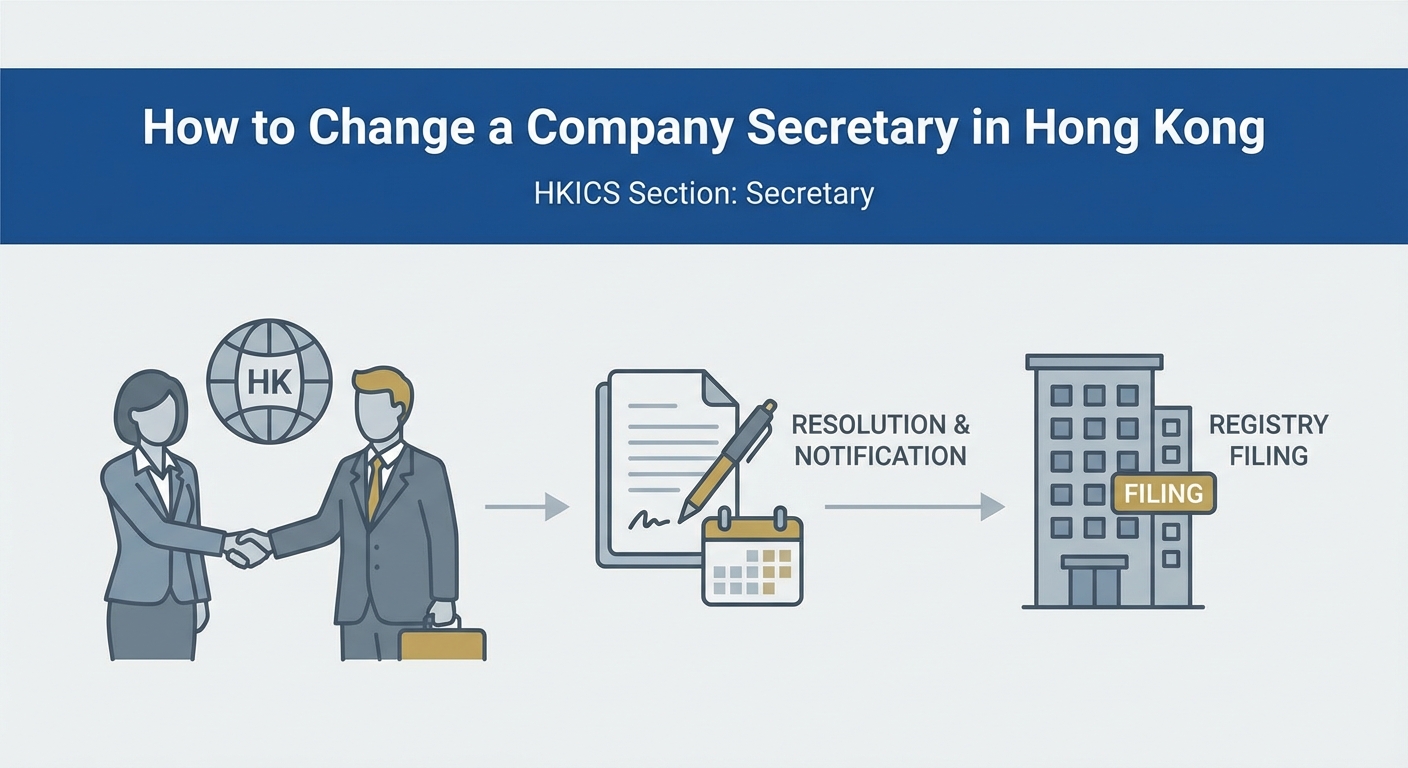
Changing a company secretary in Hong Kong requires board resolution, filing Form ND2A with the Companies Registry within 15 days, and ensuring continuous appointment. Both private and public companies must maintain a qualified secretary at all times. The process involves proper documentation, notification to relevant parties, and compliance with the Companies Ordinance to avoid penalties of up to HK$50,000.
Why companies replace their secretary
Company secretaries play a vital role in keeping your business compliant with Hong Kong law. They maintain statutory records, file annual returns, organize board meetings, and ensure your company meets all regulatory deadlines.
Sometimes the relationship just doesn’t work out. Your business might outgrow a solo practitioner and need a full-service firm. Or perhaps your secretary lacks expertise in your specific industry. Cost considerations matter too. Some directors prefer handling secretarial duties internally once they understand the requirements.
Personal circumstances also drive changes. Secretaries retire, relocate, or close their practices. In these cases, you need to act fast to maintain continuous compliance.
Legal requirements you must meet

Hong Kong law is strict about company secretaries. Every company incorporated under the Companies Ordinance must have one at all times. There’s no grace period.
For private companies, your secretary can be an individual or a corporate body. Individuals must be Hong Kong residents. Corporate secretaries must have a registered office or place of business in Hong Kong.
Public companies face tighter rules. Their secretaries need specific qualifications listed in the Companies Ordinance. This includes professional accountants, lawyers, or people who’ve served as company secretary of a listed company for at least three years.
One person cannot be both the sole director and company secretary. This separation ensures proper checks and balances in your corporate governance.
Steps to change your company secretary
The process follows a logical sequence. Missing steps or filing late can trigger penalties.
1. Hold a board meeting
Your directors need to formally approve the change. Schedule a board meeting and pass a resolution to:
- Accept the resignation of the current secretary (if applicable)
- Appoint the new secretary
- Authorize someone to file the necessary forms
Document everything in your board minutes. Include the effective date of the change. Most companies make the change immediate, but you can set a future date if needed.
2. Obtain consent from the new secretary
Your chosen secretary must agree to the appointment in writing. This consent proves they accept the role and its responsibilities.
Check their qualifications match your company type. Verify they hold the required licenses or memberships if you’re a public company.
3. Prepare Form ND2A
This form notifies the Companies Registry of the change. You’ll need:
- Company name and registration number
- Details of the outgoing secretary (name, address, cessation date)
- Details of the incoming secretary (name, address, appointment date)
- Signature of a director or the new secretary
The form is available on the Companies Registry website. You can file it online through e-Registry or submit a paper copy.
4. File within 15 days
The clock starts ticking from the appointment date. You have 15 days to notify the Companies Registry.
Late filing triggers automatic penalties. The company faces a fine of HK$870 initially, plus daily penalties of HK$700. Officers in default can be prosecuted and fined up to HK$50,000.
Set a reminder immediately after your board meeting. Don’t let this deadline slip.
5. Update your registers
Your company must maintain a register of company secretaries at its registered office. Record the change with:
- Name and address of the new secretary
- Date of appointment
- Name of the previous secretary
- Date they ceased to hold office
Keep this register updated and available for inspection. Members can request to see it during business hours.
6. Notify relevant parties
Tell your banks, service providers, and professional advisors about the change. They need to know who to contact for company matters.
Update your company website and business cards if they list the secretary’s details. Send formal notifications to anyone who regularly corresponds with your secretary.
Common mistakes that cause delays
| Mistake | Consequence | How to avoid |
|---|---|---|
| Filing after 15 days | Automatic penalties and potential prosecution | Set calendar reminders immediately after board meeting |
| Appointing unqualified secretary | Regulatory non-compliance, potential invalidation | Verify qualifications before appointment, especially for public companies |
| No written consent | Incomplete documentation, filing rejection | Obtain signed consent letter before filing Form ND2A |
| Forgetting to update registers | Non-compliance with record-keeping requirements | Update internal registers same day as filing |
| Not checking conflicts | Sole director becoming secretary (prohibited) | Review company structure before appointment |
What happens during the transition
Good planning makes the handover smooth. Your outgoing secretary should transfer all company records to the successor. This includes:
- Minute books and resolutions
- Register of members and directors
- Statutory registers
- Correspondence files
- Compliance calendars
Create a checklist of pending deadlines. Annual returns, audit arrangements, and upcoming board meetings all need attention. The new secretary should know what’s due in the next three months.
Arrange a handover meeting if possible. The outgoing secretary can explain any ongoing matters or unusual aspects of your company structure.
“A proper handover prevents compliance gaps. The new secretary needs complete records and a clear understanding of pending obligations. Take time to do this right, even if you’re changing secretaries due to disagreements.”
Choosing between individual and corporate secretaries
Individual secretaries often cost less and provide personal service. You work with the same person each time. They understand your business intimately.
The downside? Individuals take holidays, get sick, or leave the profession. If your secretary becomes unavailable during a critical filing period, you’re stuck.
Corporate secretarial firms offer continuity. Multiple staff members know your account. Someone’s always available to handle urgent matters. They typically have better systems for tracking deadlines and maintaining records.
Firms cost more but provide peace of mind. They carry professional indemnity insurance and have quality control processes. For companies with complex structures or heavy compliance requirements, the investment makes sense.
Costs involved in the change
The Companies Registry charges HK$340 to file Form ND2A online or HK$870 for paper filing. That’s your only mandatory government fee.
Your new secretary will charge setup fees. Individual secretaries might charge HK$1,000 to HK$3,000 for onboarding. Corporate firms typically charge HK$3,000 to HK$8,000, depending on your company complexity.
Annual retainer fees vary widely. Budget HK$3,000 to HK$6,000 for individuals or HK$5,000 to HK$15,000 for firms. Public companies pay more due to additional compliance requirements.
Some outgoing secretaries charge handover fees. Negotiate this upfront to avoid surprises.
Special situations that need extra attention
Changing your secretary during an audit creates coordination challenges. Your auditors need access to records and may have questions about corporate governance. Inform them about the change immediately.
If your company is involved in litigation, the new secretary needs full briefing on legal matters. They may need to sign documents or attend hearings as the company’s representative.
Companies with multiple subsidiaries should synchronize secretary changes across the group. Using the same secretary for all entities simplifies administration and ensures consistent governance standards.
Dormant companies still need secretaries. Even if you’re not trading, you must maintain a secretary and file annual returns. The change process remains the same.
Key documents your new secretary needs
Provide complete copies of:
- Certificate of incorporation
- Articles of association
- Current register of members
- Current register of directors and secretaries
- All board and shareholder resolutions from the past three years
- Latest audited accounts
- Business registration certificate
- Recent correspondence with government departments
Digital copies work fine, but keep originals secure. Your secretary should maintain their own set of company records separate from your office files.
Timeline expectations
Most changes complete within a week if you’re organized. Here’s a realistic schedule:
Day 1: Hold board meeting and pass resolution
Day 2: Obtain written consent from new secretary
Day 3: Prepare and review Form ND2A
Day 4: File form with Companies Registry
Day 5-7: Update internal registers and notify third parties
The Companies Registry processes electronic filings almost immediately. Paper filings take three to five business days.
Your new secretary can start working before the Registry processes the form. The appointment is effective from the date in your board resolution, not the filing date.
What if you can’t find a replacement immediately
Never let your company operate without a secretary. If your current secretary gives notice, start searching for a replacement right away.
Consider temporary solutions. Many corporate service firms offer interim secretarial services while you find a permanent solution. This keeps you compliant and avoids penalties.
Professional associations can help you find qualified secretaries. The Hong Kong Institute of Chartered Secretaries maintains a directory of practitioners.
Red flags when selecting a new secretary
Watch out for secretaries who:
- Promise they can file forms late without penalties (they can’t)
- Offer suspiciously low annual fees (you get what you pay for)
- Lack proper professional indemnity insurance
- Won’t provide references from current clients
- Don’t ask detailed questions about your business
A good secretary asks about your industry, ownership structure, and compliance history. They want to understand your needs before quoting fees.
Check their track record. How long have they been practicing? Do they specialize in your company type? Are they members of professional bodies?
Maintaining good records after the change
Your relationship with your secretary works best when you communicate clearly. Set expectations about response times, meeting attendance, and reporting.
Establish a regular schedule for compliance reviews. Quarterly check-ins help catch issues before they become problems. Your secretary should provide a compliance calendar showing all upcoming deadlines.
Keep your secretary informed about business changes. New directors, share transfers, and changes to your registered office all trigger filing requirements. The sooner they know, the faster they can handle the paperwork.
Getting it done without stress
Changing your company secretary doesn’t need to disrupt your business. Follow the legal steps, meet the deadlines, and maintain clear documentation. Your new secretary should make compliance easier, not harder. Take time to find someone who understands your needs and communicates in a way that works for you. Once everything’s filed and your registers are updated, you can focus on running your business while your secretary handles the regulatory details.