
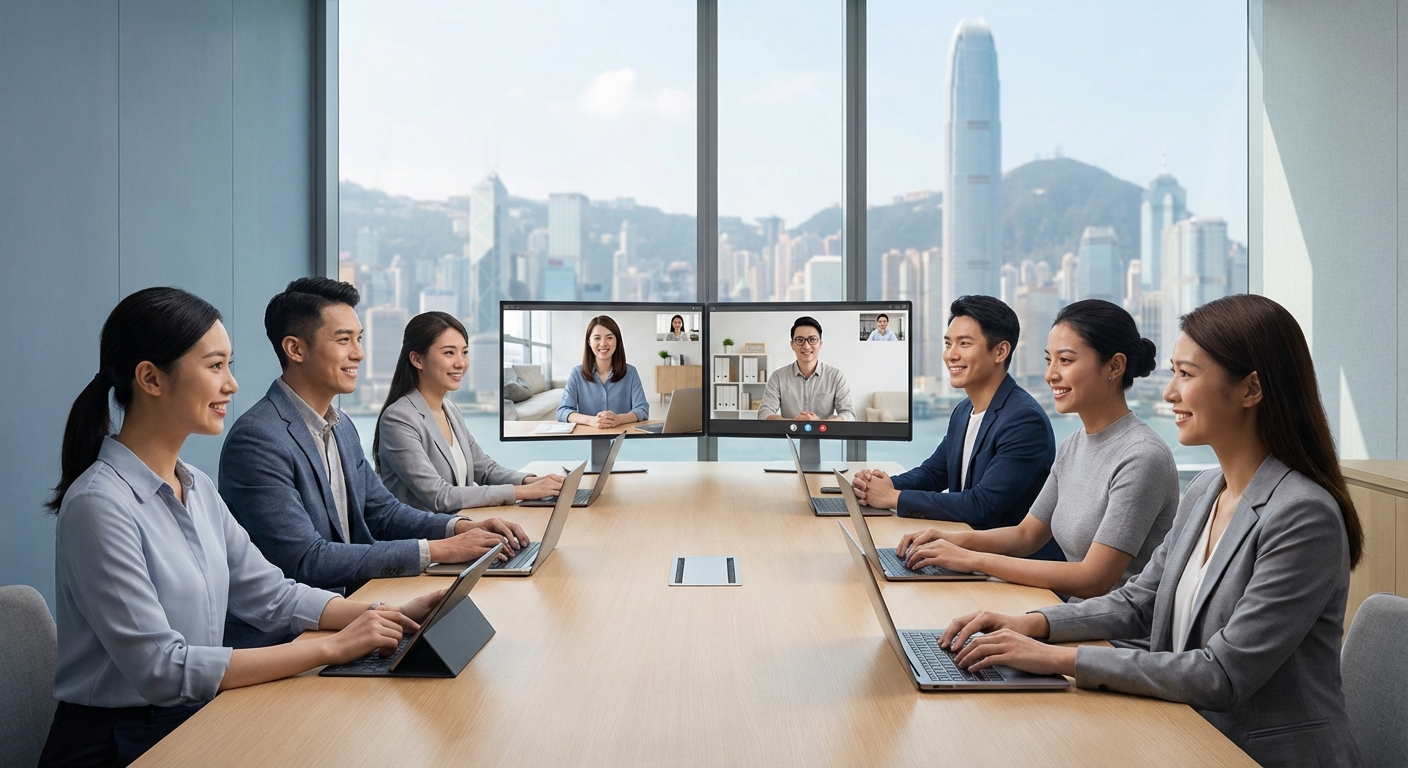
The way we work has changed forever. Companies that once insisted on packed conference rooms and morning commutes now operate entirely online. Some have closed their offices permanently. Others never opened one in the first place. This shift represents more than a pandemic response. It marks a fundamental rethinking of where and how work gets done.
Remote first companies design their operations around distributed teams rather than physical offices. They invest in digital infrastructure, asynchronous communication, and transparent documentation to ensure remote employees have equal access to information, opportunities, and resources. This approach differs fundamentally from remote-friendly or hybrid models that center office workers while accommodating remote staff as exceptions.
What makes a company remote first
A remote first organization builds its entire structure around distributed work. Every policy, process, and tool assumes employees will work from different locations. The office becomes optional, not central.
This differs sharply from remote-friendly companies. Those organizations allow some employees to work remotely but design meetings, promotions, and culture around office presence. Remote workers in these settings often feel like second-class citizens. They miss hallway conversations. They get overlooked for projects. They join video calls where everyone else sits around a conference table.
Remote first means remote is the default. If one person joins a meeting remotely, everyone joins from their own device. Documentation happens in writing, not through office chatter. Career advancement depends on output, not face time.
The model requires intentional design. Companies must rethink communication patterns, collaboration tools, and management practices. They need clear guidelines about response times, meeting schedules, and work hours across time zones.
Core principles that define the model
Remote first companies share several operating principles:
- Documentation over conversation: Important decisions get written down where everyone can find them
- Asynchronous by default: Teams communicate in ways that don’t require instant responses
- Equal access to information: Remote workers see the same data as anyone who might be in an office
- Results-based evaluation: Performance metrics focus on outcomes, not hours logged or visibility
- Deliberate inclusion: Meeting times rotate to accommodate different time zones fairly
These principles shape daily operations. Instead of tapping a colleague on the shoulder, you post in a shared channel. Rather than calling an impromptu meeting, you record a video or write a memo. When decisions get made, they appear in accessible documents, not locked in someone’s memory of a hallway chat.
The approach demands discipline. Writing takes more effort than talking. Documenting decisions requires extra time. But these investments pay dividends. New hires can read through decision histories. Team members in different time zones catch up without bothering colleagues. Knowledge stays accessible even when people leave.
How remote first differs from other models
Understanding the distinctions helps clarify what remote first actually means.
| Work Model | Office Role | Remote Worker Status | Communication Style |
|---|---|---|---|
| Traditional | Central hub for all work | Not permitted or rare exception | In-person meetings, desk conversations |
| Remote-friendly | Primary workspace with remote options | Accommodated but secondary | Hybrid meetings, some digital tools |
| Hybrid | Required presence 2-3 days weekly | Partial option with office requirements | Mix of in-person and virtual |
| Remote first | Optional or nonexistent | Default arrangement for all | Fully digital, documented, asynchronous |
The remote first model treats physical offices as amenities rather than requirements. Some companies maintain co-working memberships or small offices for employees who want them. Others operate without any physical space at all.
This creates genuine location flexibility. Employees can live in expensive cities or rural towns. They can move without changing jobs. They can travel while working, provided they maintain their schedules and deliverables.
Organizations that have adopted this approach
Hundreds of companies now operate remote first. Some started that way. Others converted after experiencing distributed work during lockdowns.
Technology companies led the early adoption. GitLab operates with no offices and over 1,300 employees across 65 countries. Automattic, the company behind WordPress, has been remote first since its founding. Zapier built its entire business around remote operations.
Financial services have followed. Several fintech startups launched as remote first organizations. Traditional banks and investment firms have opened remote first divisions to compete for talent.
Media and creative agencies found the model natural for their work. Writers, designers, and marketers often produce better work with focused time than in open offices. Many agencies now hire globally and meet clients virtually.
Professional services including legal, accounting, and consulting firms have established remote first practices. Junior staff can access senior expertise regardless of office location. Clients appreciate reduced travel costs and faster response times.
The model spans industries and company sizes. Small startups use it to compete for talent against larger competitors. Established corporations launch remote first divisions to experiment with new operating models.
Implementing remote first operations
Transitioning to a remote first model requires systematic changes across multiple areas.
1. Communication infrastructure
Choose tools that support asynchronous work. Slack or Microsoft Teams for messaging. Notion or Confluence for documentation. Loom or Vidyard for recorded video updates. Zoom or Google Meet for synchronous calls when needed.
Set clear expectations about response times. Urgent matters might need replies within an hour. Routine questions can wait 24 hours. This prevents the always-on culture that burns people out.
Create channels for different types of communication. Work updates go in project channels. Social chat happens in dedicated spaces. Announcements use specific channels everyone monitors.
2. Documentation practices
Write everything down. Meeting notes, decision rationale, project updates, and process changes all need documentation. This creates a searchable knowledge base that new hires and existing employees can reference.
Use templates to make documentation easier. Standard formats for project briefs, meeting agendas, and status updates reduce friction. People spend less time figuring out how to document and more time actually doing it.
Assign documentation responsibilities explicitly. Someone needs to own meeting notes for each session. Project leads should maintain updated project briefs. Department heads ensure process documentation stays current.
3. Meeting design
Default to asynchronous updates. Many meetings can become documents, recorded videos, or threaded discussions. Reserve synchronous time for collaboration that truly benefits from real-time interaction.
When meetings happen, record them. People in other time zones can watch later. Those who attend can review details they missed. Recordings become reference materials for future team members.
Rotate meeting times to share time zone burden fairly. If your team spans New York to Singapore, some meetings will inconvenience someone. Rotating ensures no group always bears that cost.
“Remote first means designing for the person who cannot be in the office, not accommodating them as an afterthought. Every process should work perfectly for someone who never sets foot in a physical workspace.”
Benefits for different stakeholders
The remote first model creates advantages for multiple groups.
Employees gain location flexibility and time savings. No commute means extra hours for work, family, or personal interests. Living costs drop when people can move to more affordable areas. Parents can better manage school schedules. People with disabilities avoid accessibility challenges of office buildings.
Employers access global talent pools. Geographic restrictions disappear. Companies can hire the best person for a role regardless of location. This matters especially for specialized skills with limited local supply.
Office costs drop dramatically. Real estate, utilities, parking, and office supplies represent major expenses. Remote first companies redirect those savings toward better tools, higher salaries, or improved benefits.
Job seekers find more opportunities. Location no longer limits options. Someone living in a small town can work for a company based in a major city. International candidates can apply for positions without visa complications.
Common challenges and solutions
Remote first operations create predictable difficulties. Successful companies address them proactively.
Isolation and disconnection affect some remote workers. Combat this by creating virtual social spaces, organizing optional video coffee chats, and hosting periodic in-person gatherings for those who can attend.
Communication overload happens when everything moves online. Set communication norms about notification settings, response expectations, and meeting-free time blocks. Encourage people to batch check messages rather than monitoring constantly.
Performance management requires new approaches. Focus on outcomes and deliverables rather than activity indicators. Set clear goals with measurable results. Provide regular feedback through structured check-ins.
Onboarding complexity increases without in-person training. Create comprehensive documentation, assign mentors to new hires, and schedule regular check-ins during the first month. Record training sessions for future reference.
Time zone coordination complicates scheduling. Use tools like World Time Buddy to find overlapping hours. Document decisions so people can catch up asynchronously. Rotate meeting times to distribute inconvenience fairly.
Evaluating if remote first fits your organization
Not every company should adopt this model. Consider these factors:
Does your work require physical presence? Manufacturing, healthcare, and hospitality have roles that cannot go remote. But even these industries have functions like accounting, marketing, and customer service that can operate remotely.
Can your leadership adapt? Remote first demands trust. Managers must evaluate results rather than monitoring activity. Leaders uncomfortable with this autonomy will struggle.
Will your culture support it? Some teams thrive with independence. Others need frequent in-person interaction. Assess whether your people have the self-direction and communication skills remote work requires.
Do you have the infrastructure? Remote first needs reliable technology. Video conferencing, project management tools, and secure file sharing form the foundation. Companies must invest in these systems before going remote first.
Are your processes documented? If critical knowledge lives in people’s heads or happens through informal conversations, you need better documentation before distributing your team.
Building a remote first culture
Culture requires deliberate cultivation in distributed environments.
Celebrate wins publicly. Share accomplishments in team channels. Recognize good work in company-wide updates. Make appreciation visible so everyone sees it.
Create rituals that build connection. Weekly team check-ins where people share personal updates. Monthly all-hands meetings with space for questions. Annual or semi-annual gatherings for those who can attend.
Invest in equipment and workspace. Provide stipends for home office furniture, monitors, and ergonomic accessories. Reimburse internet costs. Support co-working memberships for people who want them.
Encourage boundaries between work and personal time. Model healthy behavior by not sending messages outside work hours. Respect vacation time completely. Discourage always-on availability.
Foster informal interaction. Create channels for hobbies, pet photos, and random chat. Host virtual game sessions or watch parties. Give people space to connect as humans, not just coworkers.
Tools that enable remote first operations
The right technology stack makes remote first possible.
Communication platforms like Slack, Microsoft Teams, or Discord handle daily messaging. Choose based on your team size, security requirements, and integration needs.
Documentation systems including Notion, Confluence, or Google Workspace organize knowledge. Pick tools that make information easy to find and update.
Project management software such as Asana, Monday, or Linear tracks work progress. Select systems that match your workflow complexity and reporting needs.
Video conferencing tools like Zoom, Google Meet, or Microsoft Teams enable face-to-face interaction. Prioritize reliability and ease of use over feature abundance.
Time tracking and productivity tools help distributed teams coordinate. World Time Buddy shows overlapping hours. Calendly simplifies scheduling. Toggl tracks time for billing or analysis.
Security solutions protect company data across locations. VPNs, password managers, and endpoint protection become essential when employees work from various networks.
Making remote first work long term
Success requires ongoing attention and adjustment.
Gather feedback regularly. Survey employees about what works and what frustrates them. Hold focus groups to discuss challenges. Create safe channels for raising concerns.
Iterate on processes. What worked for a ten-person team may fail at fifty people. Review and update communication norms, documentation practices, and meeting structures as you grow.
Invest in manager training. Leading remote teams requires different skills than managing office workers. Provide coaching on asynchronous communication, building trust, and evaluating performance based on outcomes.
Measure what matters. Track employee satisfaction, retention rates, and productivity metrics. Compare performance before and after going remote first. Use data to guide improvements.
Stay flexible about the model itself. Some roles might need occasional in-person work. Some teams might benefit from quarterly gatherings. Adapt the approach to fit reality rather than forcing reality to fit the model.
Why this model keeps growing
Remote first companies multiplied during pandemic lockdowns. Many expected a return to offices once restrictions lifted. Instead, the model has continued expanding.
Talent competition drives adoption. Companies that require office presence lose candidates to remote first competitors. The best workers now expect location flexibility as a standard benefit.
Cost savings matter. Commercial real estate remains expensive. Companies that shed office leases can invest those resources in people, tools, or growth.
Results prove the concept works. Productivity data shows remote workers often outperform office-based counterparts. Employee satisfaction scores rise. Retention improves. The business case has become clear.
Technology keeps improving. Better video quality, smoother collaboration tools, and more reliable internet make remote work easier each year. What felt clunky five years ago now feels natural.
The model represents a genuine shift in how we think about work. Location and work have been tied together since the industrial revolution. Remote first severs that connection. It opens possibilities we’re still learning to use.
Whether you’re an HR professional evaluating this model for your organization, a business leader considering the transition, or a job seeker looking for remote first employers, understanding how this approach works helps you make informed decisions. The companies that master remote first operations gain access to global talent, reduce costs, and build more resilient organizations. Those that cling to office-centric models risk losing ground to more adaptable competitors.