

Starting a company with global ambitions isn’t the same as building a local business that expands later. The choices you make in your first 90 days will either open doors across borders or lock you into expensive restructuring down the road.
Building global companies from day one requires intentional structural decisions before you write your first line of code or sign your first customer. Founders who succeed internationally plan their entity structure, compliance frameworks, payment systems, and team distribution for cross-border operations from the start, avoiding costly pivots that plague companies attempting to globalize after establishing local-only foundations.
Why founders choose global from the start
The traditional advice used to be simple. Start local, prove your model, then expand.
That playbook is outdated.
Today’s founders face different market realities. Your potential customers live on six continents. Your best engineering talent might be in Warsaw, your design lead in Singapore, your early adopters in Austin. Remote work normalized distributed teams. Cloud infrastructure eliminated the need for physical presence in each market.
Starting global isn’t about ambition. It’s about access.
Companies that wait to internationalize often discover their corporate structure won’t support foreign subsidiaries without expensive reorganization. Their contracts include clauses that don’t translate across legal systems. Their payment processors can’t handle multi-currency transactions. Their cap table includes investor agreements that complicate cross-border equity.
These aren’t small problems. They’re structural barriers that cost months and six figures to fix.
Founders building for global markets from day one make different choices. They select incorporation jurisdictions based on international flexibility, not just local tax rates. They build teams across time zones intentionally. They think in terms of compliance frameworks, not single-country regulations.
Structural decisions that matter early
Your entity structure is your foundation. Get it wrong and you’ll spend years working around it.
Most founders default to incorporating where they live. That’s fine if you’re opening a restaurant. It’s limiting if you’re building software, hardware, or services for international markets.
Consider these three approaches:
Holding company structure: Incorporate a parent entity in a jurisdiction with favorable treaty networks and strong legal frameworks. Delaware, Singapore, and the UK are common choices. Then establish subsidiaries in markets where you operate, employ people, or serve customers.
Flip-ready structure: Start with a simple entity that can convert into a holding company structure later. This works if you’re not sure about international expansion timing but want to keep options open.
Multi-entity from start: Launch with separate legal entities for different functions. One for IP ownership, one for operations, one for employment. This adds complexity but provides maximum flexibility.
None of these is universally correct. Your choice depends on your funding strategy, team location, target markets, and product type.
“The biggest mistake I see is founders who incorporate based on where they happen to be standing, not where their business will operate. You can’t put the toothpaste back in the tube.” — Former general counsel at a Series C SaaS company
Here’s what different structures enable:
| Structure Type | Best For | Main Advantage | Common Pitfall |
|---|---|---|---|
| Single entity | Service businesses with one clear market | Simplicity and low overhead | Difficult to add international operations later |
| Holding company | Venture-backed startups targeting multiple regions | Clean separation of IP, operations, and risk | Higher setup costs and ongoing compliance |
| Distributed entities | Companies with regulatory requirements in each market | Meets local legal requirements | Complex transfer pricing and coordination |
| Flip structure | Founders uncertain about scale timing | Flexibility to restructure later | May trigger tax events during conversion |
Building your international compliance foundation
Compliance isn’t sexy. It’s also not optional.
Founders building global companies from day one need to understand three layers of compliance: corporate governance, employment law, and data regulations.
Corporate governance starts with your board structure and shareholder agreements. If you plan to raise capital from international investors, your governance documents need to accommodate different legal systems and investor protections. A board observer from a European VC fund has different expectations than a US angel investor.
Employment law varies dramatically by country. What counts as an independent contractor in one jurisdiction is an employee in another. Termination procedures that are standard in the US are illegal in France. Benefits requirements differ everywhere.
Data regulations create another layer. GDPR in Europe, CCPA in California, PDPA in Singapore. Each has different requirements for data storage, processing, consent, and deletion. You can’t bolt these on later. They need to be part of your product architecture from version one.
Here’s a practical compliance checklist for the first six months:
- Register for tax identification in every country where you have employees or a legal presence
- Set up compliant employment contracts that meet local labor law requirements
- Implement data processing agreements that satisfy the strictest regulations you’ll encounter
- Establish transfer pricing policies if you’re moving money between entities
- Create documentation systems that satisfy audit requirements in all your operating jurisdictions
- Set up registered agent services in countries where you have legal entities
This sounds overwhelming. It is, if you try to do it alone.
Smart founders work with corporate service providers who specialize in multi-jurisdiction setups. The upfront cost feels high. The alternative is much more expensive.
Hiring and team distribution strategies
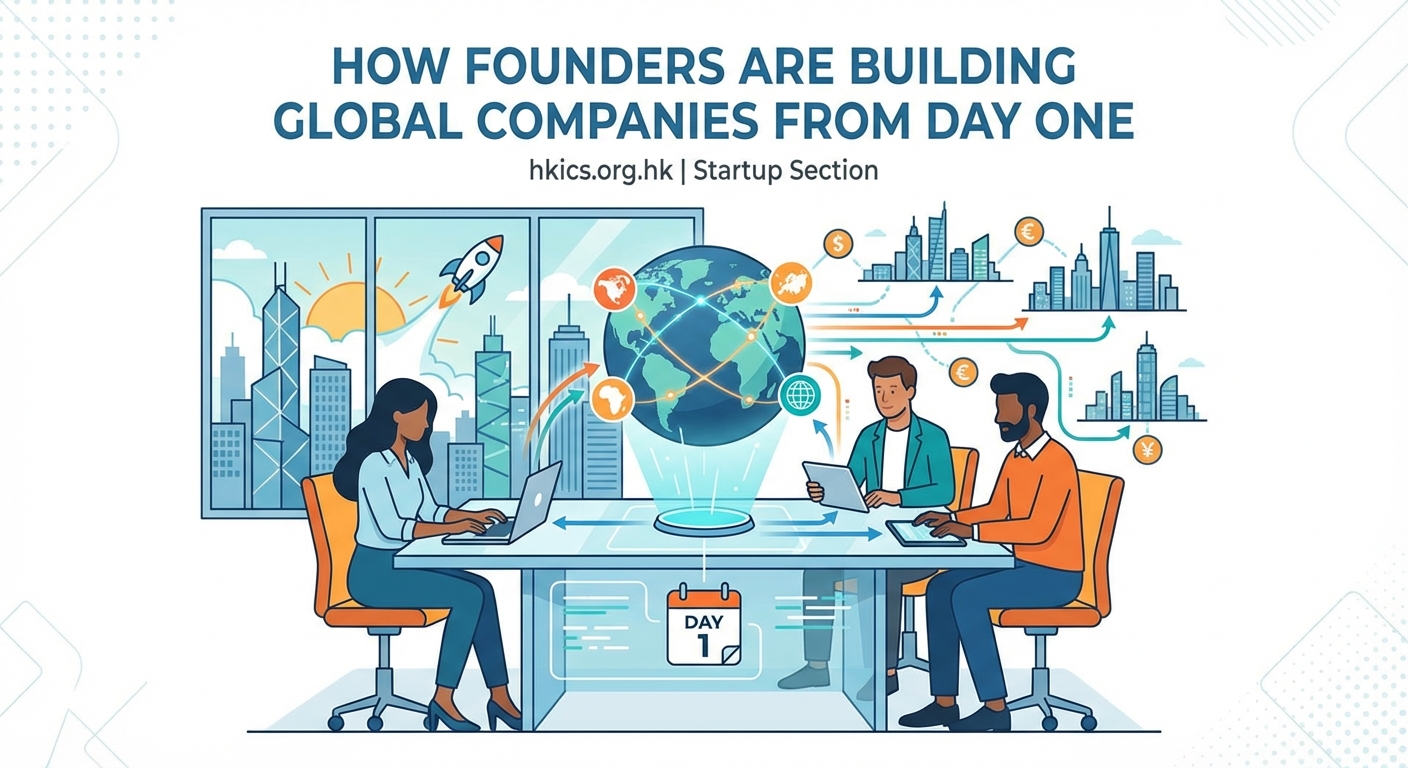
Your team structure reveals whether you’re actually building globally or just talking about it.
Companies that succeed internationally hire for talent and time zone coverage, not proximity to headquarters. They build systems that work asynchronously. They create documentation cultures that don’t rely on hallway conversations.
Three common team distribution models work well:
Hub and spoke: Establish small teams in three to five strategic locations. Each hub covers a region and time zone. Product development happens in one hub, customer success in another, sales in a third.
Fully distributed: Hire the best person for each role regardless of location. This maximizes talent access but requires excellent systems and communication practices.
Regional clusters: Build complete teams in each major market. Engineering, sales, and support all exist in Europe, Asia, and the Americas. This enables local decision making but creates coordination challenges.
Your choice depends on your product and market. B2B enterprise software often needs regional clusters to handle complex sales cycles and customer relationships. Developer tools can work fully distributed because the customer base expects async communication.
Some practical considerations:
- Payroll and benefits administration gets complex fast. Use an employer of record service for countries where you have fewer than five employees.
- Time zones matter for real-time collaboration. A team split between San Francisco and Singapore has a three-hour overlap window. Plan meetings accordingly.
- Employment contracts need local review. What you think is standard might be unenforceable or illegal in other jurisdictions.
- Equity compensation works differently across countries. Some places tax options at grant, others at exercise, others at sale.
Payment and banking infrastructure
You can’t run a global company on a single-country bank account.
Founders need multi-currency banking, international payment processing, and compliant invoicing systems from the start.
Your banking setup should include:
- Primary operating account in your main incorporation jurisdiction
- Local currency accounts in major markets where you collect revenue
- Payment processor that handles multiple currencies and payment methods
- Foreign exchange strategy that minimizes conversion costs
- Transfer mechanisms between entities that satisfy transfer pricing rules
Many founders underestimate payment method diversity. US customers expect credit cards. European customers want SEPA transfers. Asian markets use different digital wallets. If you only accept one payment type, you’re excluding potential customers.
Invoicing gets complicated when you operate across borders. You need to collect the right tax information, apply correct VAT or GST rates, meet local invoicing requirements, and maintain records that satisfy auditors in multiple jurisdictions.
Use accounting software built for multi-entity, multi-currency operations from day one. Trying to retrofit QuickBooks for international operations is painful.
Market entry sequencing
You can’t launch everywhere at once. Sequencing matters.
Smart founders choose initial markets based on four factors:
- Language and cultural proximity: Markets where you understand customer behavior and can provide support
- Regulatory complexity: Easier markets first, heavily regulated markets later
- Market size and growth: Large enough to matter, growing fast enough to reward early movers
- Competition and timing: Markets where you have an advantage or the timing is right
A common pattern is to start in your home market plus one or two others where you have unfair advantages. Maybe you have a co-founder who lived there. Maybe you have early customers pulling you in. Maybe regulatory changes create an opening.
Avoid the trap of spreading too thin. Three markets done well beats ten markets done poorly.
For each market, you need:
- Legal entity or registered presence if required
- Localized product and marketing (translation is table stakes, localization is the goal)
- Payment methods customers actually use
- Customer support in appropriate languages and time zones
- Understanding of local competition and buying behavior
IP protection across borders
Your intellectual property needs protection before you start selling internationally.
Trademarks, patents, and copyrights work differently in each jurisdiction. The US is first-to-use for trademarks. Most other countries are first-to-file. If you wait to file internationally, someone else might register your brand in key markets.
A basic IP protection strategy includes:
- Register your core trademarks in major markets (US, EU, UK, China, Japan, Singapore)
- File provisional patents if you have novel technology, then convert to PCT applications for international coverage
- Include proper IP assignment clauses in all employment and contractor agreements
- Register copyrights for significant creative works
- Use trade secret protection for processes and methods you don’t want to disclose in patents
Budget for this. International trademark registration through the Madrid Protocol costs a few thousand dollars. That’s cheap insurance compared to rebranding or legal fights later.
Technology and infrastructure choices
Your technology stack either supports global operations or fights against them.
Founders building international companies need infrastructure that handles:
- Multi-region deployment: Customers in Asia shouldn’t wait for servers in Virginia to respond
- Data residency requirements: Some countries require data about their citizens to stay within borders
- Localization support: Your database and application need to handle multiple languages, currencies, and date formats
- Compliance and security: Different markets have different security certification requirements
Cloud providers like AWS, Google Cloud, and Azure offer regional deployment options. Use them. The latency difference between local and distant servers matters for user experience.
Your application architecture should separate concerns. User interface layer handles localization. Business logic layer stays consistent. Data layer manages regional storage requirements.
Some specific technical considerations:
- Use Unicode (UTF-8) everywhere to support international characters
- Store dates and times in UTC, convert to local time zones in the presentation layer
- Build currency handling into your data model from the start
- Plan for right-to-left languages if you might enter Middle Eastern markets
- Design your API for international use cases, not just your initial market
Funding for global ambitions
Investors evaluate global startups differently than local businesses.
If you’re building internationally from day one, you need to articulate why that’s the right strategy. Some investors love global plays. Others worry about execution complexity and capital requirements.
Your fundraising story should address:
- Why global timing matters for your market
- How your team has international operational capability
- What your market entry sequence looks like
- How you’ll manage complexity while staying capital efficient
- What unfair advantages you have in target markets
International operations cost more than domestic-only businesses. You need legal help in multiple jurisdictions. You need local market expertise. You might need entities and compliance in several countries.
Budget accordingly. A US-only SaaS startup might spend 5% of funding on legal and compliance. A global-from-day-one company should budget 10-15% for the first two years.
Some investors specifically back global companies. They understand the complexity and value the market opportunity. Find investors who have portfolio companies that successfully scaled internationally. They’ll provide better guidance than investors who only know single-market playbooks.
Common mistakes to avoid
Founders building global companies make predictable errors. Learning from others is cheaper than learning from experience.
Mistake one: Assuming what works in your home market will work everywhere. Customer behavior, sales cycles, pricing sensitivity, and product expectations vary dramatically. Test your assumptions in each market.
Mistake two: Underestimating compliance complexity. Every country has different rules for employment, taxes, data, and corporate governance. Budget time and money for getting this right.
Mistake three: Hiring without proper legal entities. Using contractors everywhere seems simpler but creates misclassification risk. Some countries aggressively pursue companies that treat employees as contractors.
Mistake four: Ignoring currency and payment friction. If customers have to work hard to pay you, they won’t. Support local payment methods and currencies.
Mistake five: Building a US-centric product and trying to internationalize later. Character limits, address formats, phone number validation, name fields, date formats. These seem small but require significant refactoring if you build them wrong initially.
Mistake six: Treating all markets the same. A market with 100 million people and 80% smartphone penetration is different from a market with 1 billion people and 30% penetration, even if the total addressable market looks similar on paper.
Making global work from your first customer
Building global companies from day one isn’t about having offices on every continent or customers in 50 countries by month six.
It’s about making structural choices that enable international growth without expensive pivots later. It’s about thinking in systems that work across borders. It’s about building a team and culture that doesn’t assume everyone lives in the same city or speaks the same language.
Start with the foundation. Get your entity structure right. Build compliance into your operations. Choose technology that scales across regions. Hire for global capability even if your first ten employees all live in the same time zone.
The companies that win international markets aren’t always the ones with the best product. They’re the ones whose structure, systems, and strategy were built for global operations from the beginning. Your competitors who start local will spend years and millions catching up. You’ll already be there.