

Cloud computing has fundamentally changed how businesses operate, compete, and grow. What once required massive upfront investments in servers, storage, and IT infrastructure now happens with a few clicks and a monthly subscription. Companies can scale operations instantly, collaborate across continents in real time, and access enterprise-grade technology without building their own data centers.
Cloud computing enables businesses to reduce infrastructure costs, scale operations flexibly, and accelerate digital transformation. By shifting from capital expenses to operational expenses, companies gain access to advanced technology, improve collaboration, enhance security, and respond faster to market changes. Understanding the role of cloud computing in modern business helps decision-makers choose the right deployment models and strategies for sustainable growth.
What cloud computing actually means for your business
Cloud computing delivers computing services over the internet instead of through physical hardware you own and maintain. You access storage, processing power, databases, networking, software, and analytics through remote servers managed by service providers.
This shift changes everything about how businesses handle technology. Instead of buying servers that sit in your office, you rent computing resources that scale up or down based on what you need right now. Your team accesses applications and data from anywhere with an internet connection.
The financial model transforms too. Traditional IT infrastructure requires large upfront capital expenditures. You buy servers, storage arrays, networking equipment, and software licenses before you can use anything. Cloud computing converts these capital expenses into predictable operational expenses. You pay for what you use, when you use it.
Three main service models define cloud computing. Infrastructure as a Service (IaaS) provides virtualized computing resources. Platform as a Service (PaaS) offers development and deployment environments. Software as a Service (SaaS) delivers complete applications through your browser. Each model serves different business needs and technical requirements.
Core benefits that change business operations
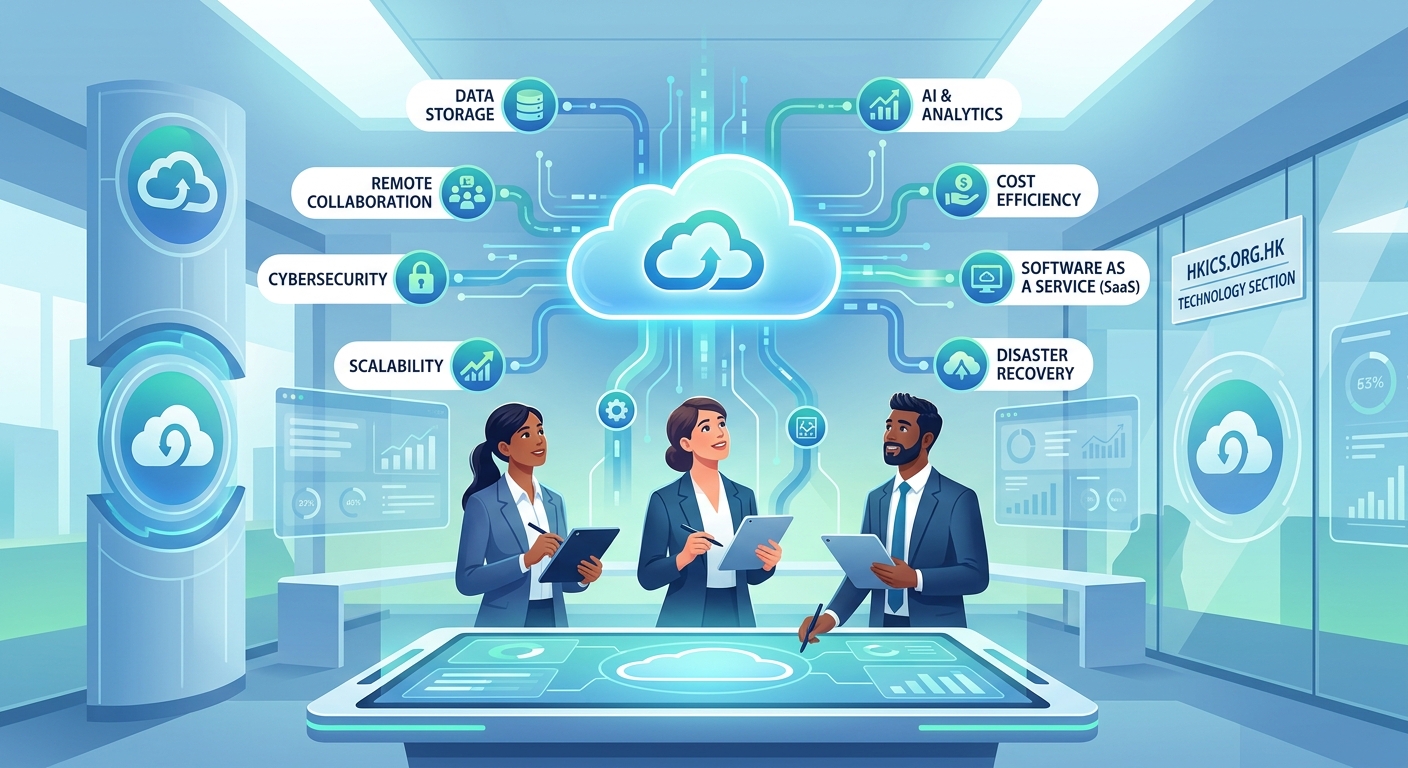
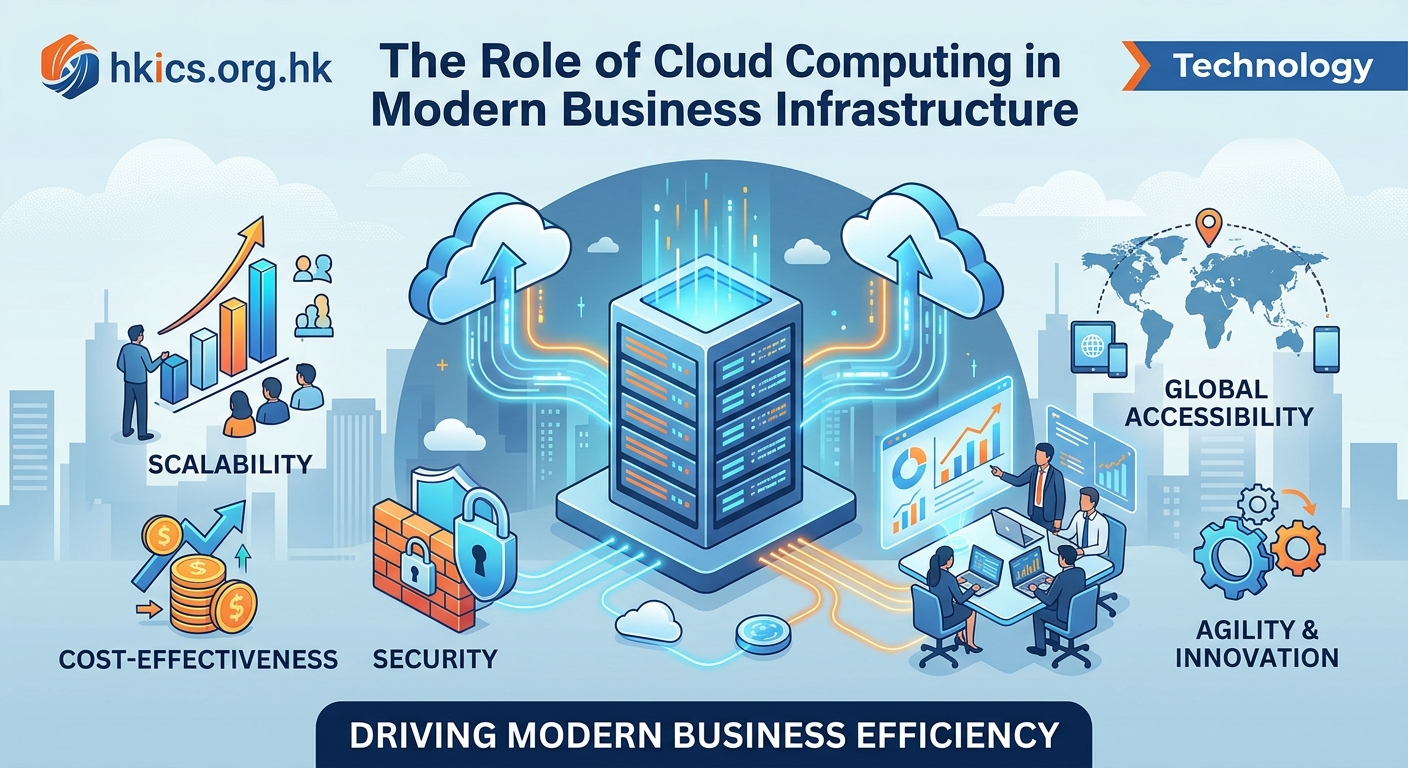
Cost reduction stands out as the most immediate advantage. Businesses eliminate spending on physical servers, cooling systems, power consumption, and dedicated IT staff for hardware maintenance. Small companies access the same computing power that once required million-dollar investments.
Scalability happens instantly. During peak seasons, you add resources within minutes. When demand drops, you scale back and stop paying for unused capacity. A retail business can handle holiday shopping traffic without maintaining excess infrastructure year-round.
Geographic reach expands without physical presence. Cloud providers operate data centers across continents. You deploy applications closer to customers in different regions, improving performance and meeting data residency requirements without building local infrastructure.
Business continuity improves dramatically. Cloud providers replicate your data across multiple locations automatically. If one data center fails, your operations continue from another location. Disaster recovery that once required duplicate infrastructure now comes built into your service agreement.
Speed to market accelerates. Development teams spin up test environments in minutes instead of waiting weeks for hardware procurement. They experiment with new ideas, fail fast, and iterate without wasting resources on infrastructure that might not work out.
How different deployment models serve different needs
Public cloud services offer the most flexibility and lowest entry cost. Providers like Amazon Web Services, Microsoft Azure, and Google Cloud Platform share infrastructure across many customers. You benefit from economies of scale and continuous innovation without managing physical hardware.
Private cloud deployments give you dedicated infrastructure. Some businesses choose this model for regulatory compliance, data sensitivity, or performance requirements. You gain cloud benefits like automation and scalability while maintaining complete control over your environment.
Hybrid cloud combines both approaches. You keep sensitive data and critical applications in a private environment while using public cloud for less sensitive workloads and burst capacity. This model works well for businesses transitioning from traditional infrastructure or managing complex compliance requirements.
Multi-cloud strategies use services from multiple providers. You might run primary operations on one platform while using specialized services from others. This approach prevents vendor lock-in and lets you choose best-of-breed solutions for different needs.
| Deployment Model | Best For | Main Advantage | Consideration |
|---|---|---|---|
| Public Cloud | Startups, variable workloads | Lowest cost, fastest deployment | Less control over infrastructure |
| Private Cloud | Regulated industries, sensitive data | Maximum control, customization | Higher cost, more management |
| Hybrid Cloud | Enterprises, gradual migration | Flexibility, compliance balance | Complex integration needs |
| Multi-Cloud | Large organizations, specialized needs | Avoid vendor lock-in | Requires multi-platform expertise |
Practical steps to implement cloud solutions
-
Assess your current infrastructure and identify workloads suitable for cloud migration. Start with applications that have variable demand or require frequent updates. Leave legacy systems with complex dependencies for later phases.
-
Choose your deployment model based on compliance requirements, budget constraints, and technical capabilities. Most businesses start with public cloud for new projects while planning gradual migration of existing systems.
-
Select service providers that match your geographic needs, industry requirements, and budget. Compare pricing models carefully because costs vary significantly based on usage patterns and data transfer volumes.
-
Train your team on cloud platforms and new operational processes. Cloud computing changes how IT teams work. Automation replaces manual configuration. Monitoring becomes continuous rather than periodic.
-
Implement governance policies before widespread adoption. Define who can provision resources, set spending limits, establish security standards, and create data classification rules. Without governance, cloud costs spiral and security gaps emerge.
-
Migrate workloads incrementally rather than attempting a complete transition at once. Test each migration thoroughly. Validate performance, security, and integration with remaining on-premises systems.
-
Optimize continuously after migration. Cloud providers release new services and pricing options constantly. Regular reviews identify opportunities to reduce costs, improve performance, and adopt better solutions.
Security and compliance in cloud environments
Cloud security follows a shared responsibility model. Providers secure the infrastructure, including physical data centers, network hardware, and virtualization layers. You secure everything you put in the cloud: data, applications, user access, and configurations.
This division confuses many businesses initially. Just because data lives in the cloud doesn’t mean the provider protects it automatically. You must encrypt sensitive information, manage access controls, monitor for threats, and maintain compliance with regulations.
Modern cloud platforms offer security tools that exceed what most businesses can build themselves. Advanced threat detection, automated patching, identity management, and encryption services come standard. The challenge shifts from building security capabilities to configuring and using them properly.
Compliance requirements don’t disappear in the cloud. Healthcare organizations still need HIPAA compliance. Financial services must meet regulatory standards. International businesses face data residency laws. Choose providers with relevant certifications and features that support your compliance obligations.
Your cloud security posture depends more on configuration than on the provider you choose. Most breaches result from misconfigured storage, weak access controls, or poor credential management rather than provider vulnerabilities.
Real business impact across industries
Retail companies use cloud computing to handle seasonal traffic spikes without maintaining excess capacity year-round. During holiday shopping periods, they scale up computing resources to process transactions and manage inventory. After the season ends, they scale back down and reduce costs.
Financial services firms process transactions, analyze risk, and detect fraud using cloud-based analytics platforms. They access computing power for complex calculations without building massive data centers. Regulatory reporting that once took weeks now completes in hours.
Healthcare organizations store patient records, manage appointment scheduling, and enable telemedicine through cloud applications. Doctors access patient information from any location. Specialists collaborate on cases across different hospitals and time zones.
Manufacturing businesses connect factory equipment to cloud platforms for real-time monitoring and predictive maintenance. Sensors detect equipment problems before failures occur. Production managers optimize processes using data analytics that would be impossible with on-premises systems.
Professional services firms collaborate on client projects using cloud-based document management, communication tools, and project management platforms. Teams work together seamlessly whether they’re in the office, at client sites, or working remotely.
Common mistakes that reduce cloud benefits
Moving applications to the cloud without redesigning them wastes the opportunity for improvement. Simply rehosting existing systems in virtual machines gives you some benefits but misses the real advantages. Applications designed for cloud environments perform better and cost less.
Ignoring cost management leads to budget overruns. Cloud resources are easy to provision but also easy to forget. Unused development environments, oversized instances, and unoptimized storage accumulate charges. Implement tagging, monitoring, and regular reviews to control spending.
Underestimating the cultural change creates resistance and slow adoption. Cloud computing changes how IT teams work and how businesses make technology decisions. Training, communication, and leadership support help teams adapt to new ways of working.
Neglecting governance from the start creates security gaps and compliance risks. Define policies before widespread adoption. Establish approval processes, security standards, and cost controls. Retrofitting governance after problems emerge proves much harder than building it in from the beginning.
Choosing the wrong migration strategy delays benefits and increases costs. Not every workload belongs in the cloud immediately. Some applications work better after refactoring. Others should stay on-premises until replacement. Evaluate each system individually rather than applying one approach to everything.
Key capabilities that drive competitive advantage
Artificial intelligence and machine learning services democratize advanced analytics. Businesses without data science teams can now build predictive models, automate decision-making, and personalize customer experiences. Cloud providers offer pre-built models and tools that make sophisticated analytics accessible.
Internet of Things platforms connect devices, collect sensor data, and enable real-time monitoring at scale. Manufacturing equipment, delivery vehicles, retail displays, and building systems send data to cloud platforms for analysis and action. This connectivity creates new business models and operational efficiencies.
Serverless computing eliminates infrastructure management entirely. Developers write code that runs in response to events without provisioning or managing servers. You pay only for actual compute time, measured in milliseconds. This model works perfectly for applications with unpredictable or sporadic usage patterns.
Global content delivery networks distribute websites, videos, and applications across worldwide locations. Users access content from nearby servers, improving performance and reducing latency. Businesses deliver fast experiences to customers anywhere without building global infrastructure.
Development and testing environments appear and disappear on demand. Teams experiment with new technologies, test configurations, and validate ideas without long-term commitments. Failed experiments cost little because resources exist only as long as needed.
Future trends reshaping business infrastructure
Edge computing brings processing closer to where data originates. Instead of sending everything to centralized cloud data centers, businesses process information on devices or nearby edge locations. This reduces latency for time-sensitive applications and decreases bandwidth costs.
Containers and orchestration platforms change how applications are built and deployed. Businesses package applications with all dependencies, ensuring consistent behavior across different environments. Automated orchestration manages complex deployments across multiple locations.
Sustainability becomes a decision factor. Cloud providers invest heavily in renewable energy and efficient data centers. Businesses reduce their carbon footprint by moving from on-premises infrastructure to providers with better environmental practices.
Specialized cloud services for specific industries emerge. Healthcare clouds include built-in compliance features. Financial services clouds offer regulatory reporting tools. Retail clouds provide commerce and inventory management capabilities. These vertical solutions accelerate implementation and reduce customization needs.
Integration between cloud platforms improves. Businesses use services from multiple providers more easily. Data moves between platforms seamlessly. Hybrid and multi-cloud strategies become practical for more organizations.
Making cloud computing work for your organization
Start with clear business objectives rather than technology choices. What problems are you trying to solve? Do you need to reduce costs, improve agility, enable remote work, or support growth? Your business goals should drive technology decisions, not the other way around.
Build cloud skills within your organization. Training existing staff often works better than hiring new people. Cloud platforms change rapidly. A culture of continuous learning matters more than current expertise with specific tools.
Partner with experienced providers or consultants for your first major projects. Cloud migration involves technical complexity and business risk. Learning from others’ experience accelerates success and avoids expensive mistakes.
Measure results against your original objectives. Track cost savings, deployment speed, system reliability, and business outcomes. Use these metrics to refine your approach and demonstrate value to stakeholders.
How cloud computing enables lasting business transformation
The role of cloud computing in modern business extends far beyond cost savings and technical infrastructure. It fundamentally changes how companies operate, compete, and innovate. Businesses that master cloud computing gain flexibility to respond to market changes, access to advanced technologies previously available only to large enterprises, and the ability to focus resources on what differentiates them rather than maintaining commodity infrastructure.
Your cloud journey doesn’t require a complete transformation overnight. Start with workloads that benefit most from cloud characteristics: variable demand, geographic distribution, or rapid development cycles. Build experience, develop skills, and expand gradually. The businesses winning with cloud computing didn’t get there through massive one-time projects. They adopted a continuous improvement mindset, learning and adapting as cloud platforms evolved and their own needs changed.